Koggala, Sri Lanka
Tri
A Fibonacci spiral in cinnamon wood and concrete, spun around a lake tower on Sri Lanka's south coast.
- Rates from
- From $650 per night
- Nearest airport
- Bandaranaike International Airport (CMB), Colombo
- Transfer
- About 2.5 hours by road via the Southern Expressway, or seaplane with Cinnamon Air to the lake followed by a short boat crossing
- Best months
- December to March
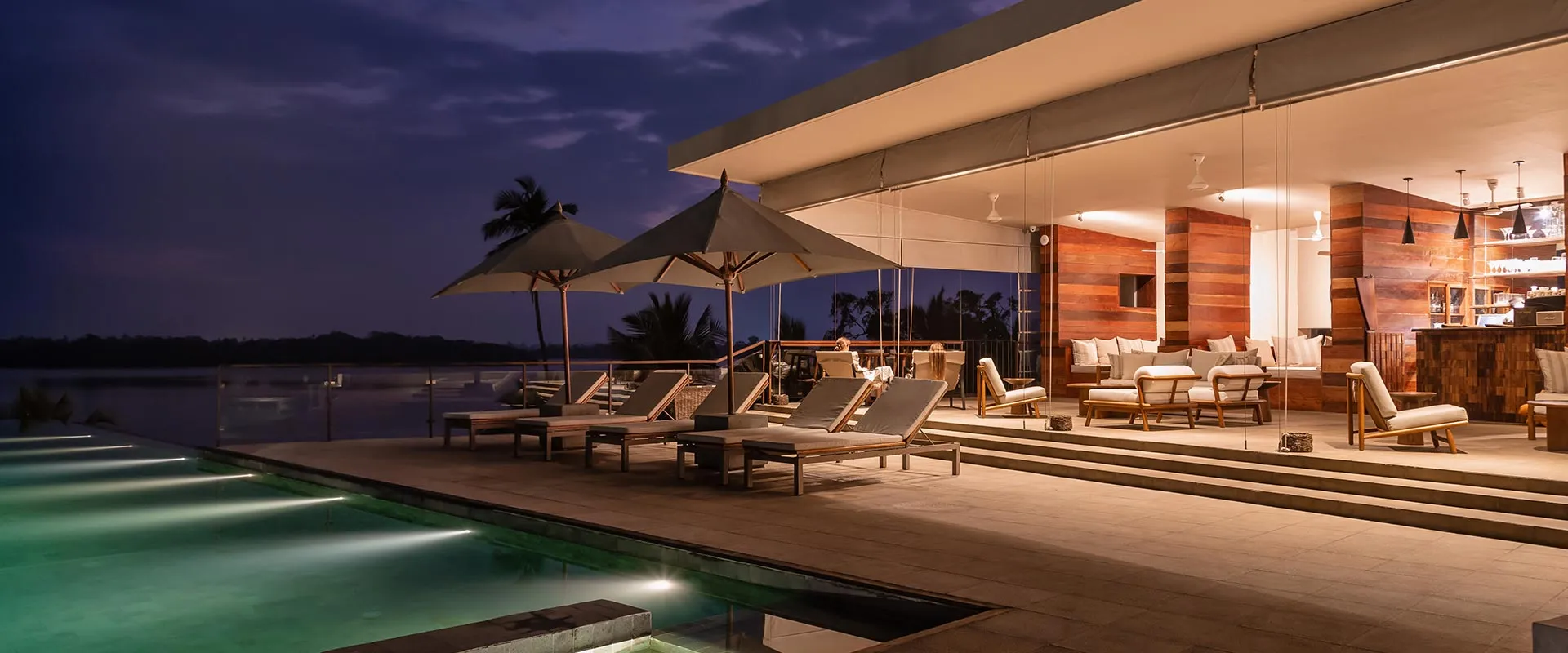
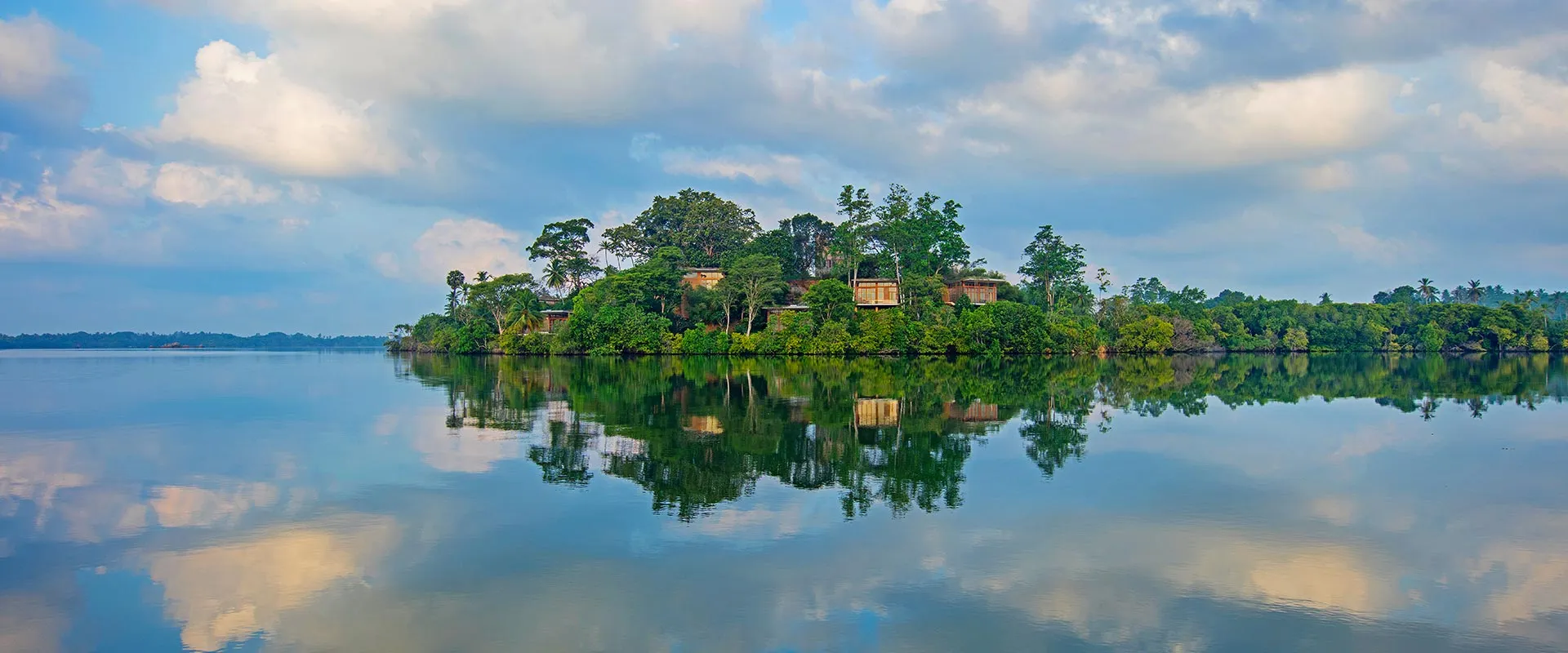
Approach Tri by water and the logic of the place declares itself immediately: a three-storey tower clad in strips of cinnamon wood, rising from a spit of land on Koggala Lake, with a spiral of low villas curling away from its base like a shell uncoiling. There is no grand porte-cochere, no marble lobby. Guests generally arrive the way the site always intended, crossing the lake by boat, watching the tower resolve out of the tree line before the rest of the hotel becomes visible at all.
This is a hotel built to a mathematical idea, which is a strange sentence to write about a building and stranger still to feel in person. The plan follows the Fibonacci sequence, the same proportional logic that describes a nautilus shell or the spiral of a fern unfurling, with the water tower as its fixed point and the guest villas spun outward from it in ascending, naturally proportioned increments. It sounds like an architect’s conceit until you are standing on a terrace at dusk, watching the tower’s silhouette catch the last light over water that Sri Lanka’s oldest maps have always marked as the island’s largest natural lake.
Tri is small by design: eleven rooms, a six-acre site, a single restaurant. It was never conceived to compete on scale with the larger resorts further down the south coast, but on the coherence of an idea carried through from architecture to material to operations. The result reads less like a hotel that added sustainability credentials after the fact, and more like a building whose environmental logic and its aesthetic logic were worked out on the same page.
About Tri
Tri began as an overgrown seven-year-old cinnamon plantation on the northern shore of Koggala Lake, bought in 2003 by the British photographer Rob Drummond and his wife, the yoga teacher Lara Baumann Drummond, founder of the Quantum Yoga method. It took over a decade for the couple’s plan to become a hotel: land clearance, permitting, and roughly two years of construction before Tri opened at the end of 2015, styled from the outset as one of Sri Lanka’s first contemporary, architect-led design hotels rather than a colonial-revival property in the island’s more familiar mould.
The building itself was designed by Raefer Wallis, an architect known for sustainability-first practice, working with the site’s existing topography rather than against it. The signature move is the Fibonacci spiral: a central three-storey water tower, clad in reclaimed cinnamon branches and topped with a viewing deck that reads the lake and the surrounding coconut country in a full circle, with eight villas arranged in a widening spiral around it. The geometry is not a decorative flourish laid over a conventional hotel plan; it is the plan. Circulation routes, sightlines, and the spacing between villas all follow the same proportional sequence found in the tower itself, which is part of why the property photographs so consistently well from the water: every angle was, in effect, worked out in advance.
Materials carry the same logic. Cinnamon wood, which the local spice trade typically discards as waste after the bark is stripped for export, clads much of the building’s exterior, weathering to a silvered grey that blends the villas into the surrounding tree cover rather than standing apart from it. Flooring, doors, and furniture are largely reclaimed jak wood, a durable local hardwood, worked by craftsmen in Sri Lanka rather than imported. Bathrooms mix hand-cut terrazzo, slate, and locally quarried granite, and even the terracing around the pool and gardens was built from crushed construction waste generated on site during the build. Living roofs and walls, planted rather than paved, mean several of the villas are genuinely difficult to pick out from the lake until you are close.
Inside, the mood is deliberately spare: white plaster, dark reclaimed timber, woven textiles, and large openings that erase the line between room and terrace. There is little in the way of applied decoration, which is consistent with the property’s stated design philosophy, summarised on site as creating more while consuming less, and looking to nature for the answer whenever a design question arises. The atmosphere that results is closer to a private architectural retreat than a conventional resort: quiet, unfussy, and organised around the lake rather than around the hotel’s own amenities.
Ownership has stayed close to the original idea since 2015. Rob and Lara Baumann Drummond remain closely associated with the property, and Tri now sits within the Teardrop Hotels collection, a Colombo-headquartered group of small, independently minded Sri Lankan properties, which gives the hotel access to a wider booking and operations network without diluting the single-site character that defines the guest experience. It is still, in every material sense, a founder’s building: the scale, the material choices, and the pace of a stay all trace back to the couple who cleared that first patch of cinnamon scrub in 2003.
Location
Tri sits on Koggala Lake, in the Pelassa area near Ahangama, within Sri Lanka’s Galle District and Southern Province, the stretch of coast that has become the country’s most concentrated run of design-led hotel openings over the past decade. The lake itself is the largest natural body of fresh water on the island, ringed with cinnamon plantations, small fishing settlements, and low forest, and separated from the Indian Ocean by a narrow strip of coconut palm and beach.
Bandaranaike International Airport (CMB), north of Colombo, is the nearest international gateway, roughly two and a half hours away by road on the Southern Expressway. Guests who prefer to skip the drive can arrange a Cinnamon Air seaplane transfer that lands directly on the lake, followed by a short boat crossing to the hotel, a genuinely dramatic way to arrive that also happens to be the lowest-impact option available.
Galle Fort, the walled Dutch colonial town that anchors most south coast itineraries, is roughly 45 minutes away by road or tuk-tuk, close enough for a half-day trip without committing an entire day to it. The surf coast running through Ahangama, Midigama, and Weligama, increasingly the south coast’s centre of gravity for its own kind of design-conscious travel, is a similarly short run from the hotel, putting a genuine spread of beach, reef break, and reef-adjacent café culture within easy reach of a base that is itself set back from the coast on quieter water.
The climate follows the rest of the south coast: a dry season from roughly December through March with the most reliable sun and calm lake conditions, a workable shoulder into April, and a wetter, cloudier stretch from the southwest monsoon starting in May that tends to send visitors toward the island’s east coast instead.
Rooms & Suites
Accommodation at Tri splits between the water tower and the freestanding villas that spiral away from it, eleven keys in total.
Tri Tower Bedrooms occupy the water tower itself, three rooms of around 25 square metres each, stacked with panoramic windows that take in the lake, the gardens, and the tree line beyond. These are the most architecturally immersive rooms on the property, built from the same reclaimed timber and terrazzo palette as the villas but with the added drama of the tower’s height and its curved, windowed form. They suit travellers who want to feel the building’s design idea most directly, and who don’t need a private plunge pool to feel looked after.
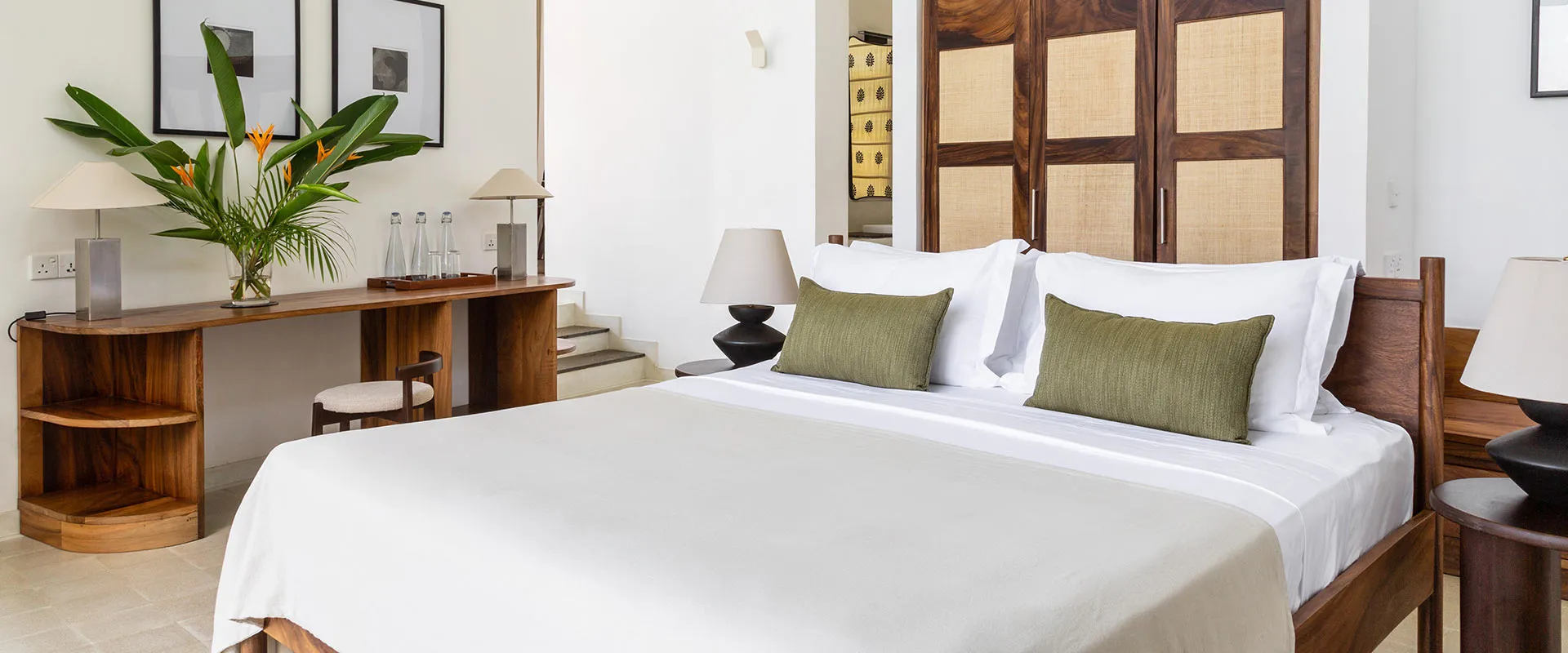
Lake Villas, at around 72 square metres, are freestanding structures with private terraces angled toward the water; some categories add a private plunge pool. Sunset Villas run a similar footprint, from roughly 70 to 80 square metres depending on whether a plunge pool is included, oriented to catch the lake’s evening light. Both categories give guests a genuine sense of separation from neighbouring villas, thanks to the spiral layout and the planting between them, with king beds, ensuite bathrooms finished in slate and hand-cut terrazzo, rainfall showers, and organic amenities as standard.
The Family Villa with Pool adds the layout flexibility larger groups need, with floor-to-ceiling glazing and enough separation between sleeping areas to work for two generations travelling together, still built to the same material palette as the rest of the property.
At the top of the range, the Tri Villa is the largest accommodation on site at around 140 square metres, a two-storey structure with its own pool and the most generous terrace footprint of any category, suited to a couple wanting the most space and privacy the property offers, or to a small family willing to trade a second bedroom for scale.
Across every category, the throughline is natural light, cross-ventilation, and materials sourced or reclaimed close to the site: none of the rooms lean on air-conditioned enclosure as the default experience, and most are designed to be lived in with doors and screens open for large parts of the day.
Restaurants & Bars
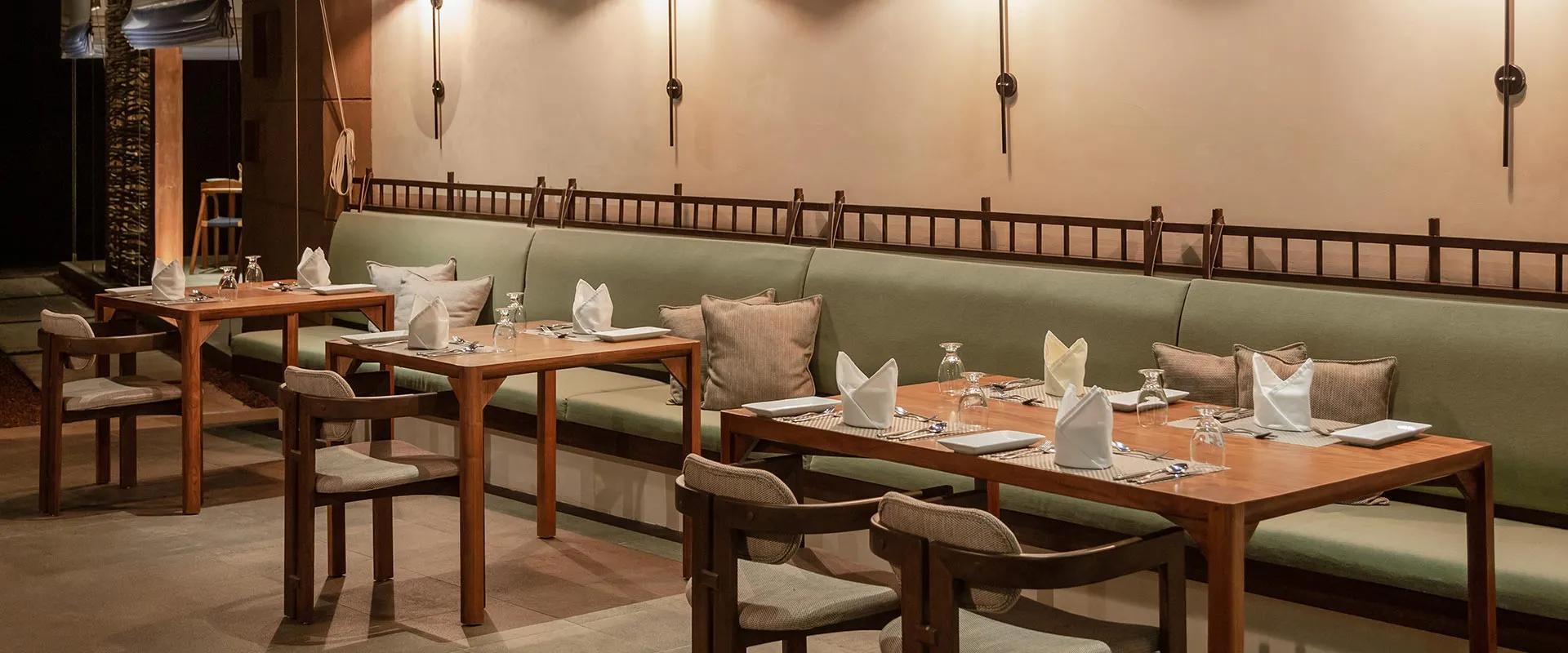
Tri operates a single main restaurant, positioned beside the infinity pool and open to the lake view on all sides, which keeps the food programme tightly focused rather than spread across multiple concepts. The kitchen works a daily-changing menu built around fresh, seasonal ingredients, sourced locally where possible, and described consistently by visitors as a fusion of Sri Lankan classics with lighter, more contemporary technique rather than a straight rijsttafel-style curry spread. Dinner is typically served as a multi-course set menu, with a simpler lake-view menu available for lighter meals and room service.
The water tower doubles as the property’s bar, with near 360-degree views over the lake that make it the obvious spot for a sundowner before dinner. Beyond the two fixed venues, Tri leans into its own geography for private dining: tables can be set at the top of the water tower, on the private jetty over the water, poolside, or under one of the property’s banyan trees, each a genuinely different vantage point on the same small stretch of lake.
Wellness
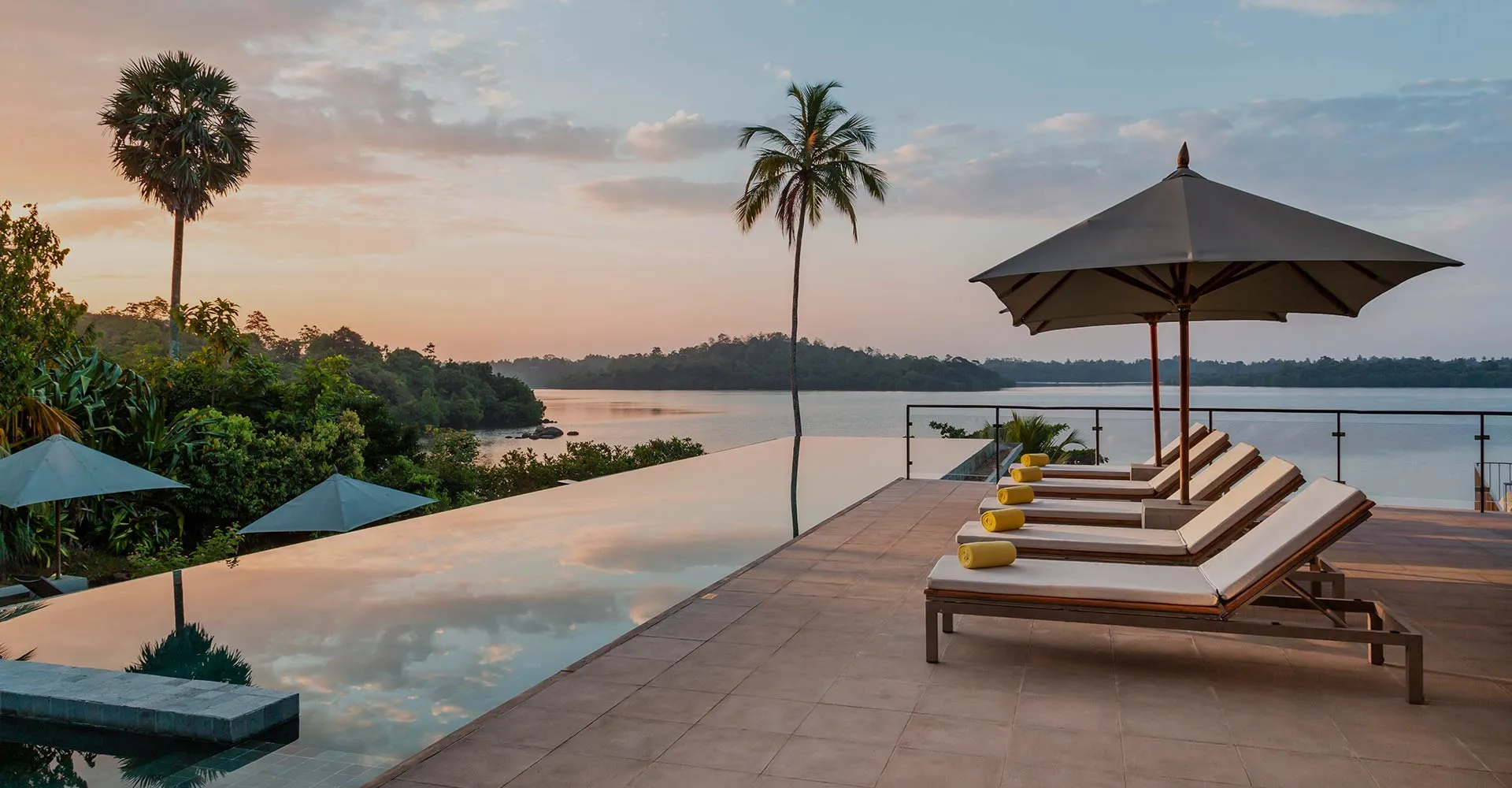
The pool is the property’s social centre: a 21-metre infinity edge facing directly onto Koggala Lake, run with ionising filtration rather than a heavy chlorine dose, in keeping with the wider low-impact approach to the site.
Wellness at Tri runs deeper than a spa menu, largely because of Lara Baumann Drummond’s own background as a yoga teacher and the founder of the Quantum Yoga method. Daily classes run from an elevated, open-sided yoga shala set above the tree canopy, timed around the cooler parts of the day. The spa itself offers Ayurvedic treatments, including shirodhara, alongside more conventional massage therapies, with a steam cavern among the treatment facilities. A small library on site gives guests a quiet, air-conditioning-free alternative to the room for slower afternoons.
Experiences
Because the hotel is built on the lake rather than the coast, its signature activities are water-based and, for the most part, low-key by design. Boat trips out onto Koggala Lake are the obvious starting point, taking in the small forested islands, cinnamon-growing hamlets, and the lake’s resident population of water monitors and birdlife; the property’s own transfers, largely by traditional fishing boat, double as one of the more atmospheric ways to see the lake without a dedicated excursion.
On land, the hotel can arrange visits to see Koggala’s stilt fishermen, a local fishing technique now largely staged for visitors but still a recognisable piece of south coast iconography, along with cinnamon-processing demonstrations and Sri Lankan cooking sessions that draw on the same kitchen supplying the restaurant. Golf, village walks, and cultural excursions further afield toward Galle round out the property’s activity list.
For travellers who came south for the coast rather than the lake, Ahangama and Weligama’s beach breaks are close enough to combine easily with a stay at Tri, whether for a morning surf lesson or simply an afternoon on sand rather than water.
Sustainability
Tri’s environmental programme is built into the operation rather than bolted on. The property runs on solar power, including solar water heating, and harvests rainwater on site; water gardens and swales across the grounds are designed specifically to manage runoff and reduce shoreline erosion, a programme the hotel supplements with active mangrove planting along the lake edge. Lighting throughout is LED, and appliances run on inverter technology to cut consumption further. Plastic is excluded from guest operations, and the boats used for lake transfers favour traditional or electric propulsion over diesel outboards.
Construction leaned on the same principle: cinnamon wood cladding repurposes a waste product of the local spice trade, jak timber used throughout is reclaimed rather than newly felled, granite and terrazzo are locally sourced, and the terracing around the pool and gardens was built from crushed waste generated during the build itself rather than trucked-in aggregate. The hotel works with a Colombo-based environmental consultancy on an ongoing carbon-reduction programme, and has documented the site’s biodiversity in detail, recording 51 bird species, 18 butterfly species, and nine dragonfly species across the grounds, a level of ecological bookkeeping unusual for a property of this size.
Who Is It For
Tri suits travellers who care about architecture and want to feel a building’s idea rather than just look at it: the Fibonacci plan and the material choices reward a slower stay, not a one-night stopover. Couples and honeymooners are well served by the villa categories with private plunge pools and the property’s generally hushed, adults-friendly pace, while the Family Villa gives multi-generational groups a workable option without diluting the design intent. Anyone building a trip around yoga, Ayurveda, or a genuine slow-travel pace will find the programme here more substantial than the usual hotel spa menu. It is a less obvious fit for travellers who want direct beach access or a livelier social scene: Tri’s water is a lake, its energy is quiet, and its restaurant is a single, unhurried table rather than a choice of venues.
Practical Information
Rates at Tri start from an indicative USD 650 per night and rise through the villa categories to the two-storey Tri Villa; travellers should confirm current pricing and meal-plan inclusions directly with the hotel or a specialist agent, since rates on a property this small move with season and availability. Check-in is from 3:00 PM and check-out by 11:00 AM, with early check-in or late check-out available on request, subject to occupancy.
The nearest international airport is Bandaranaike International Airport (CMB) near Colombo, roughly two and a half hours away by road via the Southern Expressway, or reachable by Cinnamon Air seaplane directly to the lake followed by a short boat transfer. December through March is the most reliable weather window on this stretch of coast, with April a workable shoulder month before the southwest monsoon sets in from May. Most visitors give Tri two to three nights, generally as one leg of a longer south coast itinerary rather than a stand-alone destination.
Nearby
Koggala Lake itself is the property’s immediate landscape, worth exploring by boat regardless of how long the rest of the stay runs. Galle Fort, the UNESCO-listed walled town of Dutch ramparts, boutique shopping, and harbour views, sits around 45 minutes away by road and remains the standard half-day excursion for guests staying anywhere on this stretch of coast. The surf towns of Ahangama and Weligama, both a short drive from the hotel, have become the south coast’s parallel design-and-café scene over the past several years, with reef and beach breaks that suit everyone from first-time surfers to more experienced wave-hunters, making Tri a natural, quieter base from which to dip into either.
In pictures
On the map
Koggala, Sri Lanka
Questions
Frequently asked
How many rooms does Tri have, and what are the categories?
Tri has just 11 keys across two settings. Three Tri Tower Bedrooms (around 25 square metres) sit inside the central water tower with panoramic lake and countryside views. The remaining eight are freestanding villas ranged around the spiral: Lake Villas and Sunset Villas (roughly 70 to 80 square metres, some with private plunge pools), a Family Villa with pool, and the largest, the two-storey Tri Villa at around 140 square metres.
Is Tri a beach hotel?
Not directly. Tri sits on the shore of Koggala Lake, Sri Lanka's largest natural lake, rather than on the open sea. The south coast's beaches, including the surf breaks at Ahangama and Weligama, are a short tuk-tuk or car ride away, which makes Tri a natural pairing with a few nights at a beachfront property rather than a substitute for one.
How do guests get to Tri from the airport?
The nearest international gateway is Bandaranaike International Airport (CMB) near Colombo, roughly two and a half hours away by road on the Southern Expressway. Cinnamon Air also operates seaplane transfers that land directly on Koggala Lake, with a short boat crossing to complete the journey to the hotel.
What does Tri actually do on sustainability, beyond marketing language?
The property runs on solar power for electricity and water heating, harvests rainwater, and operates a plastic-free policy across guest areas. Buildings are clad largely in cinnamon wood, a waste product of the local spice industry, alongside reclaimed jak timber and locally quarried granite. Tri also plants mangroves along the shoreline to reduce erosion and works with a Colombo-based environmental consultancy on an ongoing carbon-reduction programme.
When is the best time to visit?
December through March is the reliable dry season on Sri Lanka's south coast, with calm water on the lake and consistent sun. April is a workable shoulder month; the southwest monsoon from May tends to bring more rain and cloud to this side of the island.
Same destination
More hotel guides in Sri Lanka
Thiranagama, Sri Lanka
Haritha Villas + Spa
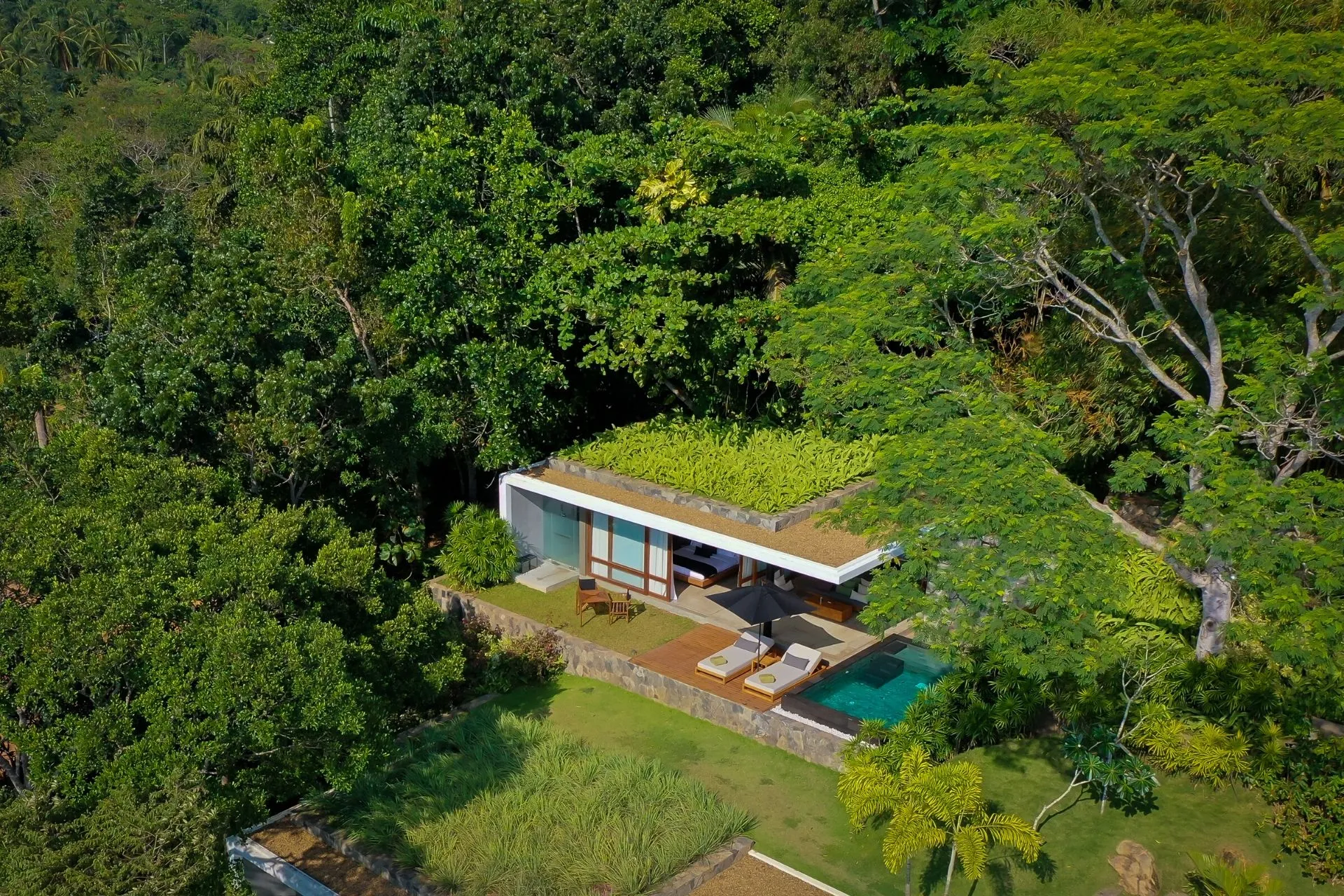
Nine keys on a forested hilltop above Thiranagama, built around private saltwater plunge pools rather than a stretch of sand.
From $460 per night
Tangalle, Sri Lanka
Kayaam House
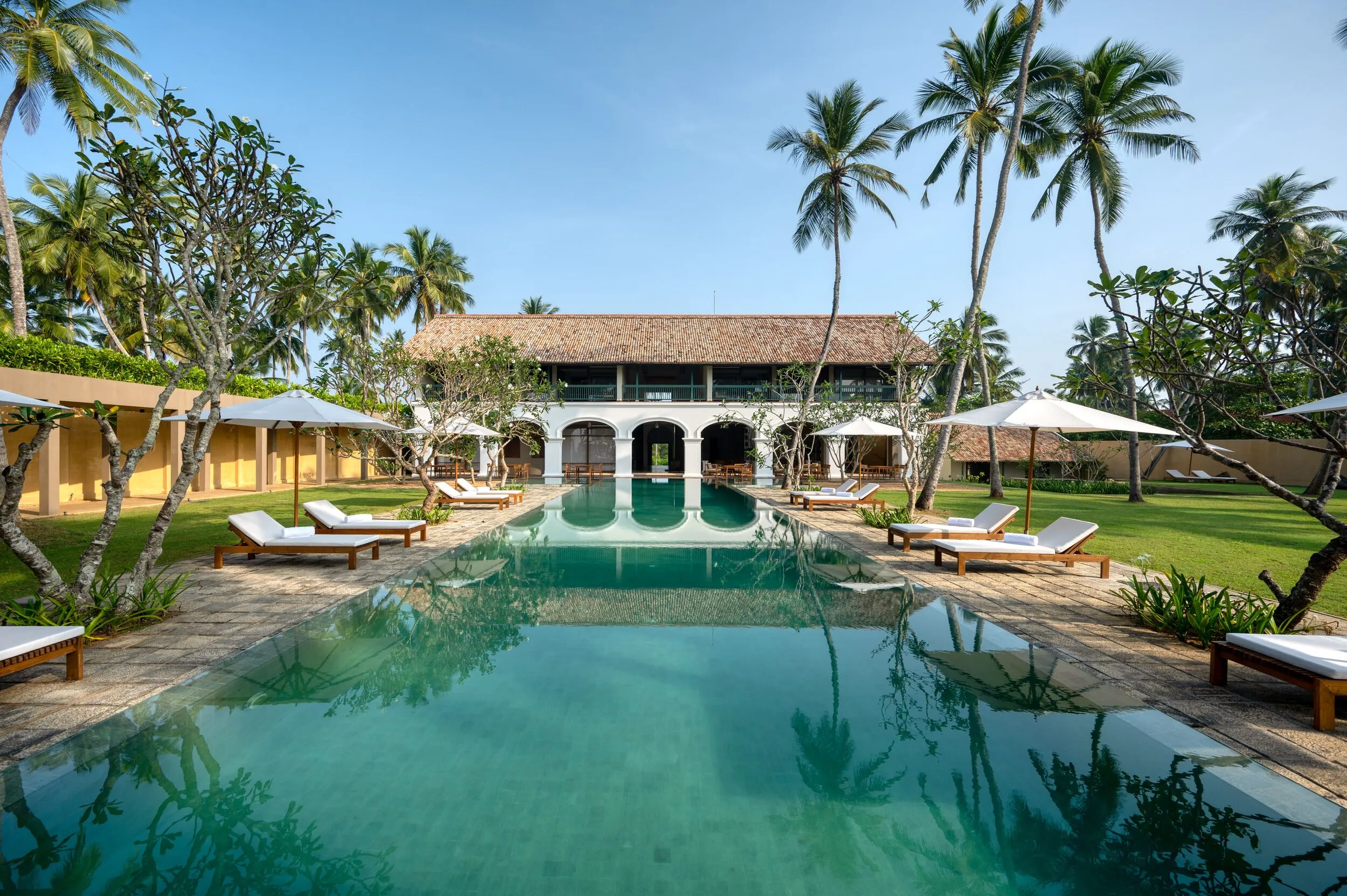
Nine keys, a resident Ayurvedic doctor and a private stretch of turtle-nesting coastline near Tangalle.
From $700 per night
Alawatugoda, Kandy, Sri Lanka
Aarunya Nature Resort
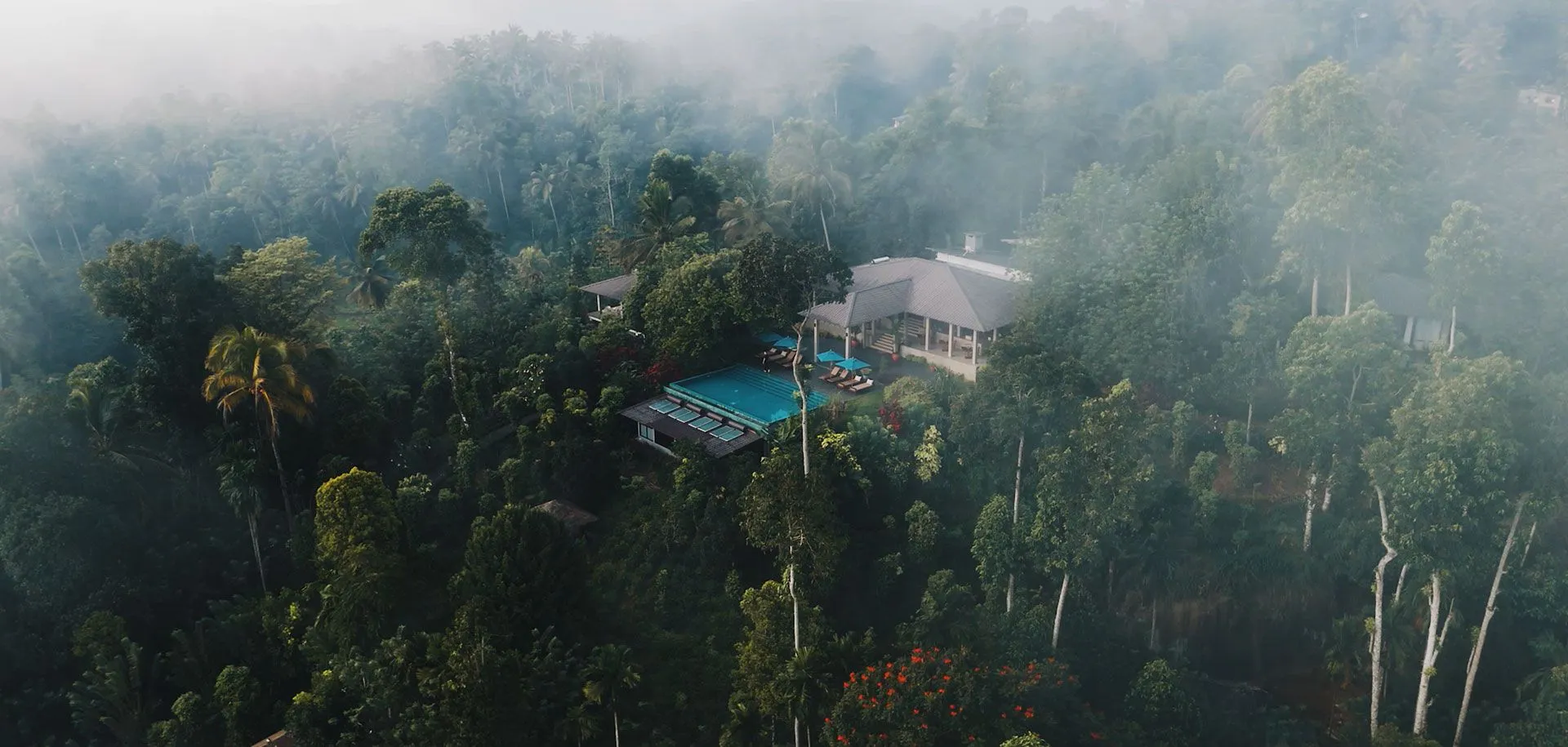
A regenerative hillside estate above Kandy, where private-pool villas sit inside a working tea and spice garden facing the Knuckles range.
From $520 per night