Barnard, United States
Twin Farms
A Nobel laureate's wedding-gift farm turned into New England's most complete all-inclusive estate, 28 individually designed cottages scattered across 300 private acres.
- Rates from
- From $2,200 per night, all-inclusive (double occupancy)
- Nearest airport
- Lebanon Municipal Airport (LEB), New Hampshire
- Transfer
- About 45 minutes by road
- Best months
- September to October (foliage) and January to March (private ski trails)
In 1928, the novelist Sinclair Lewis bought a 300-acre farm in the hills above Barnard, Vermont, as a wedding gift for his bride, the journalist Dorothy Thompson, who had agreed to marry him on the condition that he find her a Vermont property with sweeping lawns, orchards, and what she called delicious air. Lewis, who would become the first American to win the Nobel Prize in Literature, wrote much of “It Can’t Happen Here” at the farm, a novel about America’s slide into authoritarianism shaped in part by Thompson’s own reporting from Nazi Germany, reporting that got her expelled from the country in 1934. For thirty years the couple entertained a stream of writers, editors and political figures at Twin Farms before their marriage ended and Thompson kept the property until her death in 1961.
That literary pedigree would be reason enough to visit if Twin Farms were simply a well-preserved farmhouse with a plaque. It is not. Since the Hawaiian publishing family Twigg-Smith bought the estate as a private retreat in 1974 and gradually opened it to guests, first as an informal bed-and-breakfast in the late 1980s, then as a fully realized resort from 1993 onward, Twin Farms has become something closer to a private country estate that occasionally admits paying visitors: 28 individually designed cottages and suites scattered across the original 300 acres, an all-inclusive rate that covers essentially everything from the wine list to the ski trails, and a Forbes Five-Star rating it has held, by most accounts, longer than any other all-inclusive property in the world.
The scale of what is included is unusual even within the crowded field of “luxury all-inclusive.” Meals, alcohol, activities and equipment are standard fare for the category; what sets Twin Farms apart is the range and seriousness behind each one, a 15,000-bottle wine cellar, six private ski trails with no one else on them, a cedar-built Japanese-style bathhouse in the woods, and a museum-quality contemporary art collection, works by David Hockney, Cy Twombly and Jasper Johns among them, hung throughout guest cottages rather than confined to a lobby. The result reads less like a themed resort experience than an extremely well-funded version of staying at a friend’s remarkable house, if that friend happened to own several Twomblys and a stocked trout pond.
This is a guide written from research and public reporting on Twin Farms, not from a stay there, and it should be read accordingly: as an orientation to what the estate is, how it operates, and who is likely to get the most from a visit, rather than a first-hand account of any particular room, meal or season.
Why It Stands Out
Twin Farms occupies a narrow category of hotel that markets itself almost entirely on the strength of what it does not ask guests to think about. There is no dinner check, no bar tab, no rental desk for skis or canoes, no calculation of what an extra bottle of wine will cost at the end of the stay. The all-inclusive rate is genuinely comprehensive rather than a marketing gesture bolted onto an à la carte property, and the resort has built its reputation on the argument that removing those small frictions changes the character of a stay more than any single amenity could.
What separates Twin Farms from other all-inclusive properties chasing the same promise is the density of what actually sits behind that rate. Most all-inclusive resorts standardize; Twin Farms individualizes. No two of its 28 accommodations were designed by the same hand to the same brief, the wine cellar runs to roughly 15,000 bottles rather than a house list, and the six ski trails carved into the estate’s own hillside exist for the sole purpose of guests skiing them without a lift line or another skier in sight. It is a resort built less around a checklist of inclusions than around the idea that a genuinely private estate, staffed and stocked at this level, is the actual product.
The Sinclair Lewis and Dorothy Thompson history gives the estate a literary weight that most countryside luxury hotels have to manufacture or borrow. Lewis did not simply pass through Barnard; he wrote here, entertained here, and the farm he bought as a wedding gift became, for three decades, an unofficial gathering point for a certain strand of American literary and political life. The current resort has generally chosen to keep that history visible rather than curate it away, preserving the 1795 Main House as the estate’s working center rather than converting it into an interpretive display.
Architecture
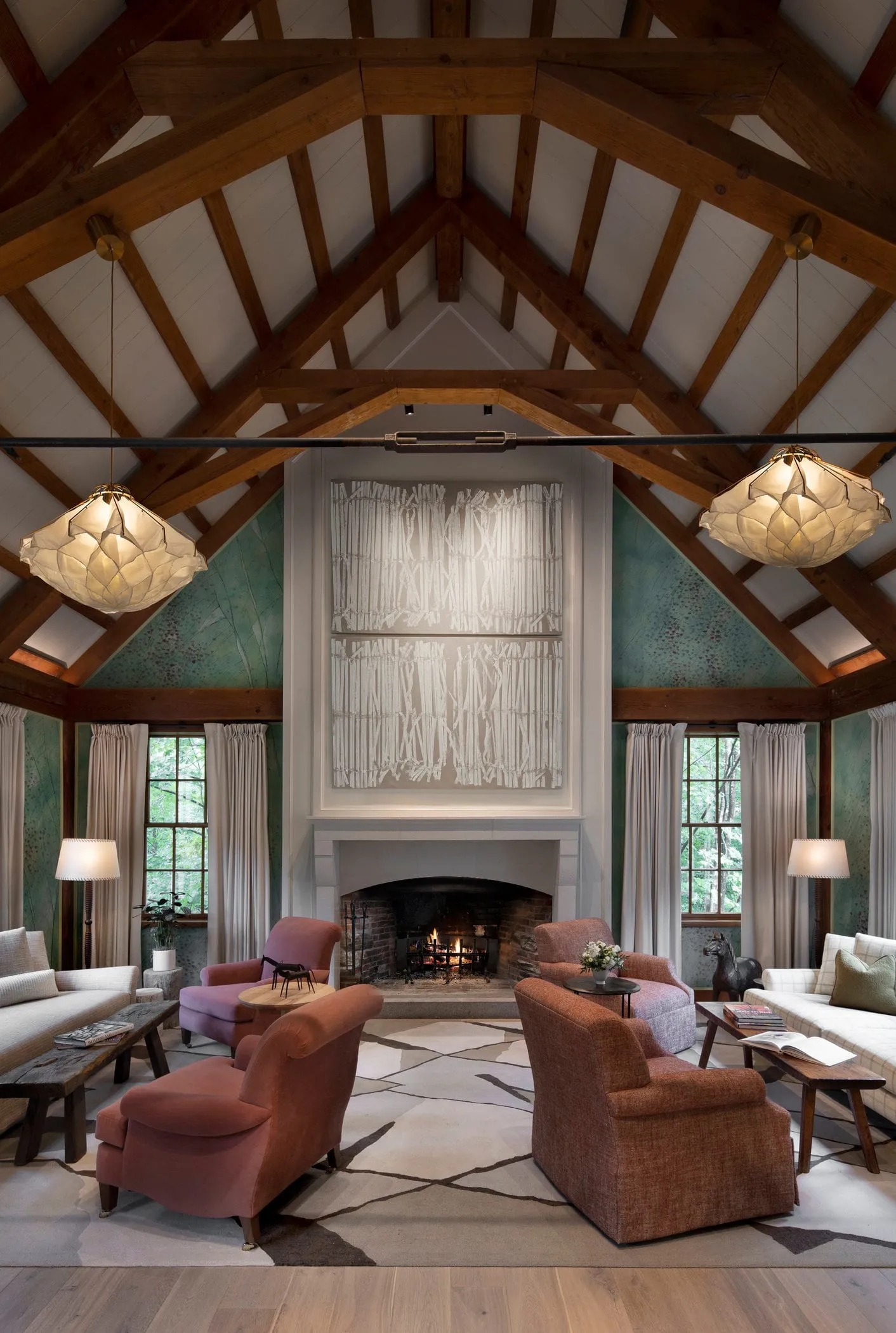
The Main House, a farmhouse dating to around 1795, anchors the estate both physically and symbolically: it is the building Lewis and Thompson actually lived in, and it remains the hub for dining, common areas and several of the resort’s guest rooms. Everything else at Twin Farms has been built up around it over three distinct phases of expansion, each with a different architectural signature rather than a single house style imposed across the property.
The first wave of development, in 1993, came under interior designer Jed Johnson, who created the initial 15 accommodations and set the template of treating each cottage as a discrete design project rather than a repeated unit. Later expansion brought in architect Peter Bohlin, whose firm is perhaps best known outside Vermont for designing Apple’s retail stores and the main Microsoft campus buildings, to design the Farmhouse at Copper Hill and other structures on the estate, working within a material language of wood, stone and glass suited to the surrounding forest rather than imported from elsewhere. Interior designer Thad Hayes refined interiors across later additions, and landscape architect Dan Kiley, one of the most significant American landscape designers of the twentieth century, shaped the grounds to read as a natural topography rather than a manicured resort landscape.
The estate’s newest structures, eight Treehouses that opened in 2023, mark a further architectural departure again, elevated structures set into the tree canopy that update the property’s design vocabulary for a new generation of guests without displacing the older cottages around them. Across all of it, the guiding principle appears to be additive rather than uniform: each phase of construction has been allowed its own architectural identity, tied together by the forest, meadows and ponds of the estate rather than by a shared façade.
Interior Design
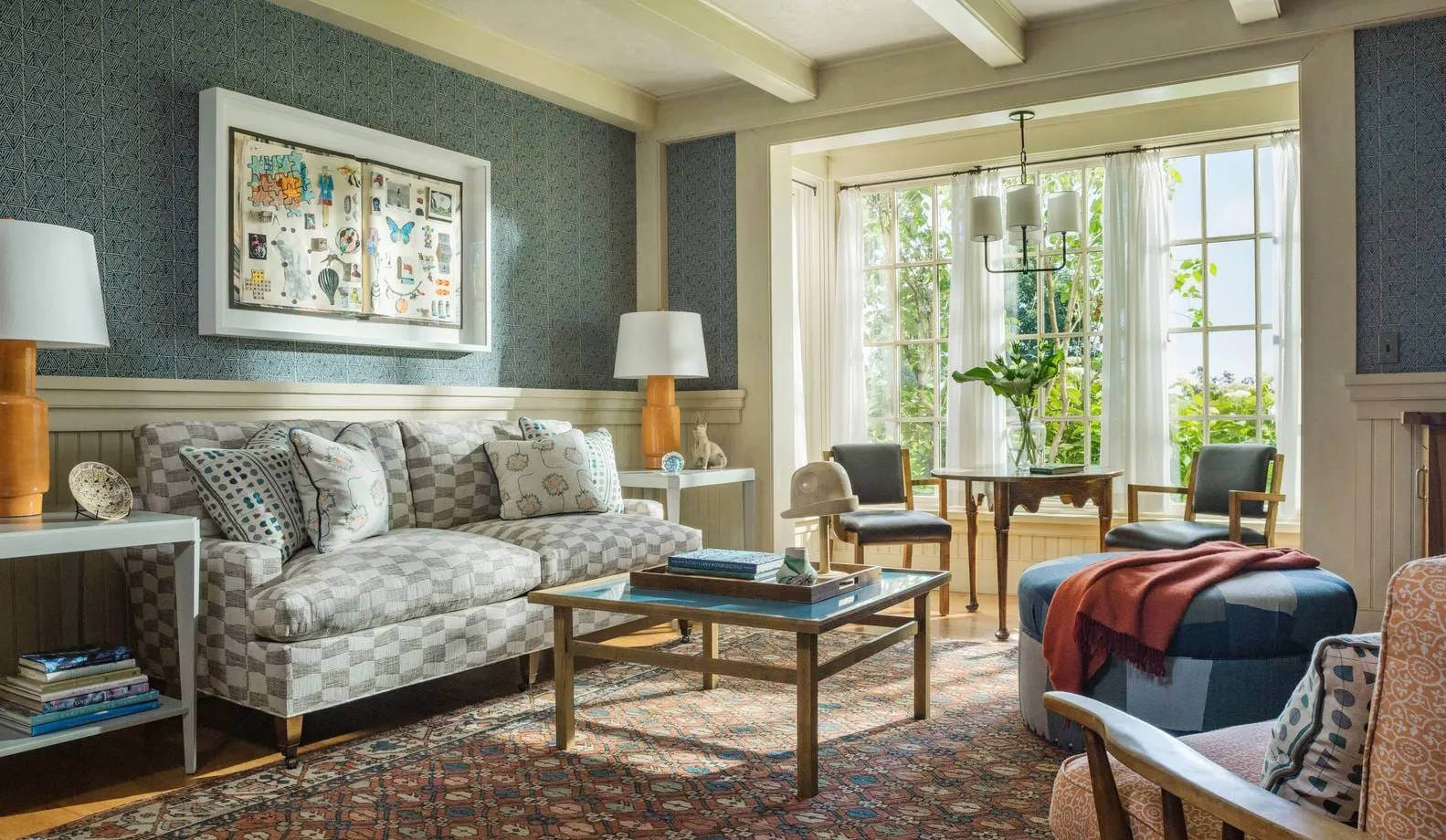
Inside, the defining feature of Twin Farms’ interiors is not a signature palette or material but the presence of serious contemporary art, drawn from the private collection amassed by the Twigg-Smith family, including works attributed to David Hockney, Cy Twombly and Jasper Johns displayed inside guest cottages rather than sequestered in public galleries. It is an unusual choice for a hotel operator to let museum-quality pieces live in rooms that guests sleep, read and have breakfast in, and it is part of what gives Twin Farms its particular texture: less a hotel decorated to a brand standard than a private collection that happens to be inhabited by paying guests.
Because each cottage was designed independently, often by a different architect or designer working to a different brief, interiors vary considerably between categories and even between individual units within a category. Cottages built in the Jed Johnson era carry a more eclectic, personality-driven design sensibility, layering textiles, art and furniture in ways that read as assembled rather than specified. The Farmhouse at Copper Hill, designed by Bohlin with interiors by Thad Hayes, leans toward a calmer, more architectural register, with private entrances connected by a shared lounge and library. The newer Treehouses bring a different material and structural logic again, built to sit within the forest canopy rather than beside it.
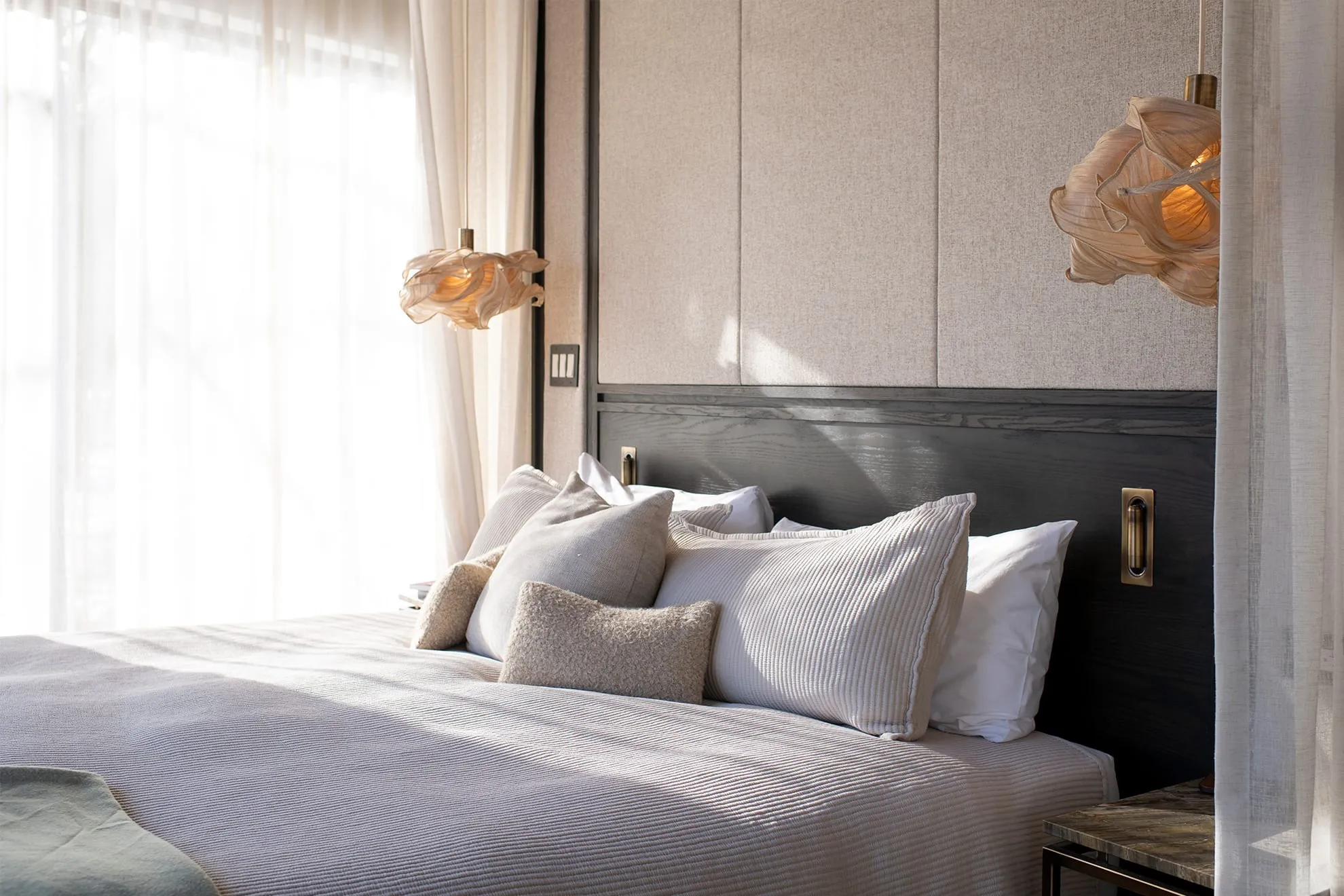
What ties the interiors together across categories is less a shared aesthetic than a shared standard: fireplaces, screened porches, premium linens and Versante toiletries appear consistently. The effect across the estate is closer to visiting a scattered collection of well-appointed private houses than moving between numbered rooms in a single building.
Atmosphere
Twin Farms works hard to feel unhurried, and the mechanics behind that feeling are largely structural. With only 28 accommodations across 300 acres, guest density is extremely low by the standards of any resort, let alone one with a working restaurant, spa, ski trails and pond. Cottages are spaced with enough distance and forest cover between them that neighboring guests are rarely visible, and there is no central pool deck or lobby bar built for socializing among strangers; interaction with other guests is, for the most part, optional rather than architecturally encouraged.
The estate leans into Vermont’s seasons rather than working against them. Autumn brings the state’s well-known foliage directly onto the property’s own hardwood forest, winter turns the private ski trails and Copper Pond into a self-contained snow-sports base, and summer opens the pond to swimming, canoeing and fly fishing alongside the biking network. Evenings tend to center on the fireplace in each cottage and the shared ritual of cocktails and canapes before a seated, multicourse dinner, a rhythm that repeats through the stay rather than varying by day.
Because the resort is adults-only, the atmosphere carries a consistent register throughout: quiet rather than boisterous, romantic rather than family-oriented. It is, by design, a place for couples and small groups of friends rather than a base for a broader family trip.
Rooms and Suites
Twin Farms offers 28 accommodations across five distinct categories, none built to a repeated floor plan. The four rooms in the Main House occupy the estate’s original 1795 farmhouse, the most historically loaded of the categories, spacious rooms described by the resort itself as steeped in the building’s own history. The Lodge holds two suites with a shared common area, positioned close to the Main House for guests who want easy access to the dining rooms without a longer walk through the grounds.
The Farmhouse at Copper Hill comprises four suites with private entrances connected by a shared lounge and library, designed by architect Peter Bohlin with interiors by Thad Hayes, and generally regarded as some of the more architecturally considered accommodations on the estate. The ten freestanding Cottages, scattered through the wooded acreage, come with fireplaces and screened porches and represent the core, most numerous category on the property, each with its own name and design identity rather than a standardized layout.
The eight Treehouses, added in 2023, are the newest and most structurally distinctive category, elevated among the trees and built to evoke childhood memories of adventure and independence, translated into an adult luxury register. Every category includes the same baseline of fireplace, Wi-Fi, premium linens and same-day laundry, with the differences between categories coming down to architectural character and proximity to the Main House rather than a tiered amenity structure.
Dining
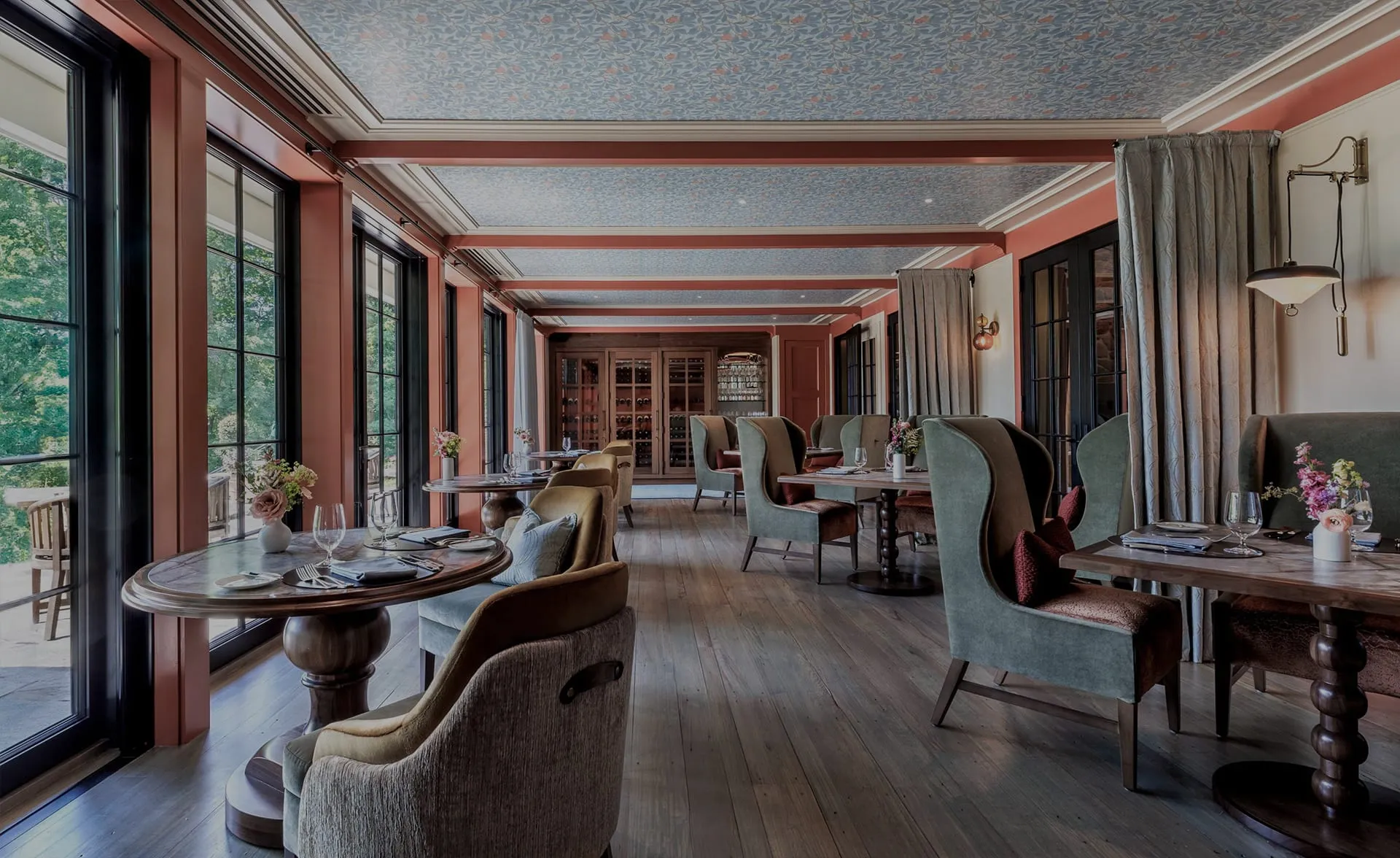
Dining at Twin Farms is included in full rather than offered as an add-on, and it runs on a structure built around a small number of venues used repeatedly rather than a rotating cast of restaurants. The Main Dining Room serves breakfast from 7 to 10am and lunch from 12:30 to 2pm, with dinner by reservation between 6 and 8pm, and offers guests a choice between an à la carte menu of seasonally driven hors d’oeuvres, entrées and desserts, or a multicourse tasting menu that changes nightly across a multi-night stay so returning guests are not served the same dinner twice. The kitchen is led by Executive Chef Nathan Rich alongside Executive Pastry Chef Chris Wilson and Chef de Cuisine Sylvain Courbet.
Twiggs, a more recent addition, offers an Argentine-style wood-fired grill in an indoor-outdoor setting as a deliberately more casual counterpoint to the Main Dining Room, with steaks, chops, fish, pasta and burgers built for guests who want a looser evening. For a smaller number of guests, a chef’s table experience seats up to eight people around a curated, multicourse tasting menu paired with reserve wines, offered at an additional per-person charge above the standard inclusive rate.
Sourcing leans hard on the surrounding region: butter and cheese from local Vermont dairies, beef, chicken and pork from nearby farms, and produce, honey and maple syrup drawn from the estate’s own gardens and hives where possible. The wine program is anchored by a cellar of roughly 15,000 bottles, and the inclusive rate covers a genuinely broad range of wines, beers and spirits, along with evening cocktails and canapes ahead of dinner. In-cottage dining, forest picnics and customized box lunches are all available on request.
Spa and Wellness
Wellness at Twin Farms centers on the Bridge House Spa, a small facility with only three treatment rooms, appointments at which are reserved exclusively for resort guests and reportedly booked out months in advance given the limited capacity. The spa menu covers massage, face and body treatments, offered either in the spa itself or in guests’ own cottages, and is paired with a fully equipped fitness center stocked with Technogym cardio and strength equipment, a NordicTrack bike, a Concept2 rower and a dual Smith machine, alongside complimentary fitness classes and optional personal training.
The estate’s most distinctive wellness feature is The Onsen, a cedar-clad bathhouse set apart in the woods and built around a Japanese-style furo bath heated to roughly 104 degrees Fahrenheit, with separate men’s and women’s sides as well as a private option for two. It is an unusual amenity for a Vermont country estate to offer, drawing on Japanese bathing tradition rather than a generic spa vocabulary, and it functions as a standalone experience as much as a spa add-on, a quiet soak in the forest rather than a treatment room extension.
Beyond the spa and bathhouse, the resort folds movement into the wider grounds: guided meditation, paddleboard yoga, mat pilates and labyrinth walks are offered across the 300 acres, alongside hiking and biking that double as a lower-key form of wellness. Spa treatments are the one significant category not covered by the all-inclusive rate.
Experiences
The activity program at Twin Farms is built to run across all four seasons rather than concentrating around a single warm-weather window, and virtually all of it, equipment and instruction included, sits inside the nightly rate. Warmer months bring hiking and biking across the estate’s trail network, with a fleet of cruisers, hardtails and pedal-assist mountain bikes available, including routes that run nine miles down the road into the village of Woodstock. Copper Pond, the estate’s private nine-acre pond, is stocked for fishing and open for swimming, canoeing, kayaking and paddleboarding, with a private twilight canoe outing available on request, and Silver Lake sits about a mile and a half further down the road for guests who want a change of water.
Winter shifts the program onto snow: six private downhill ski trails cut into the estate’s own hillside operate without lift lines, supplemented by cross-country skiing, fat-tire biking, snowshoeing, sledding, ice skating and ice fishing. Tennis, archery, axe throwing, fly-fishing lessons and a bee tour round out the shoulder seasons, and evening bonfires with s’mores are a regular fixture.
A number of these experiences are built around the estate’s own produce and history: the bee tour connects directly to the honey served at breakfast, and cooking demonstrations draw on the same kitchen and garden supplying the dining rooms. The range is broad enough that a multi-night stay can be built almost entirely around on-site activity without ever needing to leave the 300 acres.
Who It Is For
Twin Farms is built for couples first, and its adults-only policy makes that intent explicit rather than incidental. It suits travelers who want the mechanics of a stay, meals, drinks, activities, laundry, entirely handled and included, freeing attention for the estate itself rather than for logistics. Guests with a genuine interest in contemporary art, architecture or design will find more substance here than at most countryside hotels, given how directly the collection and the building program are woven into the accommodations themselves rather than confined to public spaces.
It is also a strong fit for skiers and four-season outdoor enthusiasts who want private terrain without the infrastructure of a commercial ski resort, and for wine-minded guests drawn to a cellar of real depth rather than a standard hotel list. Because the resort does not admit children, it is not a fit for family travel, and travelers who prefer to pay only for what they use may find the all-inclusive structure less flexible than an à la carte luxury hotel.
Anyone drawn to the Sinclair Lewis and Dorothy Thompson history will find that thread handled with care, and literary-minded guests may get more out of a stay in the Main House, where that history is most directly present, than in the newer categories built later on the estate.
Best Time to Visit
Vermont’s autumn foliage season, generally running from mid-September through mid-October, is one of the most popular windows to visit, when the estate’s own hardwood forest turns alongside the wider region and the hiking and biking trails are at their most photogenic. Winter, roughly January through March, is the other clear high point given the estate’s six private ski trails and the broader snow-sports program, offering a version of a ski trip without lift lines, rental queues or other skiers on the mountain.
Summer brings warm-weather access to Copper Pond and Silver Lake, along with the full roster of hiking, biking, tennis and fly fishing, and suits guests prioritizing outdoor water activity over foliage or snow. Spring, Vermont’s mud season, tends to be the quietest and least recommended window, when trails are wettest and the landscape is between its more dramatic seasonal states; guests planning a visit built around outdoor activity are generally better served by one of the other three seasons.
How to Get There
The closest airport to Twin Farms is Lebanon Municipal Airport (LEB) in New Hampshire, about 45 minutes away by road and able to accommodate both commercial regional flights and private aircraft. Burlington International Airport (BTV) is a secondary option, roughly an hour and fifteen minutes to an hour and a half by car, offering a wider range of commercial connections. For guests arriving through a larger hub, Boston Logan International Airport is approximately three hours by road, and Manchester-Boston Regional Airport in New Hampshire runs to about two hours; New York City is roughly five hours by car for guests driving up from further south.
Most guests arrive by private car or a chauffeured transfer arranged through the resort’s concierge or a service such as Vermont VIP Services. The final approach runs through the village of Barnard itself: from Route 12, a right turn at the general store leads onto Royalton Turnpike, followed by about a mile and a half of road before two stone pillars and a wrought iron gate mark the estate’s entrance. The property also has a helicopter landing area for guests arriving by private helicopter rather than by road.
Nearby Experiences
The village of Woodstock, Vermont, roughly a 20-minute drive or a nine-mile bike ride from the estate, offers a well-preserved New England town center with galleries, shops and restaurants, and is the most common off-property outing for guests wanting a change of scene without a long drive. Silver Lake, about a mile and a half from Twin Farms, provides an alternative to Copper Pond for swimming and paddling.
The wider Upper Valley region along the Vermont-New Hampshire border holds a number of small-town and outdoor draws within reasonable driving distance, from covered bridges and farm stands to Dartmouth College in Hanover, New Hampshire, itself close to Lebanon Municipal Airport. Given how comprehensive the on-property program is, most Twin Farms stays are built around staying largely on the estate, with off-site excursions treated as an occasional change of pace rather than a core part of the itinerary.
Things to Know Before Booking
Twin Farms is an adults-only resort, and the booking policy reflects that directly: it is not set up for children or family travel. Minimum-stay requirements apply around weekends, holidays and peak periods such as foliage season and the winter months, so travelers should confirm specific date availability rather than assuming a single night is bookable year-round. Standard check-in is from 4:00pm, with check-out at 11:00am, though the resort can typically arrange lunch or afternoon tea for guests arriving earlier in the day.
The all-inclusive rate is broad but not universal: spa treatments at the Bridge House Spa are billed separately, as is the chef’s table experience, and any items beyond the included wine, beer and spirits list may carry an additional charge. Given the property’s remote, wooded setting, guests should also expect limited or no cell signal in parts of the estate, offset by the resort’s own Wi-Fi included in the rate. Because rooms and cottages vary so significantly by category, prospective guests with a strong design preference are generally well served by discussing specific accommodation options with the reservations team before booking.
Sustainability
Twin Farms sources as much of its kitchen supply as possible from Vermont farms, dairies and orchards working with organic and sustainable practices, supplementing outside purchases with produce, honey and maple syrup drawn from its own gardens and hives on the estate. The resort has been recognized with Forbes Travel Guide’s Verified Responsible Hospitality Award in acknowledgment of these sourcing and operating practices.
The 300-acre estate itself, shaped in part by landscape architect Dan Kiley to read as a natural topography of meadows, hardwood forest and ponds rather than a manicured resort landscape, functions as a working piece of Vermont countryside as much as hotel grounds, a framing that has been consistent since the Twigg-Smith family first held the property as a private residence in the 1970s and 1980s.
Practical Information
Twin Farms is located at 452 Royalton Turnpike, Barnard, Vermont 05031, on 300 acres of woods, meadows and ponds in the town of Barnard, roughly six miles from Woodstock, Vermont. It holds Forbes Travel Guide’s Five-Star rating, a distinction it has carried since 1996 and is generally cited as the longest-held Five-Star rating of any all-inclusive resort worldwide, and is a member of Relais & Châteaux.
Rates are all-inclusive of accommodation, all meals, evening cocktails and canapes, wine, beer and spirits, and the great majority of on-site activities and equipment, and should be read as an indicative “from” figure that varies considerably by cottage category, room, and season rather than a fixed nightly price; spa treatments and select premium experiences such as the chef’s table are billed in addition to the nightly rate. Check-in is from 4:00pm and check-out by 11:00am. The nearest airport is Lebanon Municipal Airport (LEB) in New Hampshire, about 45 minutes by road, with Burlington International Airport a secondary option roughly an hour and fifteen minutes to an hour and a half away. The resort is adults-only, and most guests find three to four nights sufficient to make use of the dining program, the spa and Onsen, and at least one or two of the estate’s seasonal activities without feeling rushed.
Editorial Conclusion
Twin Farms occupies an unusual position in American luxury travel: a resort with the literary weight of Sinclair Lewis and Dorothy Thompson behind it, the design ambition of a serious private art collection built into its cottages, and the operational completeness of an all-inclusive rate broad enough to cover a private ski hill and a 15,000-bottle wine cellar without a single line-item charge. Few properties combine that degree of historical substance with that degree of built-in generosity, and fewer still do it across a genuinely private 300-acre estate.
Its narrowness is also its clearest limitation: adults-only, remote, expensive, and built around a single register of quiet countryside luxury rather than variety. For the couple or small group it is built for, that narrowness reads less as a constraint than as the entire point, a fully resolved version of one specific kind of stay, delivered on 300 acres that have spent nearly a century being carefully looked after by people who, by most accounts, actually mean it.
In pictures
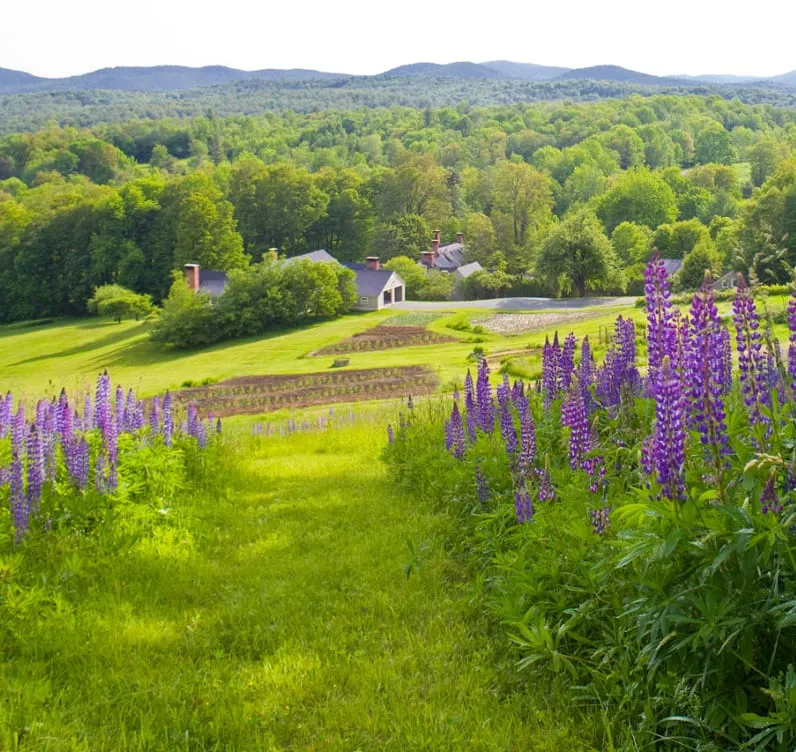
On the map
Barnard, United States
Questions
Frequently asked
What exactly does the all-inclusive rate at Twin Farms cover?
The nightly rate covers accommodation, a Vermont-style breakfast, a prepared-to-order lunch, a multicourse farm-to-table dinner every night including the night of arrival, evening cocktails and canapes, fine wines, beers and spirits, and access to essentially every on-site activity with equipment and instruction included: biking, hiking, tennis, canoeing, kayaking, paddleboarding, fly fishing, and in winter, skiing, snowshoeing and sledding. Wi-Fi, laundry and long-distance calls are also included. Spa treatments at the Bridge House Spa are booked and charged separately.
How many cottages and rooms does Twin Farms have?
There are 28 accommodations in total, spread across five categories: four rooms in the 1795 Main House, two suites at The Lodge, four suites at the Farmhouse at Copper Hill, 10 freestanding Cottages, and eight Treehouses, the newest category, opened in 2023. Every unit was designed individually rather than to a repeated template, several by architect Peter Bohlin, and each is furnished with pieces from the owners' museum-quality contemporary art collection.
Is Twin Farms suitable for children?
No. Twin Farms operates as an adults-only resort, and stays are reserved for guests 18 and older, a policy consistent with its positioning as a quiet, romance-oriented retreat rather than a family resort.
How do guests get to Twin Farms?
The closest airport is Lebanon Municipal Airport (LEB) in New Hampshire, about 45 minutes away by road, which accepts both commercial and private aircraft. Burlington International Airport is roughly an hour and fifteen minutes to an hour and a half away, and Boston Logan is about three hours by car. Most guests arrive by private car or arrange a chauffeur through the resort; the property also has a helicopter landing area for guests flying in privately.
Does Twin Farms have its own ski slopes?
Yes. The estate maintains six private downhill ski trails on its own grounds, along with cross-country skiing, snowshoeing, sledding and ice skating in winter, all included in the nightly rate with equipment and instruction provided. There are no lift lines because the trails serve only the resort's own guests.
Same destination
More hotel guides in United States
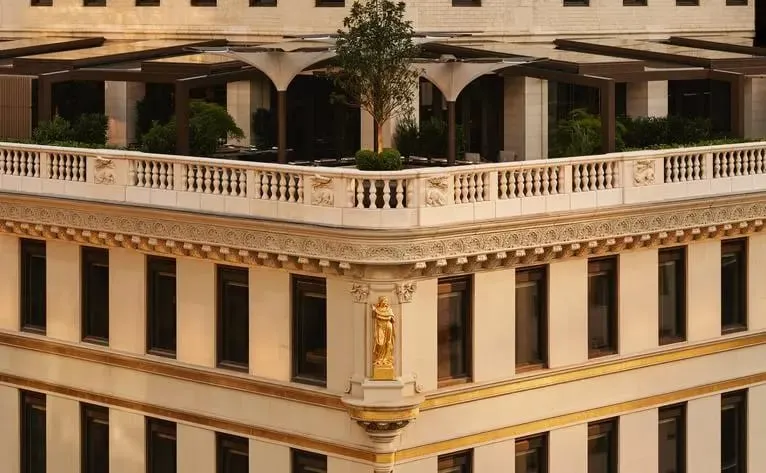
Midtown Manhattan, New York City, United States
Aman New York
Eighty-three suites folded into a landmarked 1921 Beaux-Arts tower on Fifth Avenue, with a three-floor spa larger than any other Aman on earth.
From $2,300 per night
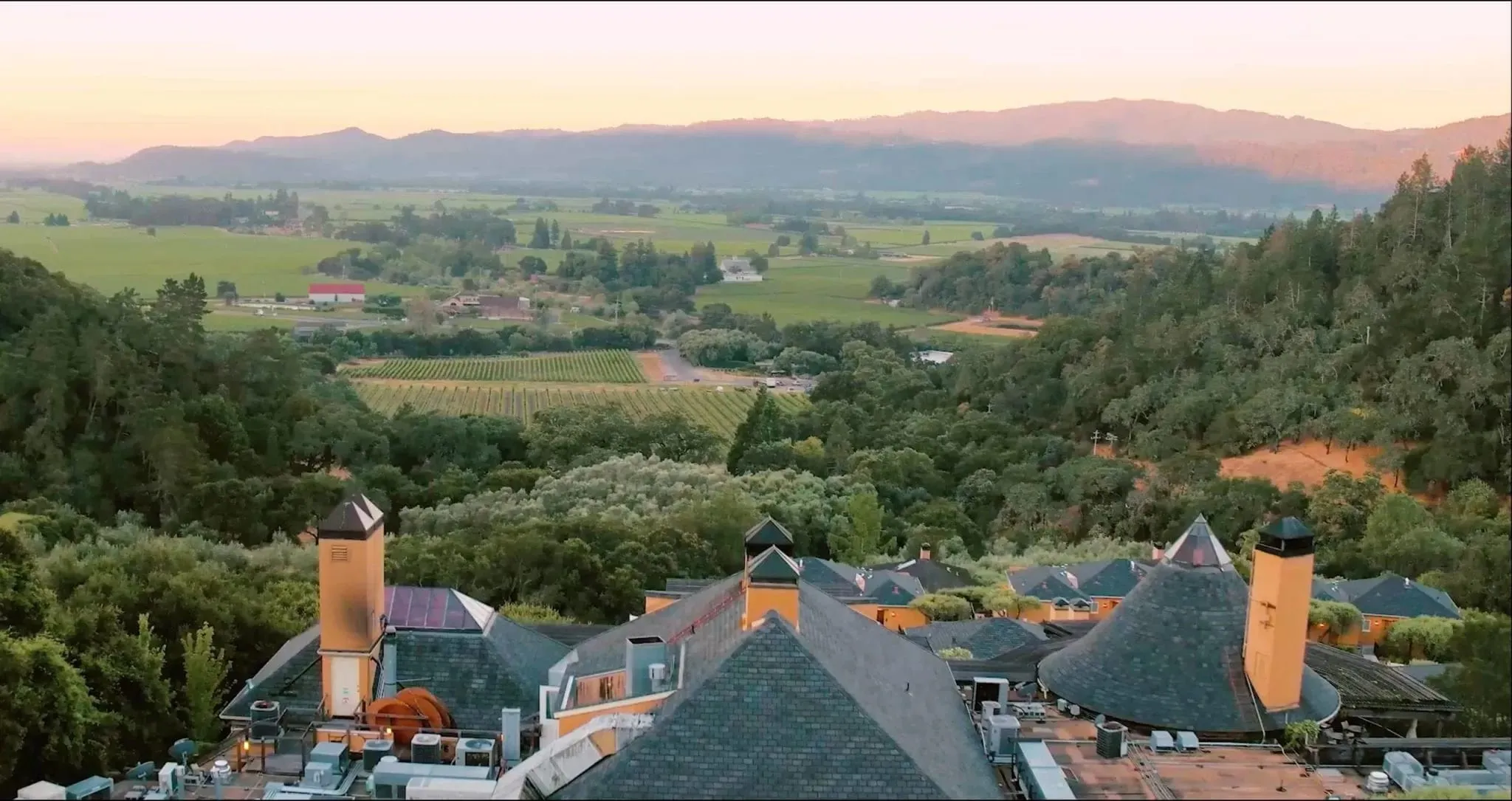
Rutherford, Napa Valley, United States
Auberge du Soleil
The Provence-inspired hillside inn that gave an entire hotel group its name, its philosophy, and one of Napa Valley's longest-running Michelin stars.
From $1,200 per night
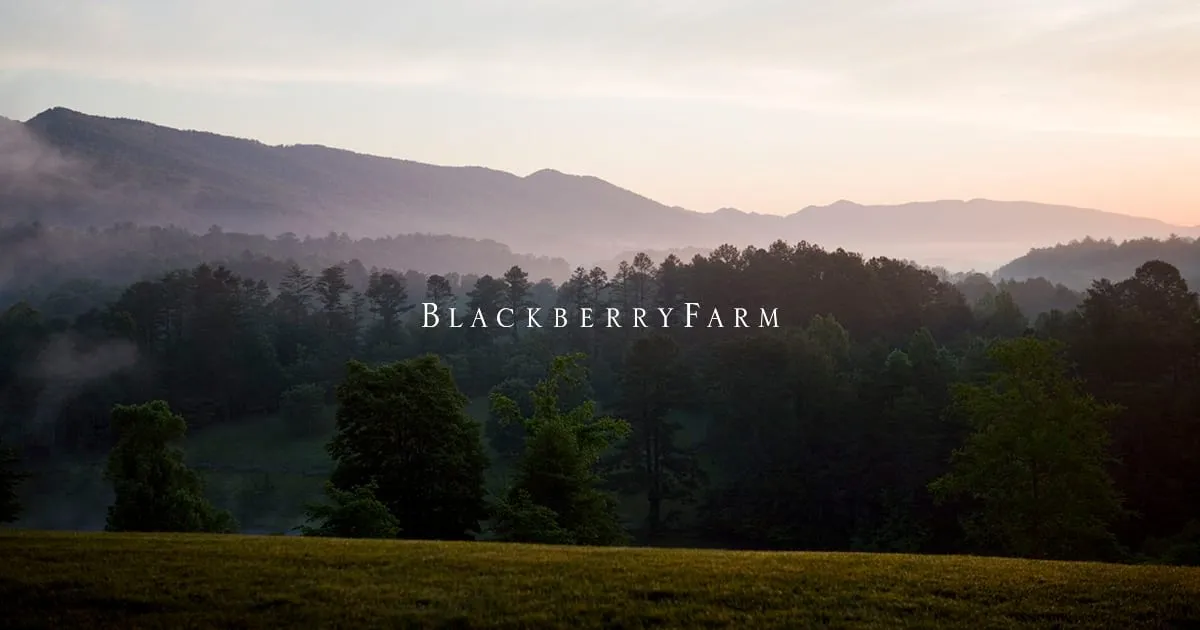
Walland, Great Smoky Mountains foothills, United States
Blackberry Farm
A 4,200-acre working farm at the foot of the Great Smoky Mountains where the Beall family built an entire school of American cooking around cheese, garden and pasture.
From $1,145 per night