Malaroyroy Peninsula, Bulalacao Island, Coron, Philippines
Two Seasons Coron Island Resort & Spa
A self-sustaining private peninsula between two beaches, built as Coron's first eco-luxury address and still run on its own power and water.
- Rates from
- From $350 per night
- Nearest airport
- Francisco B. Reyes Airport, Busuanga (USU)
- Transfer
- About 1.5 hours total: a private coaster from Busuanga Airport to Coron Town, then a boat crossing to the resort
- Best months
- December to May, the dry season across northern Palawan
There is a particular kind of arrival that defines the private-island resorts of northern Palawan, and Two Seasons Coron follows the pattern closely: a flight into a small regional airport, a road transfer through fishing country, then a boat that leaves the last visible town behind and does not stop until an island resolves out of the haze. At Two Seasons, that final crossing runs about 22 kilometres south from Coron Town to the Malaroyroy Peninsula on Bulalacao Island, and it delivers guests to a property that has built its entire operating model, water, power, waste, around the fact that nothing from the mainland grid reaches it. Everything the resort uses, it makes.
That self-sufficiency is not an abstract sustainability claim tacked onto a marketing page. It shows up in the resort’s own account of itself: a reverse-osmosis desalination plant converting seawater into fresh water, a sewage system that recycles treated wastewater back into guest bathrooms, solar panels assigned one to every two bungalows for hot water. Two Seasons opened on this peninsula in 2012, five years after its sister property debuted on Boracay, and it has marketed itself since as Coron’s first eco-friendly luxury island resort, a claim that predates the current wave of sustainability-branded hospitality by the better part of a decade.
None of that would matter much if the setting itself did not deliver, and here the peninsula does the heavier lifting. Two beaches run off either side of the same narrow spit of land, roughly 200 metres each, one facing the sunrise and fringed by mangroves to the east, the other open to the sunset in the west, with a sandbar connecting the peninsula’s tip to a neighbouring islet at low tide. Coron’s wider reputation, as one of the world’s premier wreck-diving destinations and gateway to the limestone lake country of Coron Island, sits within reach of the resort’s own boats, which makes Two Seasons less a beach resort with some diving nearby and more a base camp purpose-built for the specific geography around it.
Why It Stands Out
Two Seasons Coron’s clearest point of difference is structural rather than cosmetic: it is a resort built to function without any outside utility connection, on an island where that was never optional. The desalination plant, sewage treatment system and solar water heating are not amenities layered on top of a conventional build, they are the build, and the resort states its production figures (80 cubic metres of fresh water daily) with a specificity that is harder to find at properties where sustainability is closer to a communications exercise. It also operates as a designated turtle and giant clam sanctuary, which places conservation inside the resort’s working identity rather than at its edges.
The second differentiator is geography. Coron’s status as one of the world’s best wreck-diving destinations, home to a cluster of Japanese naval vessels sunk in a single day in September 1944, sits within a short boat ride of the resort, alongside the limestone lake circuit (Kayangan, Barracuda, Twin Lagoon) that draws day-trippers from across Palawan. Few resorts anywhere combine a serious, beginner-through-advanced dive programme with equally serious limestone-lake access from the same dock, and Two Seasons’ own Pawikan Aqua Sports Center is built to run both simultaneously.
A third, quieter distinction is the Sandbar Bungalow, the resort’s single most unusual accommodation. Set on the exact point where the peninsula’s two beaches converge, it is described by the resort as the only one of its kind on the property, positioned to catch both the sunrise over the mangrove-lined east beach and the sunset over the open west beach without a guest needing to move.
Architecture
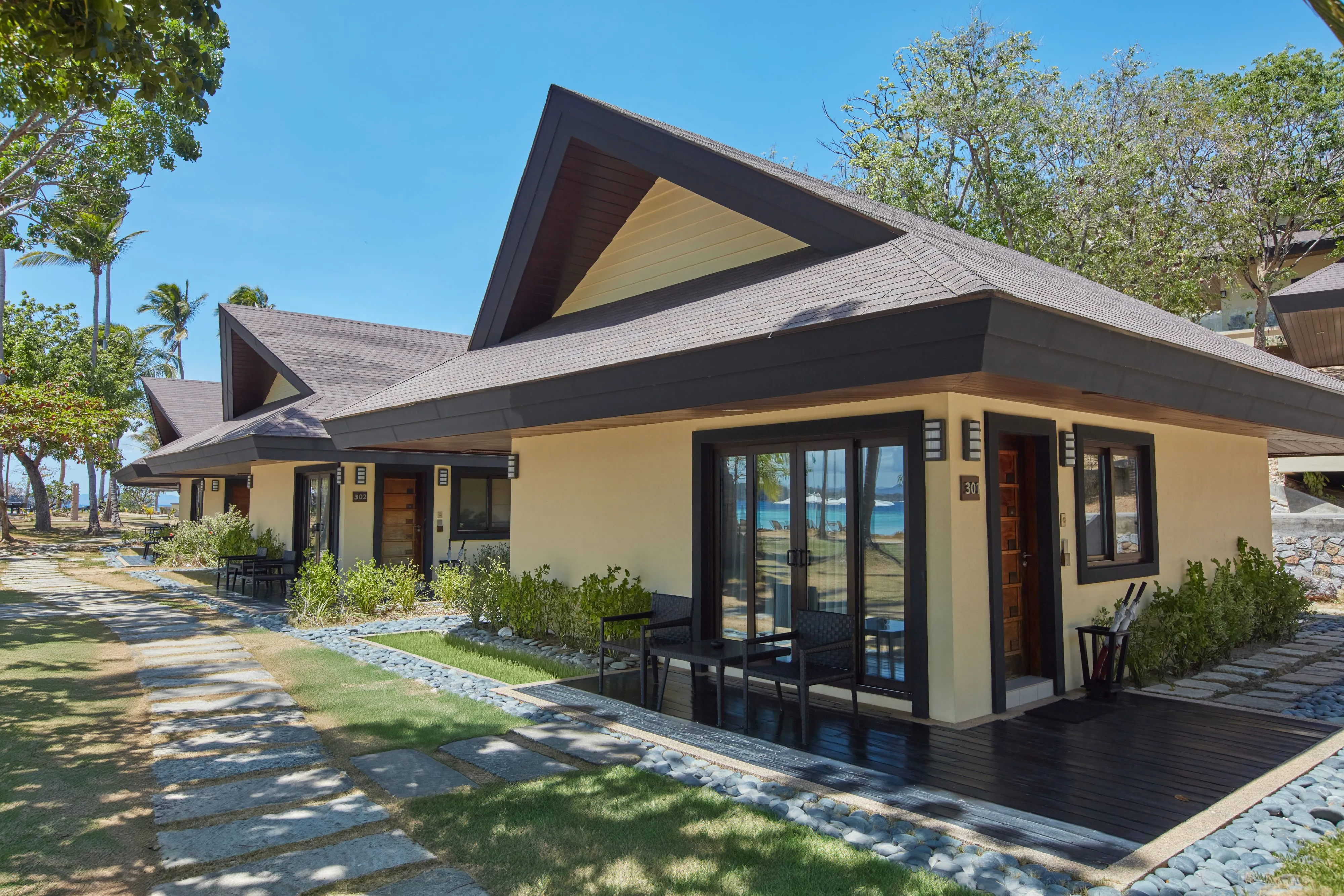
The resort’s built environment reads as a scatter of individual bungalows and casitas spread through tropical garden and hardwood tree cover across the peninsula, rather than a single dominant structure. Categories are sited according to the terrain they occupy, Mountain and Hilltop bungalows set into higher ground with garden and forest cover, Seaview and Beach bungalows angled toward the water from the upper and lower parts of the resort, and casitas placed within specific micro-landscapes: one enclosed by mangrove forest, one on a west-facing hilltop, one with open ocean views. That distribution is a direct response to the peninsula’s own shape, a narrow spit of land with two distinct beach faces and a wooded, undulating interior, rather than a masterplan imposed on a flat cleared site.
The construction logic follows the same self-sufficiency that defines the resort’s utilities. Building on an island 22 kilometres from the nearest town with no grid access requires materials and methods that can be maintained locally, and the resort’s high-ceiling bungalow architecture, built substantially from natural hardwoods, sits within that practical constraint as much as any stated design brief. Low-rise, garden-set structures also keep the peninsula’s sightlines to both beaches largely open, in keeping with a property whose core selling point is water on two sides.
Interior Design
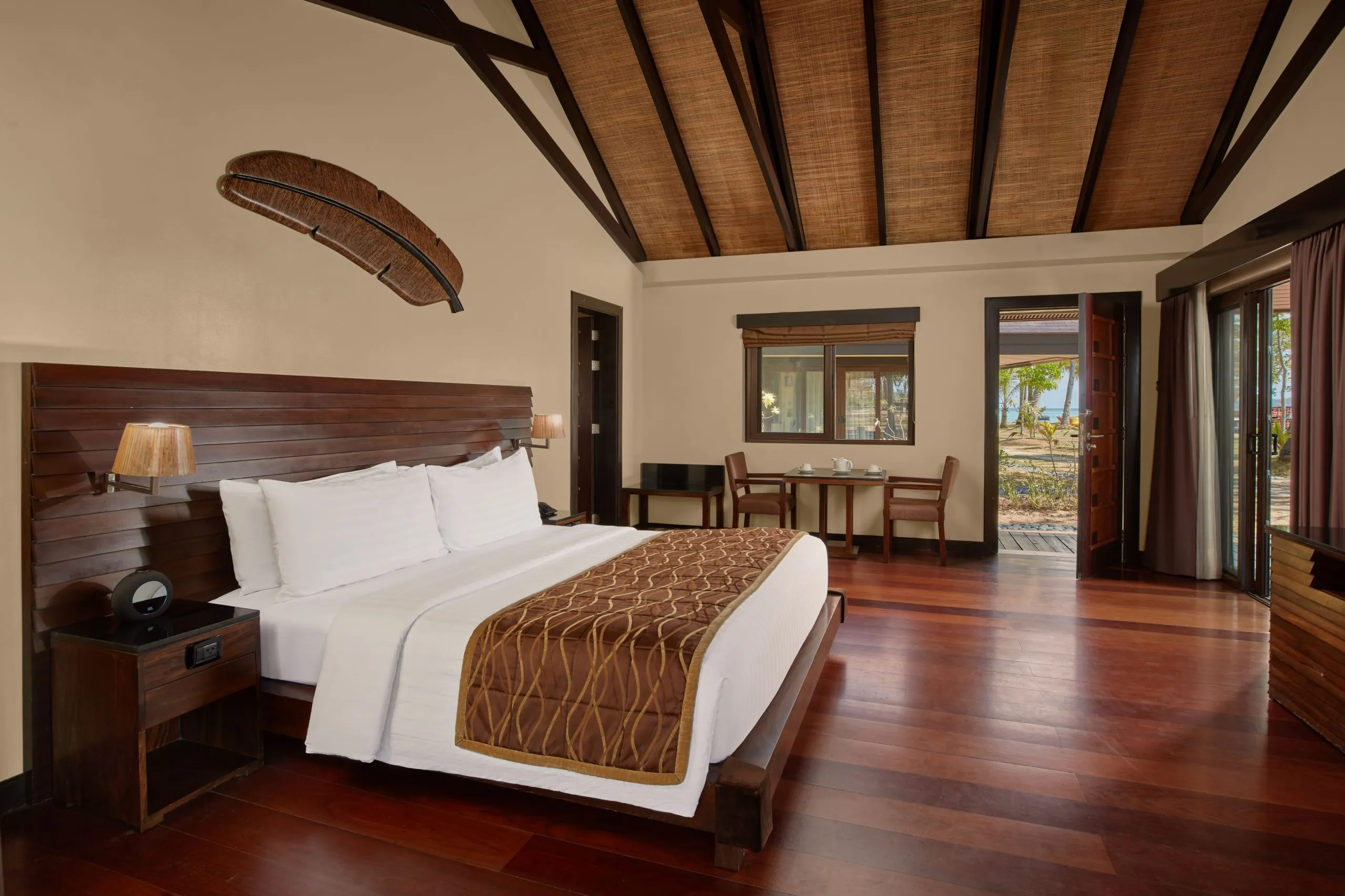
Two Seasons describes its bungalow and casita interiors as carrying “a distinct contemporary Filipino tropical design,” and that reads across the property as a fairly consistent language: high ceilings, natural timber finishes, and furnishing that favours a warm, garden-adjacent register over a minimalist or heavily air-conditioned resort look. The scale of the units, from the compact 34-square-metre Mountain and Seaview bungalows up to the 50 to 51-square-metre Hilltop bungalows and Hillside casitas, keeps the interiors closer to a boutique bungalow footprint than to the sprawling villa format found at some of the region’s higher-end private islands, with the emphasis placed on comfort and craftsmanship within a modest, human-scaled room rather than square footage as a selling point in itself.
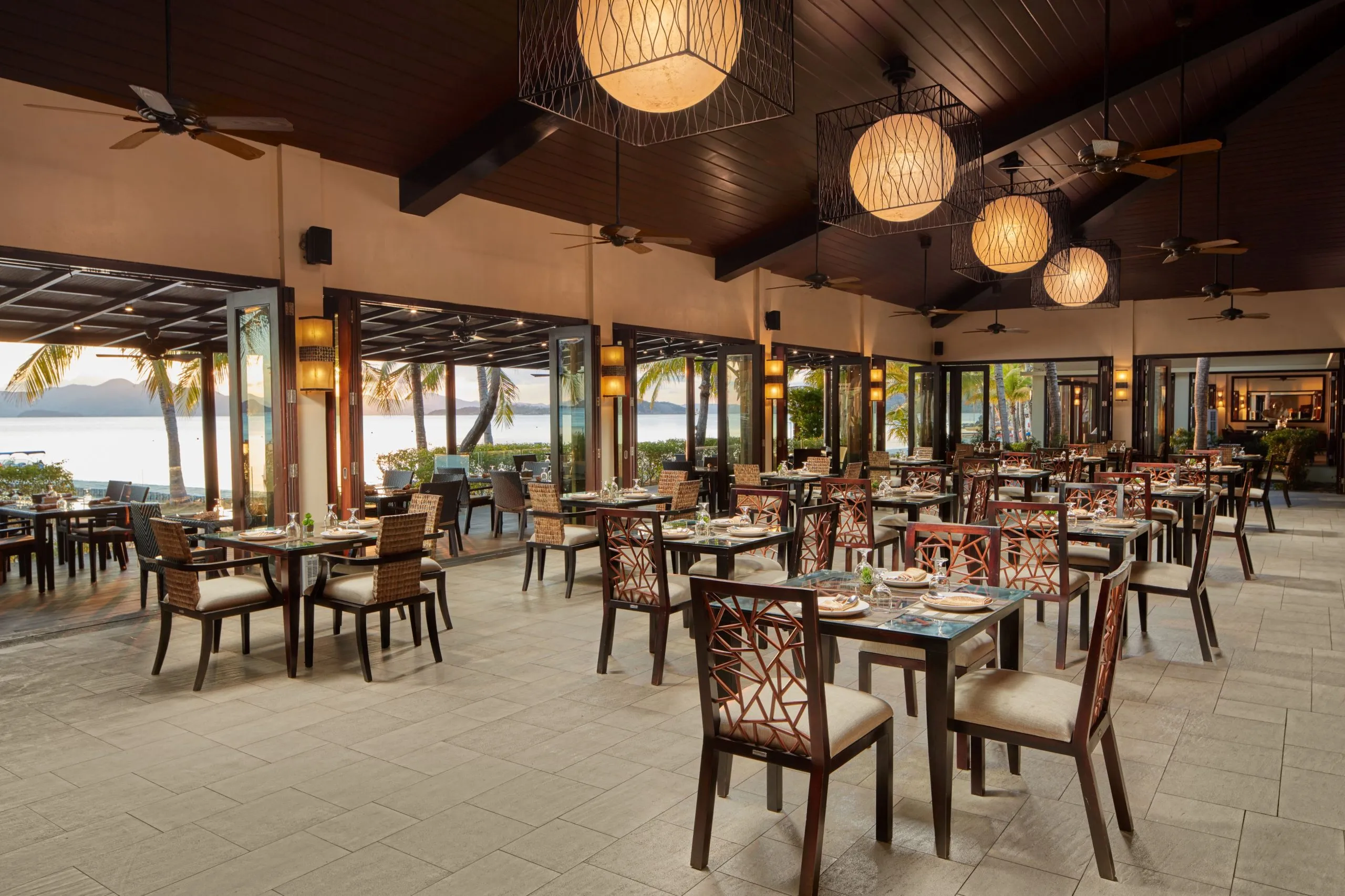
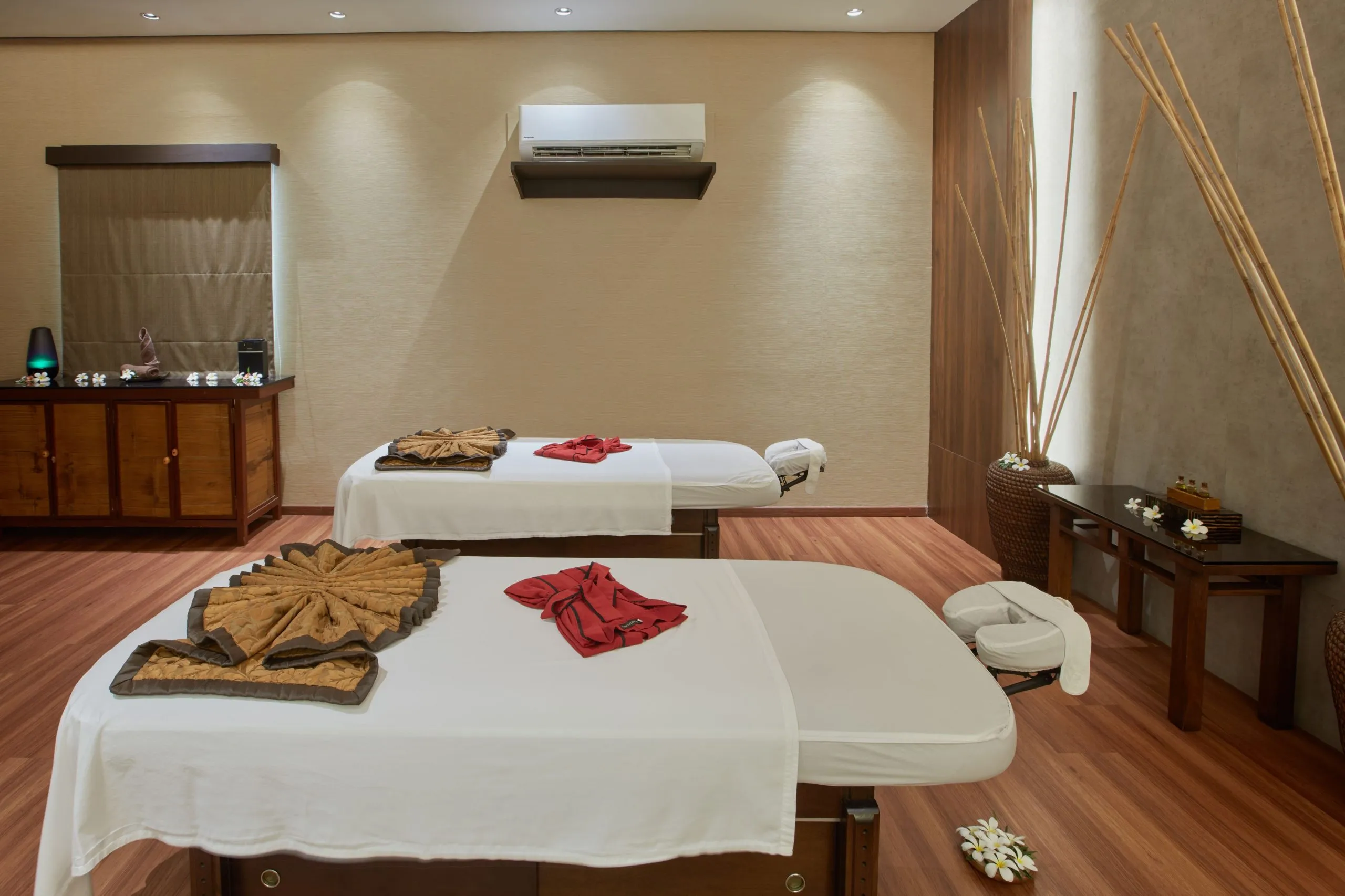
Public interiors follow a similar restraint. Sulu Restaurant is built around sightlines to the sea and surrounding islands rather than an elaborate interior scheme, and Narra Spa is described in the resort’s own terms as a space of “warm tones, soft lighting, and beautifully prepared massage beds,” designed for a quiet, unhurried register rather than a showpiece wellness pavilion. The overall interior identity leans toward warmth and natural material over architectural drama, consistent with a resort whose case for itself rests more on setting and access than on design spectacle.
Atmosphere
Two Seasons Coron sits at a specific point on the spectrum between rustic island escape and full-service resort: self-sustaining and remote enough that nothing outside its own operation, power, water, waste, functions without the resort itself, yet built with the amenity layer, pool, spa, restaurant, boutique, karaoke room, children’s playroom, of a conventional family resort rather than a bare-bones eco-lodge. That combination shapes the atmosphere directly. It is not a hushed, adults-only retreat; the resort markets itself explicitly to honeymooners and families alike, and amenities such as a kiddie pool, a children’s playroom and a games room (darts, pool table, library) sit alongside the more expected spa and dive-centre offerings.
The peninsula’s two-beach layout also gives the resort a built-in rhythm: mornings can run toward the mangrove-fringed east beach, afternoons toward the open west-facing sunset beach, with the pool and Bahura Bar sitting at the centre of the property between both. Because the island is genuinely isolated, no town, no second resort within casual reach, the atmosphere depends entirely on the resort’s own programming and setting, in the same way a private-island stay in the Maldives does, even though Two Seasons operates at a more accessible, family-oriented register than the region’s ultra-luxury private islands.
Rooms and Suites
The resort’s 46 accommodations split into six bungalow categories and four casita categories, all built in the same high-ceiling, contemporary Filipino tropical style but distributed across different parts of the peninsula according to terrain and beach proximity. Mountain Bungalows (34 square metres, sleeping two adults and two children) sit within a short walk of the garden interior among tropical planting and hardwood trees, while Seaview Bungalows, the same 34-square-metre footprint and occupancy, are angled toward or facing the sea from the resort’s upper section.
Hilltop Bungalows step up to 50 square metres and sleep four adults and two children, positioned atop the highest part of the resort and suited to a small family or group travelling together. Beach Bungalows, at 45 square metres for two adults and two children, sit on prime beachfront or beach and poolside positions and are consistently among the resort’s more requested categories given their direct beach access. Island Tip Bungalows (36 square metres, two adults) occupy the peninsula’s outer point, and the single Sandbar Bungalow, at 42 square metres for two adults, is the property’s standout unit: the only one of its kind on the island, sited on the pointed tip where the sandbar connects to a neighbouring islet, with views that take in both the sunrise beach and the sunset beach from the same terrace.
The four casita categories add a second, slightly larger accommodation tier. Forest Casita (46 square metres, two adults) is set for a secluded, wooded outlook, and Mangrove Casita, also 46 square metres, sits within the resort’s mangrove forest for a more enclosed, sheltered atmosphere. Hillside Casita, at 51 square metres, faces west from a hilltop position with hardwood-forest views, and Oceanview Casita, 48 square metres, occupies a hilltop with sightlines across the surrounding ocean and neighbouring islands. None of the categories are marketed as suites or villas in the conventional five-star sense; the resort’s positioning rests on the bungalow-and-casita format itself, scaled for couples and small families rather than built around a residence-style top tier.
Dining
Sulu Restaurant functions as the resort’s principal dining room, open daily from 6am to 10pm and serving what the property describes as world-class continental cuisine built around fresh seafood, set within a modern tropical interior looking out over the sea and surrounding islands. It covers the standard run of a resort’s core dining, breakfast through dinner, in a single venue rather than splitting the property’s food and beverage programme across multiple standalone restaurants, which is consistent with Two Seasons Coron’s scale as a mid-sized, remote island resort rather than a large multi-restaurant complex.
Bahura Bar, named for the Filipino word for reef, takes a livelier, more social role, positioned at the centre of the peninsula with views over both the east and west beaches and set adjacent to the resort’s main pool. Open from 10am to midnight, it is built around a reef-inspired design, cocktails, and music, and functions as the natural gathering point for sunset drinks given its position between the two beaches. Beyond the two fixed venues, the resort runs a private Beach Dinner experience, a set table on the sand under draped lighting for guests marking an occasion or simply wanting a private, beachfront meal apart from the main restaurant.
Spa and Wellness
Narra Spa occupies its own quiet corner of the resort’s garden grounds, away from the pool and beach traffic, and is built around the kind of understated wellness offering typical of a mid-sized island resort rather than an expansive destination spa. The resort describes the space itself as designed for “ultimate comfort and rejuvenation,” with warm tones, soft lighting and prepared massage beds set up for both individual and couples treatments. The treatment menu draws on a mix of Filipino and international techniques, spanning massage styles from Shiatsu and reflexology to traditional Filipino massage and the spa’s own signature Narra Spa Massage, alongside facials, body wraps and scrubs built around local ingredients such as mango, passion fruit, cacao, coffee and coconut, and paired packages, Lakambini for women and Lakandula for men, that combine a foot bath, scrub, body wrap and bath with massage and facial treatments. Spa facilities extend to jacuzzis, saunas and soaking tubs, run daily through a long opening window that stretches from mid-morning into the evening.
Experiences
Coron’s identity as a wreck-diving destination sits at the centre of the resort’s experience programme, and the history behind it is specific and well documented: on 24 September 1944, American warplanes sank a group of roughly ten to twelve Japanese naval vessels in Coron’s waters as they retreated from Manila Bay, and of the ships lost that day, twelve wrecks have since been located at accessible depths of 25 to 40 metres. The resort’s Pawikan Aqua Sports Center runs dive instruction from beginner through advanced levels, giving first-time divers a route into the wrecks and giving experienced divers a base for repeat dives among the marine life, mantas, turtles, rays, napoleon wrasse, barracuda, tuna, that the wrecks and surrounding reefs support. Beyond diving, the same centre operates Molokini transparent kayaks and other watersports directly off the resort’s beaches.
The second pillar of the experience programme is Coron Island’s limestone lake and lagoon circuit, sold as a full-day tour that typically combines Barracuda Lake, known for its distinct thermocline where fresh and salt water meet at different temperatures, Twin Lagoon, Siete Pecados’ coral gardens for snorkelling, the shallow, accessible Skeleton Wreck, and Kayangan Lake, widely cited as one of the most photographed bodies of water in the Philippines, framed by sheer limestone cliffs and reached by a short climb from the boat landing. A fresh seafood lunch on a beach cove is typically built into the day, and Culion Island, with its own separate history as a former leper colony turned working island community, is offered as an additional excursion for guests wanting a longer look beyond Coron’s immediate waters. Because Coron Island itself is Tagbanua ancestral domain, managed by the indigenous community rather than run as open parkland, access to sites like Kayangan and Barracuda Lakes is arranged through permitted tours rather than independent visits, which is how the resort structures its own day-tour programme.
On property, the 600-square-metre adult and kiddie pool, a fitness centre, a children’s playroom, a library and games room with darts and a pool table, and a karaoke room round out the resort’s non-water activities, giving families and non-divers a full activity slate without needing to leave the peninsula.
Who It Is For
Two Seasons Coron is built for a specific, dual audience that the resort names directly on its own materials: honeymooners and families. Its bungalow-and-casita format, scaled for couples in the smaller categories and stepping up to four-adult occupancy in the Hilltop Bungalows, supports both, and amenities on either end of that spectrum, the Sandbar Bungalow’s twin-beach outlook for couples, the kiddie pool and children’s playroom for families, are built into the property rather than added as an afterthought.
It is a natural fit for divers and underwater enthusiasts, given direct access to some of the best-documented wreck diving anywhere in the Philippines alongside a full beginner-to-advanced course structure. It suits travellers drawn to a resort’s sustainability credentials being operationally real rather than cosmetic, given how specifically the resort documents its own water and power systems. It is a less natural fit for travellers seeking the scale, multi-restaurant variety or villa-format luxury of the region’s largest private-island resorts; Two Seasons operates at a more compact, boutique scale, with a single main restaurant and bungalow-sized rooms rather than sprawling residences.
Best Time to Visit
December through May marks the dry season across northern Palawan, bringing the calmest seas for both the boat crossing from Coron Town and the day tours out to Kayangan Lake and the wreck sites, along with the most reliable visibility for diving and snorkelling. It is also the resort’s busiest period. The southwest monsoon runs roughly from June through November, bringing a higher chance of rain and rougher water, with the heaviest typhoon risk typically falling between July and October; boat operations in this window are governed by Philippine Coast Guard weather advisories, which can affect both arrival transfers and day-tour schedules.
How to Get There
There is currently no direct flight between Manila and Busuanga, so the resort recommends routing through either Clark International Airport in Pampanga or Cebu’s Mactan airport, both of which run several flights a day to Busuanga on a roughly 45-minute route via carriers including Philippine Airlines, Cebu Pacific, Airswift (now operating under the Cebu Pacific brand) and Sunlight Air; direct flights are also available from El Nido. Guests arriving into Ninoy Aquino International Airport in Manila can reach Clark by the Genesis Transport P2P bus service, a journey of roughly two to three and a half hours departing directly from the NAIA terminals.
From Busuanga’s Francisco B. Reyes Airport, the resort arranges a private coaster or bus transfer to Coron Town, followed by a scenic boat crossing to the Malaroyroy Peninsula, a combined land-and-sea transfer of about an hour and a half depending on sea conditions. Because boats operate only between 6:15am and 4pm under Philippine Coast Guard guidelines, the resort advises booking an early flight into Busuanga rather than the day’s last arrival, and departing guests are asked to leave the island resort a full three hours ahead of their scheduled flight, with return flights before 9:30am and connecting itineraries both discouraged given the transfer’s built-in unpredictability.
Nearby Experiences
Coron Island, distinct from Coron Town and reached separately by boat, is the ancestral domain of the Tagbanua indigenous people, who manage the island’s beaches, cliffs and lakes under a sustainable, community-led framework rather than as open public parkland. Its two best-known lakes, Kayangan and Barracuda, sit within the resort’s standard day-tour circuit alongside Twin Lagoon and the Siete Pecados coral garden, and each is reached by permitted boat access arranged through tour operators like the resort itself rather than independent visits. Culion Island, a short boat journey further afield and historically notable as a former leper colony now a working island community, is available as a separate excursion for guests wanting to extend beyond the standard wreck-and-lake circuit. Coron Town itself, the resort’s gateway rather than a resort amenity, offers a working fishing-town counterpoint to the peninsula’s isolation for guests who want a look at it during transfer days.
Things to Know Before Booking
Transfer logistics deserve real attention when planning a stay: with no direct Manila flight, no overland road access to the resort, and boat operations restricted to daylight hours by Coast Guard rule, arrival and departure days should be built around an early flight in and a generous buffer, at least three hours, before any outbound flight. Boat transfers between El Nido and Coron are actively discouraged by the resort due to frequent gale warnings along that stretch of water, so travellers combining both destinations should plan a flight connection instead.
Extremely busy periods, Christmas, New Year, Chinese New Year, Holy Week and long weekends, are flagged by the resort as requiring bookings three to five months in advance given limited flight capacity into Busuanga. Because Coron Island’s lakes sit on Tagbanua ancestral land, access to Kayangan and Barracuda Lakes runs through permitted, resort-arranged tours rather than independent excursions, which is worth factoring into any plan to visit them outside a booked tour day.
Sustainability
Two Seasons Coron’s sustainability credentials rest on documented operational infrastructure rather than broad marketing language. The resort is entirely self-sustaining because the island, 22 kilometres south of Coron Town, has no connection to any utility company: fresh water is produced on site through a reverse-osmosis desalination plant capable of around 80 cubic metres a day, wastewater runs through a sewage treatment plant with a double-piping system that returns clean water to guest bathrooms for flushing while drying solid waste into fertiliser, and the resort states it operates as a zero waste discharge establishment as a result. Solar panels, installed at a ratio of one per two bungalows, power the water heating system rather than drawing on any generator-based supply for that specific load.
The resort also functions as a turtle and giant clam sanctuary and markets itself, on its own materials, as the first eco-friendly luxury island resort in Coron, a claim tied to its 2012 opening that predates much of the region’s more recent sustainability-branded development. As with most single-property sustainability claims, a fully independent third-party audit of the resort’s complete environmental footprint is not publicly available, so this guide describes only the specific systems the resort documents rather than extending them into a broader claim about its overall environmental performance.
Practical Information
Rates at Two Seasons Coron Island Resort start from around USD 350 per night, with the six bungalow categories and four casita categories priced according to size, position and beach proximity, the Sandbar Bungalow and Beach Bungalow categories among the most requested given their direct beachfront access. Check-in is from 2:00pm and check-out by 12:00pm.
The nearest airport is Francisco B. Reyes Airport in Busuanga (USU), reached from the resort by a combined land-and-sea transfer of about an hour and a half, a private coaster to Coron Town followed by a boat crossing to the peninsula. Most stays run three to four nights, enough time to work through a wreck dive or two, a full-day Kayangan and Barracuda Lake tour, and time on both the resort’s sunrise and sunset beaches without rushing the transfer days on either end.
Editorial Conclusion
Two Seasons Coron makes its case less through architectural spectacle or villa-scale luxury than through the specificity of what it actually documents about itself: a resort built to run entirely on its own water and power, sited on a peninsula with two distinct beaches, positioned within reach of one of the world’s most concentrated wreck-diving sites and the limestone lake country that draws visitors to Coron from across the archipelago. It is not competing with the region’s largest private-island resorts on scale, and it does not try to; its ten accommodation categories stay modest in size, and its dining and spa programmes run to a single restaurant, bar and treatment space rather than a sprawling multi-venue complex. For travellers whose priority is genuine proximity to Coron’s wrecks and lakes, paired with a resort whose sustainability claims are backed by named infrastructure rather than a slogan, that trade-off reads less like a limitation than a clearly stated set of priorities, honestly kept.
In pictures
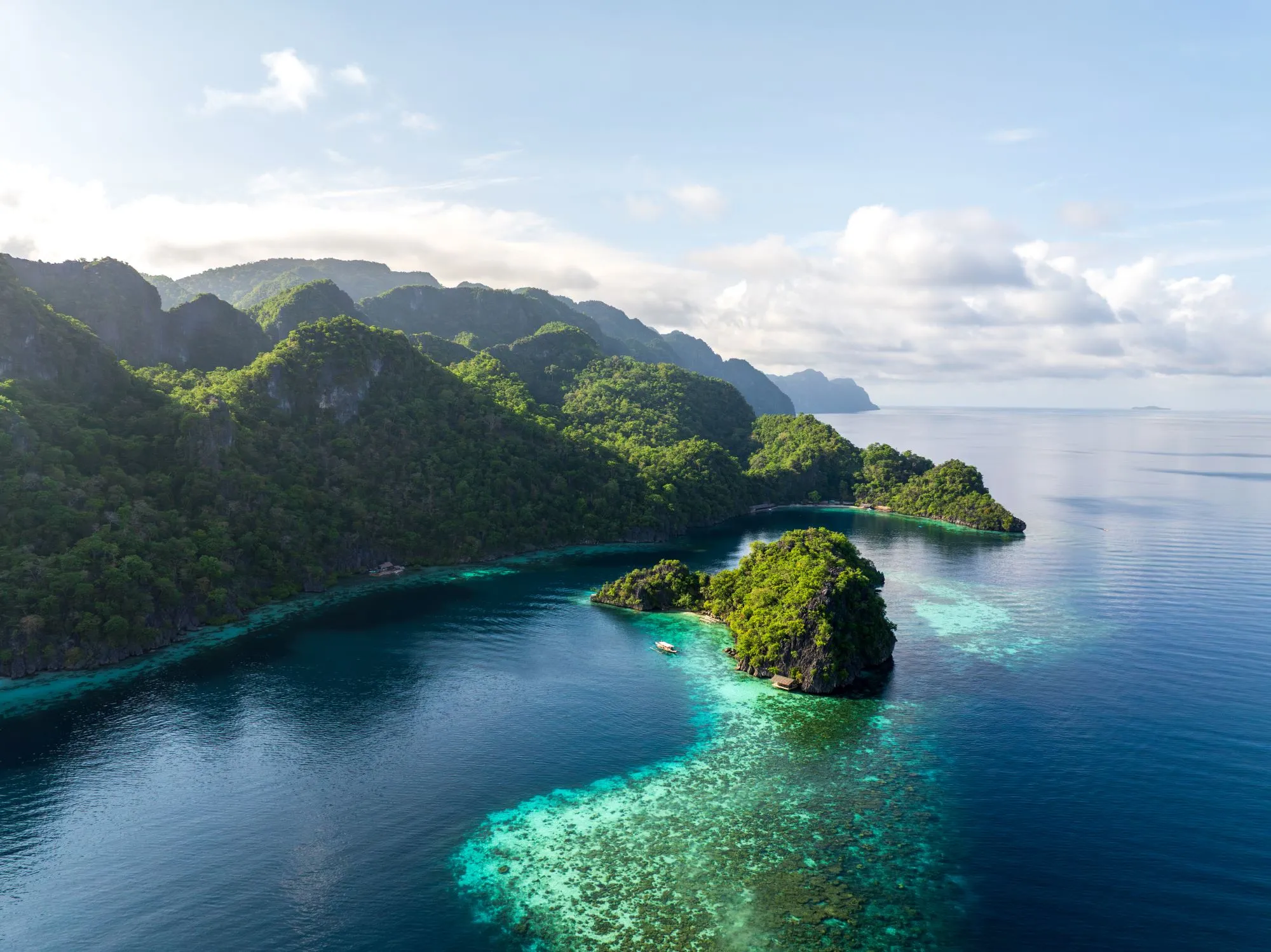
On the map
Malaroyroy Peninsula, Bulalacao Island, Coron, Philippines
Questions
Frequently asked
Where exactly is Two Seasons Coron Island Resort, and why is access more involved than a typical beach hotel?
The resort occupies the Malaroyroy Peninsula on Bulalacao Island, about 22 kilometres south of Coron Town by boat, with no road connection of any kind. Guests fly into Busuanga's Francisco B. Reyes Airport, are driven roughly an hour to Coron Town by private coaster, then cross by boat to the resort, a combined transfer of around an hour and a half that depends on sea conditions and daylight boating hours set by the Philippine Coast Guard.
Is there a direct flight from Manila to Coron?
No. There is currently no direct flight between Manila and Busuanga. The resort recommends routing through Clark International Airport in Pampanga or Cebu's Mactan airport instead, both of which run multiple daily flights to Busuanga on carriers including Philippine Airlines, Cebu Pacific, Airswift (now operating under Cebu Pacific) and Sunlight Air. Travellers landing at Ninoy Aquino International Airport in Manila can reach Clark by the Genesis Transport P2P bus in roughly two to three and a half hours.
What accommodation categories does the resort offer?
Two Seasons Coron has 46 units across ten categories: six bungalow types (Mountain, Seaview, Hilltop, Beach, Island Tip and the single Sandbar Bungalow) and four casita types (Forest, Mangrove, Hillside and Oceanview), ranging from around 34 to 51 square metres. The Sandbar Bungalow, the only one of its kind on the property, sits on the peninsula's point where the resort's two beaches meet, with sightlines to both sunrise and sunset.
Can non-divers still experience the wreck sites and the limestone lakes?
Yes. The resort's Pawikan Aqua Sports Center runs certified dive courses for beginners through the WWII wreck sites, but the same day-tour circuit, Kayangan Lake, Barracuda Lake, Twin Lagoon and the Siete Pecados coral garden, is largely accessible to swimmers and snorkellers, and the boat tours to Coron Island's lakes are sold as a standalone experience separate from any diving certification.
What has the resort actually done on sustainability, rather than just claimed?
Two Seasons Coron is 100% self-sustaining because no utility grid reaches the island: it runs its own reverse-osmosis desalination plant producing about 80 cubic metres of fresh water a day, treats its wastewater through a double-piping sewage system that recycles clean water back into guest bathrooms and dries solid waste into fertiliser, and heats water with solar panels installed at a rate of one panel per two bungalows. It also operates as a turtle and giant clam sanctuary and describes itself, on its own materials, as Coron's first eco-friendly luxury island resort.
Same destination
More hotel guides in Philippines
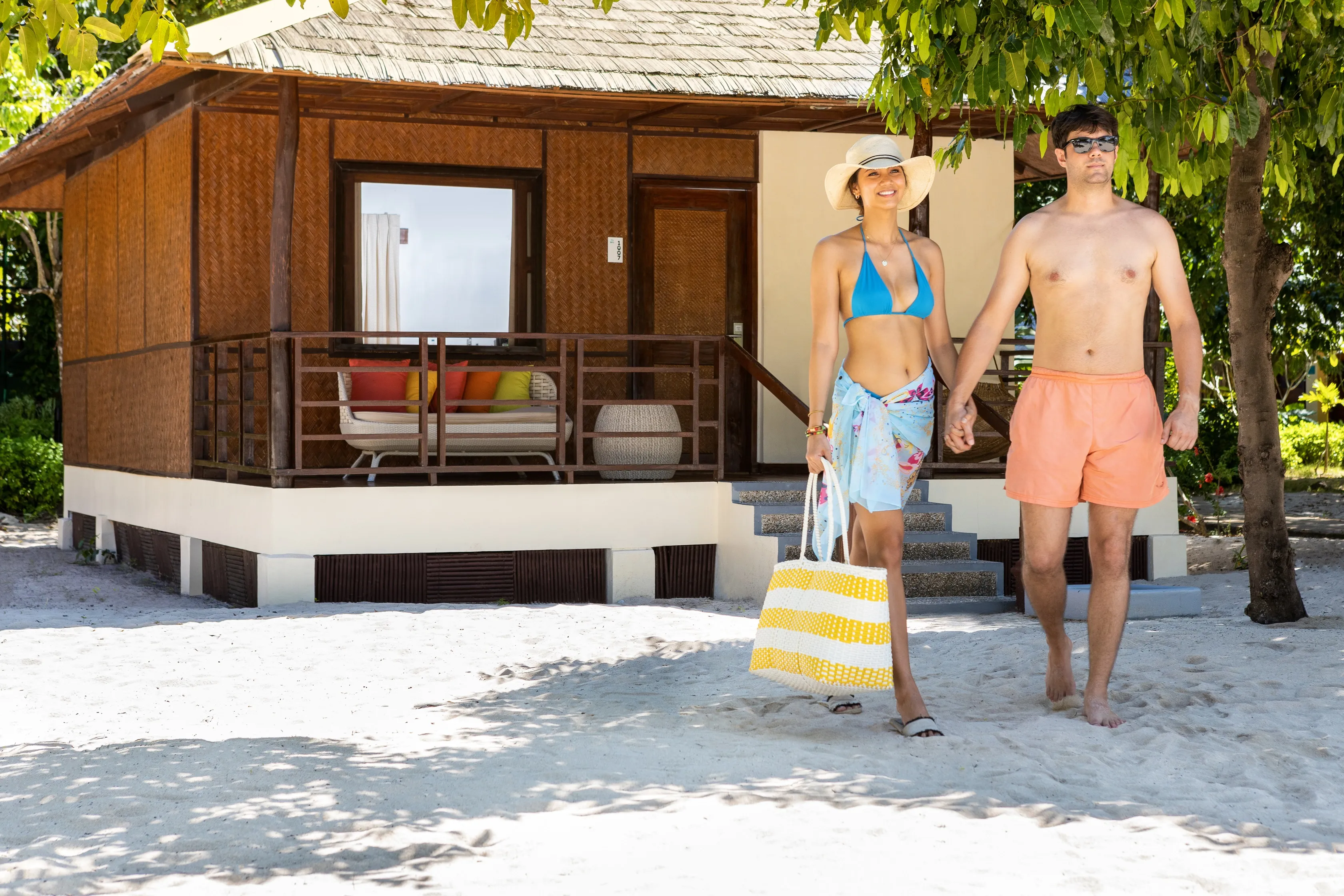
Dimakya Island, Busuanga, Coron, Philippines
Discovery Coron
A nineteen-hectare private island off northern Busuanga, diving Coron's Japanese wrecks by day and disconnecting from everything else after dark.
From $260 per night
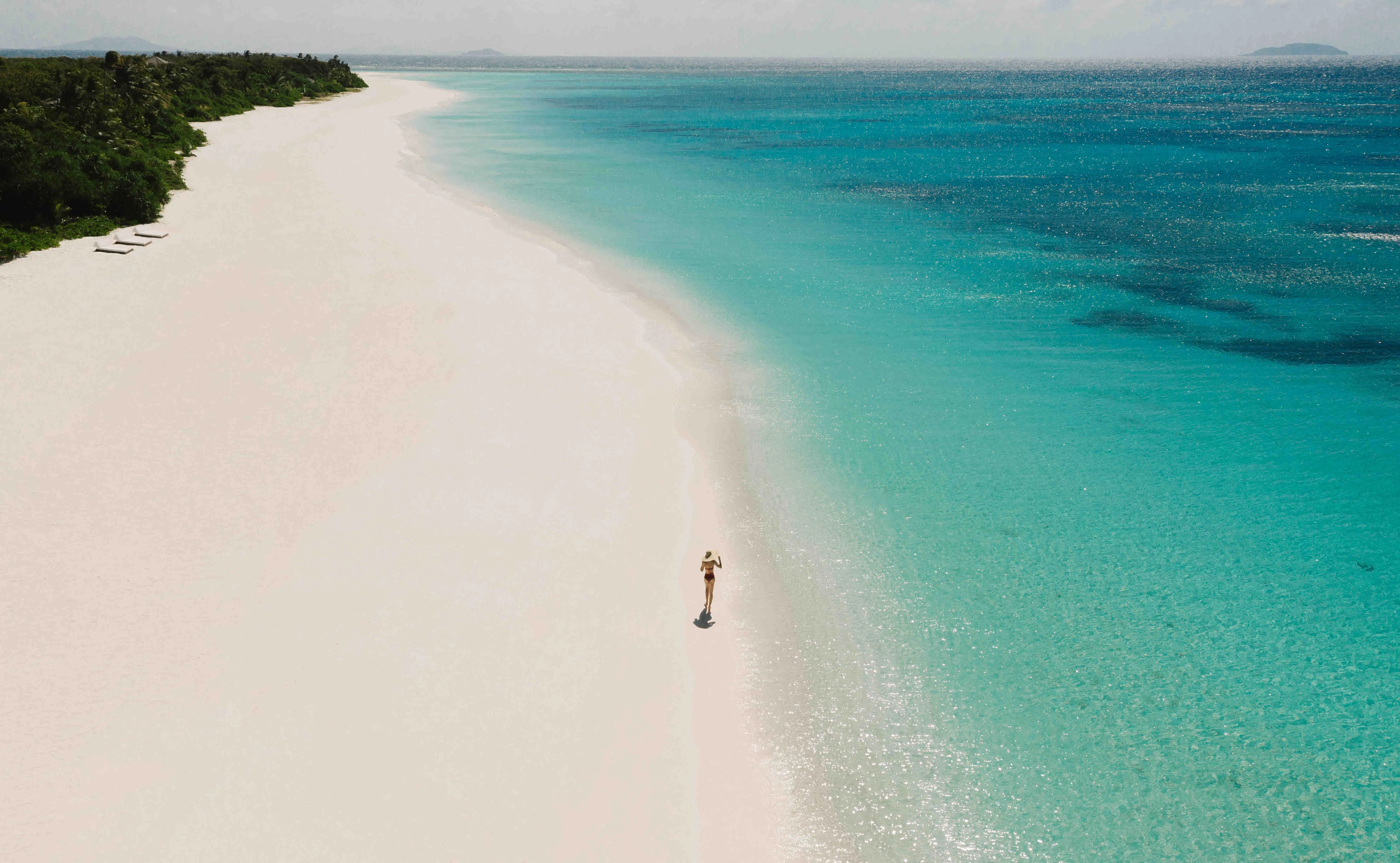
Pamalican Island, Cuyo Islands, Philippines
Amanpulo
A private island in the Cuyo archipelago, reachable only by Aman's own aircraft, built around bahay kubo-inspired casitas set beneath forty-year-old coconut palms.
From $1,900 per night
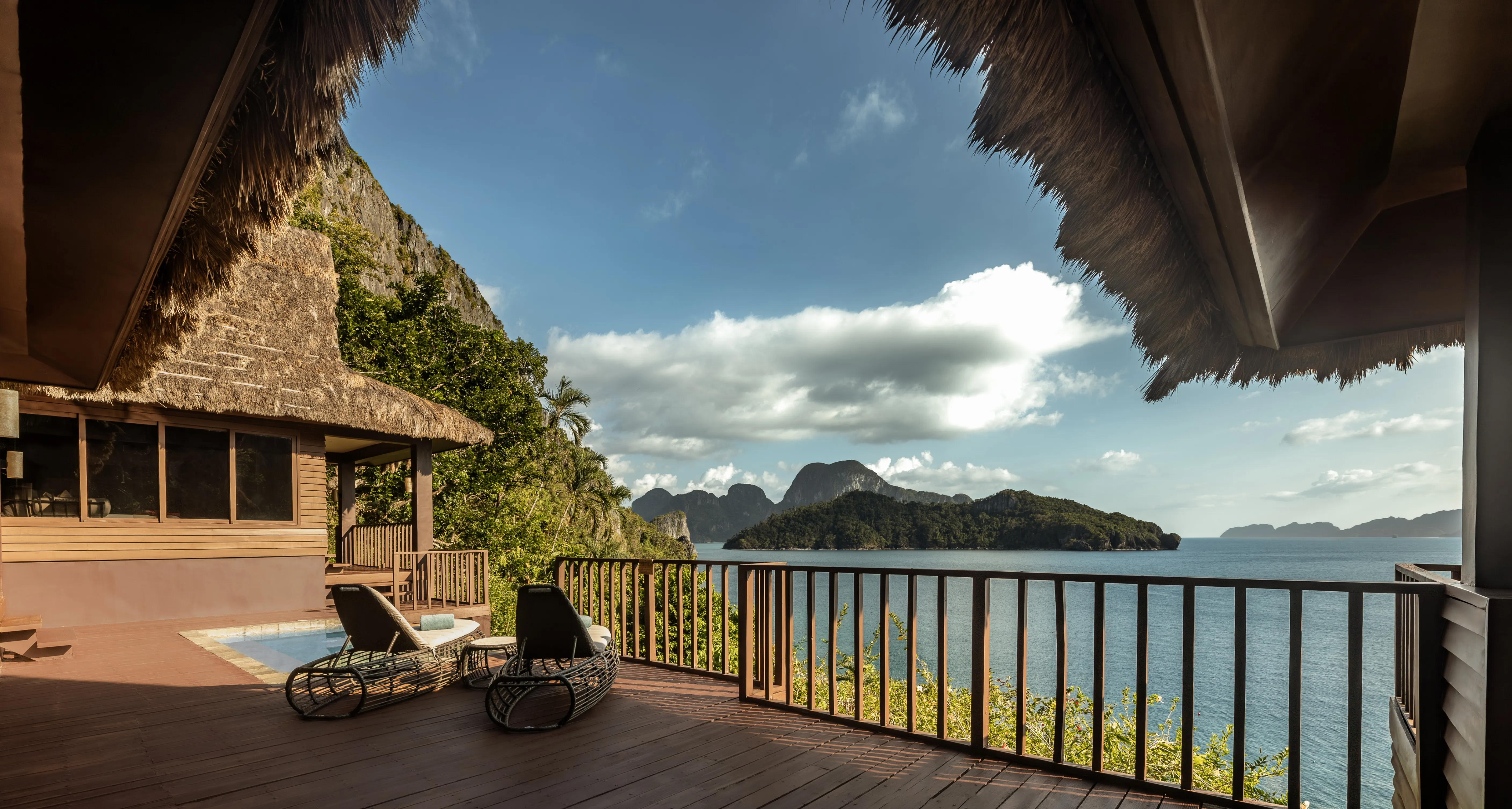
Cauayan Island, Bacuit Bay, El Nido, Philippines
Cauayan Island Resort
A privately owned island in Bacuit Bay, thirty stilt-raised villas set between limestone cliffs and open water, reachable only by boat.
From $500 per night