Yala, Sri Lanka
Uga Chena Huts
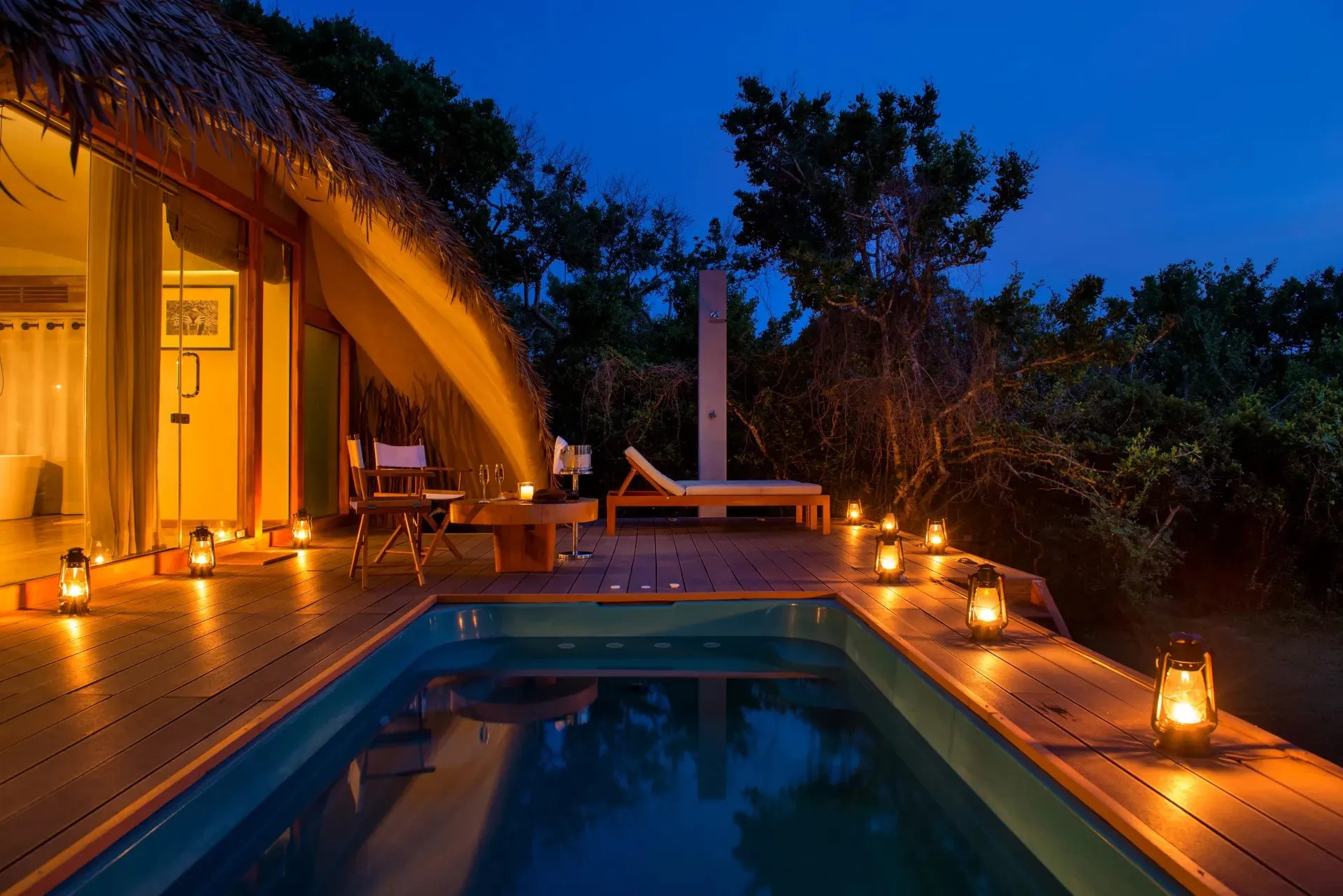
Eighteen thatched pavilions with private plunge pools, pitched on the scrubland edge of Yala, where the leopard density is the highest recorded on earth.
- Rates from
- From $1,200 per night
- Nearest airport
- Mattala Rajapaksa International Airport (HRI)
- Transfer
- About 1 hour by road from Mattala; around 5 to 6 hours by road from Colombo
- Best months
- February to July (dry season, peak leopard visibility); note that Yala's Block 1 typically closes for several weeks around September for the annual drought closure
There is a particular kind of quiet that settles over the dry zone of Sri Lanka’s deep south in the hour before a game drive: cicadas thinning out, the scrub going the colour of weak tea, the Indian Ocean audible but not yet visible beyond the tree line. Uga Chena Huts is built directly into that quiet. Eighteen thatched cabins, each set apart from its neighbours by dense buffer planting, sit low on a stretch of coastal scrubland where Yala National Park’s boundary is close enough to hear the alarm calls of spotted deer at dusk.
The name borrows from the chena, the traditional slash-and-burn cultivation plot of Sri Lanka’s dry zone, and by extension the simple, thatched field huts farmers once built to watch over those plots through the night. Uga Escapes took that vernacular, a structure built for watching, waiting, and living close to wild land, and rebuilt it at the scale of a five-star cabin, with a plunge pool on the deck and a king bed under a vaulted thatch roof. It is a conceit that could easily tip into pastiche. It does not, largely because the property resists filling in the spaces between buildings: paths are raised on stilts over vegetation rather than cut through it, mature trees are left standing through decking and roof lines, and cabins are spaced widely enough that the resort reads more like a scatter of private outposts than a hotel campus.
The result sits at the junction of two landscapes that rarely get equal billing in Sri Lanka’s south: the dry-zone jungle that runs into Yala, home to one of the highest densities of leopards recorded anywhere in the world, and an undeveloped stretch of the Indian Ocean coastline, close enough for a beach walk or a sundowner but held slightly at arm’s length from the cabins themselves. Guests tend to arrive for the safari and stay, several days in, for the specific stillness of watching both landscapes from a private deck with nobody else in view.
About Uga Chena Huts
Uga Chena Huts is one of the properties within Uga Escapes, a small Sri Lankan hospitality group whose other hotels include Uga Ulagalla near Anuradhapura, Uga Jungle Beach in Trincomalee, Uga Bay in Pasikudah and Uga Residence in Colombo. Across the portfolio, the group has built a reputation for pairing strong architectural concepts with an all-inclusive operating model, and Chena Huts is generally regarded as its flagship safari property, positioned at the edge of Yala rather than inside a city or on a conventional beach strip.
The design concept draws its language from the region’s vernacular chena huts, the modest thatched shelters built by dry-zone farmers to keep watch over their cultivated plots at night, a practical response to living alongside wild animals rather than apart from them. That relationship between structure and surrounding wilderness carries through into how the property was laid out: rather than clearing the seven-acre site to a blank pad, planners spaced the eighteen cabins around existing trees and scrub, in places letting older tree trunks and canopy push directly through the built form. Paths connecting the cabins to the central restaurant and pool area are raised on low stilts, a decision aimed at letting undergrowth and small wildlife move beneath the walkways rather than being displaced by them.
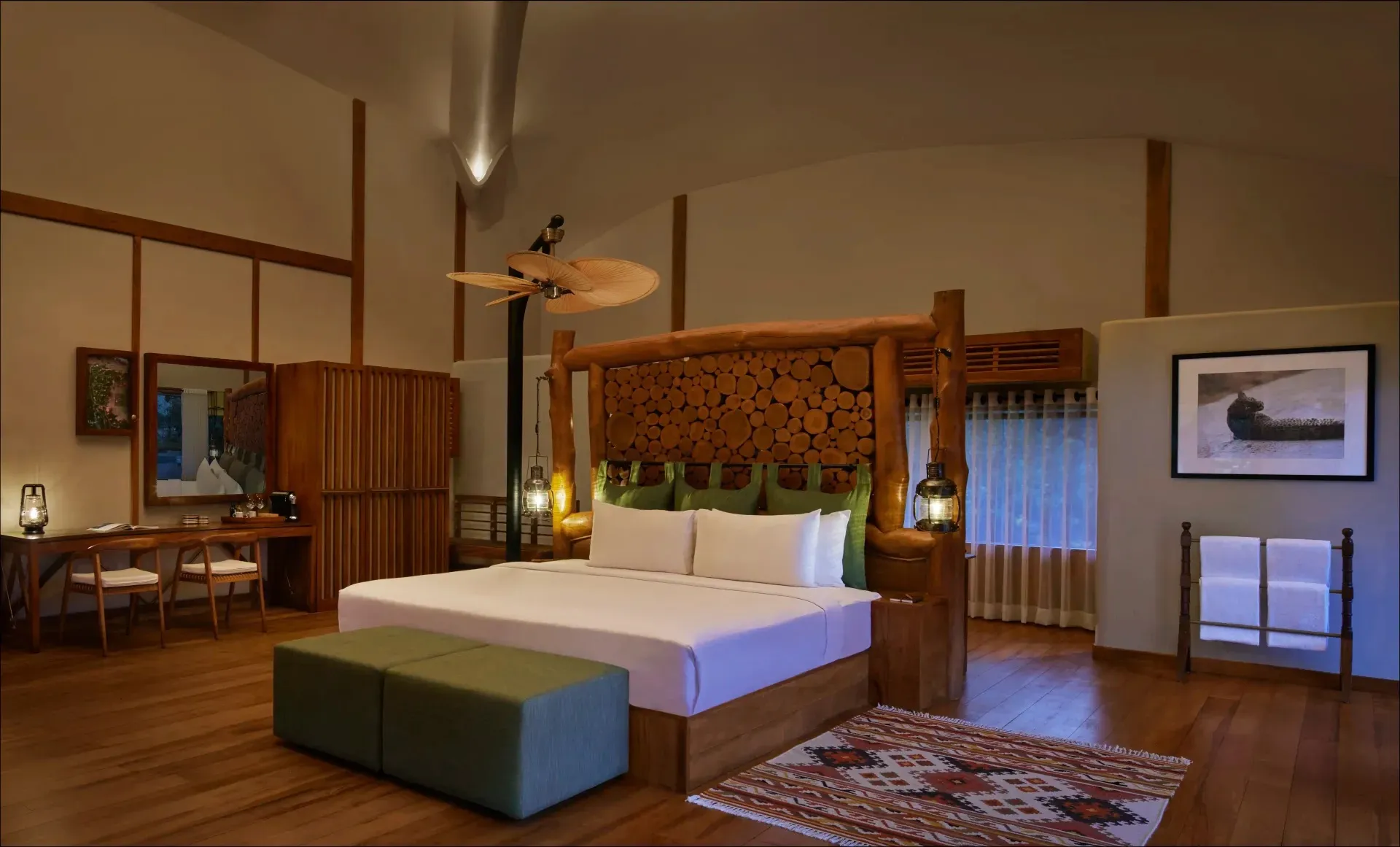
Inside, the interiors lean into the same log-and-thatch vocabulary that gives the resort its name, with heavy timber furniture, rustic textures and safari-inflected detailing, offset by unambiguously contemporary comforts: variable-intensity lighting, air conditioning, flat-screen televisions, Bluetooth speakers and fully stocked minibars. It is a deliberate tension, rough-hewn materials paired with hotel-grade technical fit-out, and it is the throughline of the property’s atmosphere: a working idea of “wilderness lodge” translated without much apology into five-star scale.
That translation extends to how the property positions itself against Sri Lanka’s wider hotel landscape. Rather than competing on beachfront or on proximity to a town, Chena Huts sells solitude and access, the two things hardest to manufacture at scale. There is no lobby to speak of in the conventional sense, no long block of connected rooms, and little of the shared circulation that defines a typical resort. Guests move between their cabin, the restaurant, the pool and the safari vehicle, and comparatively little else, which keeps the pace of a stay unusually slow and self-directed for a property built around twice-daily wildlife excursions.
Location
Uga Chena Huts sits on the coastal scrubland of Palatupana, in Sri Lanka’s Southern Province, close to one of the entrance gates into Yala National Park’s most visited sector. The property is not inside the park itself but immediately adjacent to it, close enough that the drive to the start of the game-drive tracks takes only a matter of minutes rather than the hour or more required from towns further along the coast.
The nearest airport is Mattala Rajapaksa International, roughly an hour’s drive away, which makes it the most practical gateway for travellers connecting through Colombo on a short domestic hop or private charter. The alternative, and the route most visitors still take, is a private road transfer directly from Colombo’s Bandaranaike International Airport, a journey of roughly five to six hours depending on traffic and route. Some visitors break that drive with a stop in the hill country or at another south-coast property en route, which also softens the transfer considerably.
Climatically, the region runs on the dry zone’s rhythm rather than the wet, monsoon-prone pattern of Sri Lanka’s southwest coast. The dry season, broadly February through July, brings clearer skies, thinner vegetation and better wildlife visibility, as animals concentrate around the shrinking waterholes inside the park. It also brings heat and dust on the safari tracks, a fair trade for most visitors given the sightings it produces. Yala’s most popular section, Block 1, is typically closed for several weeks around September as part of an annual drought-recovery period, so travellers planning a visit close to that window should confirm park status before booking.
Rooms & Suites
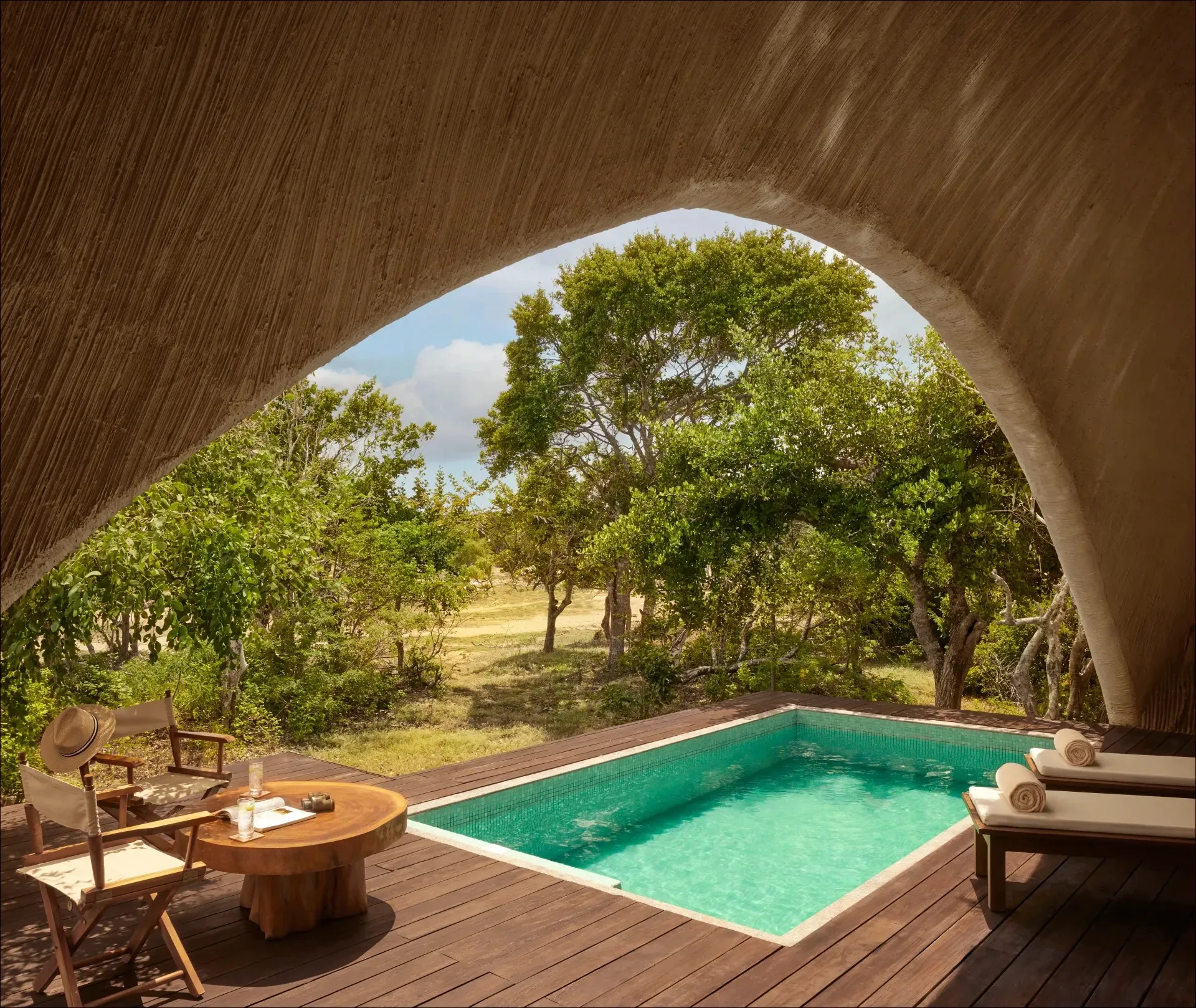
There is a single accommodation category at Uga Chena Huts, which simplifies the usual hierarchy of room types into one consistent standard: eighteen detached cabins, each roughly 1,600 square feet in total, with a climate-controlled interior of about 1,130 square feet and a private outdoor deck making up the rest. Every cabin is built to the same core layout and comes with its own shaded, built-in plunge pool of around five metres, fitted with air jets, positioned on the deck rather than shared or communal.
Inside, cabins are organised around a king-size bed beneath a vaulted, thatched ceiling, with a glass back wall that opens the sleeping area onto the private deck and pool. A separate living area holds a sofa, television and minibar, giving the cabin a genuine sense of distinct zones rather than a single undivided room. Bathrooms lean into the property’s rustic-luxury pairing, with freestanding bathtubs, separate showers, and in most cases his-and-hers basin arrangements, finished in natural materials that echo the timber and thatch used throughout.
Because the eighteen cabins are spaced generously across the seven-acre site and buffered by planting rather than lined up along a corridor or shared walkway, privacy is close to absolute: from inside a cabin’s deck, it is possible to go a full stay without a clear sightline to a neighbouring unit. That seclusion, combined with the plunge pool and the proximity to genuine wilderness, is the core appeal for couples and honeymooners, while the single, consistently spacious category also means families booking for two adults and up to two children are not compromising on space to do so.
Dining
Uga Chena Huts runs on Uga Escapes’ all-inclusive model, meaning the nightly rate covers breakfast, lunch and dinner, along with a selection of drinks and minibar replenishment in-cabin, without the need to itemise meals separately during the stay. The main dining venue is Basses Restaurant, an open-sided space overlooking the surrounding jungle and coastline that handles the bulk of the property’s breakfast, lunch and dinner service, drawing on Sri Lankan coastal cooking, seasonal produce and a menu that leans toward fish curries, coconut-based sambals and freshly baked items alongside more international options.
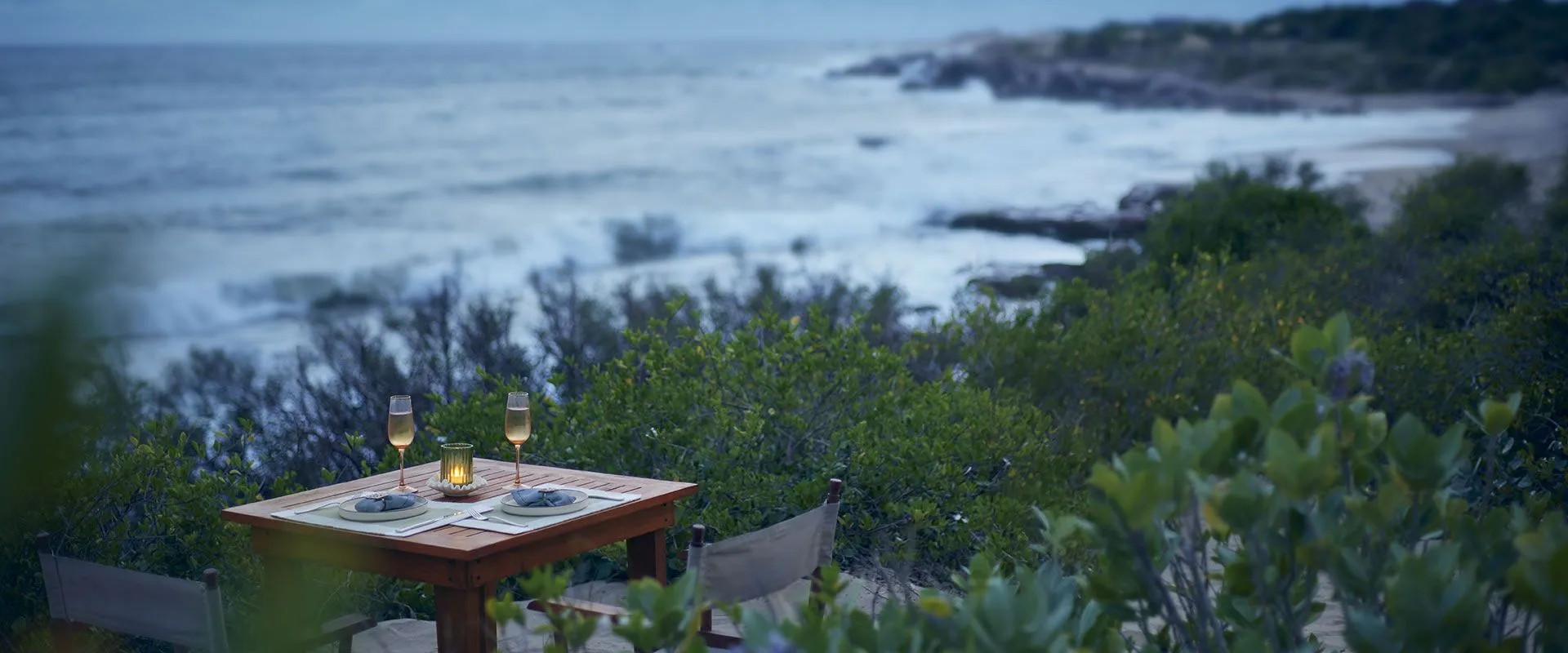
Beyond the main restaurant, the resort operates two further venues: a minimalist bar overlooking the dry-zone wilderness for pre- and post-safari drinks, and the Sundowner Beach Bar, set on the dunes above the Indian Ocean for cocktails at dusk. The property also offers more theatrical dining formats on request, including beach barbecues and candlelit dinners set apart from the main restaurant, generally arranged with advance notice through the guest experience team.
Wellness
The spa at Chena Huts operates from thatched treatment rooms close to the main pool area, offering massage, facial and body treatments in a setting that leans on the same natural materials and open-air feel as the rest of the property. Alongside the private plunge pools attached to every cabin, the resort maintains a substantial shared swimming pool near the restaurant and bar, giving guests a social alternative to the seclusion of their own deck when they want it.
Given the pace of a typical stay, split between early starts for morning game drives and downtime through the heat of the day, the spa and the shared pool tend to function as a counterweight to the safari schedule rather than a separate holiday within the holiday. Most guests treat the hours between the morning and afternoon drives as recovery time, and the property’s layout, with the pool and treatment rooms a short walk from the restaurant, is built around that rhythm rather than around a resort-style full-day wellness itinerary.
Experiences
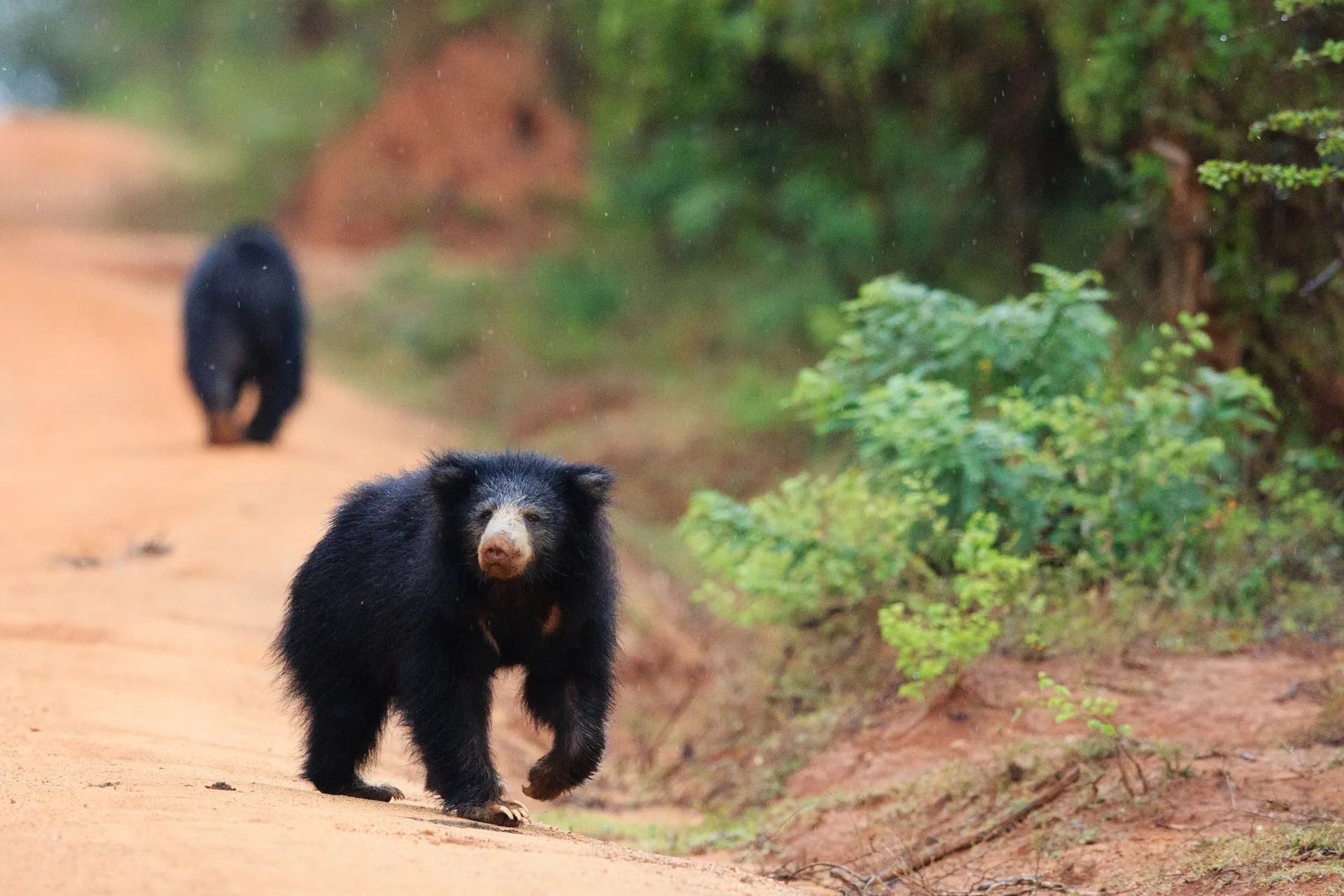
The defining experience at Uga Chena Huts is Yala National Park itself, widely cited as home to one of the highest densities of leopards recorded anywhere in the world, alongside elephants, sloth bears, crocodiles and a substantial resident and migratory bird population. The all-inclusive rate covers two game drives a day, typically an early-morning departure around sunrise and a second drive in the afternoon running into sunset, each lasting roughly three hours in a shared, open safari vehicle with park entrance fees and a tracker-guide included. Because the property sits only minutes from one of the park’s entrance gates, guests reach the game-drive tracks with little of the transfer time that eats into a safari morning at properties further from the boundary.
Access extends across more than one section of the park, including the busier, leopard-rich Block 1 and quieter alternative blocks used to spread out sightings and avoid vehicle congestion at popular waterholes. Beyond Yala itself, the resort can arrange day excursions to nearby Bundala National Park, known for its wetland birdlife, and to Udawalawe National Park, a reliable option for elephant sightings. Closer to the property, guests can take guided bush walks on foot, join beach walks along the adjoining coastline, and for families, the Junior Ranger Programme is designed to introduce children to the park’s wildlife and conservation themes in an age-appropriate way.
Outside the vehicle, the property also builds in a handful of lower-key, culturally rooted activities: guided drives through nearby villages, hands-on cooking sessions and demonstrations of traditional curd-making, the clay-pot buffalo-curd preparation associated with the region around Tissamaharama and Kataragama. None of it competes with the safari for top billing, but it rounds out a stay for guests who want at least one day that is not built entirely around a vehicle and a viewfinder. The quality of the guiding is, by most accounts, the property’s other defining strength: trackers work the same blocks repeatedly and are generally credited with reading fresh sign, alarm calls and radio traffic from other vehicles quickly enough to close in on sightings that a less experienced guide would miss.
Sustainability
Uga Chena Huts is built with a plastic-free operating policy across guest-facing areas, and the property runs on a substantial bank of solar panels supplemented by low-energy LED lighting throughout the cabins and public spaces. Guest transport around the property is handled by electric buggies rather than combustion vehicles, and the kitchens draw on produce grown in an on-site organic garden and sourced from nearby farmers where possible, reducing the distance food travels before it reaches Basses Restaurant.
The property’s architectural approach, cabins spaced around existing trees rather than a cleared site, raised walkways over undergrowth, wide buffers between structures, functions as a form of environmental restraint as much as an aesthetic choice, intended to keep the resort’s footprint on the scrubland light given its position on the immediate boundary of a national park. Third Night has not independently verified specific water-recycling or biodiversity-monitoring claims beyond what the property and its operator publish, so travellers who prioritise sustainability credentials in detail should confirm current practices directly with Uga Escapes ahead of booking.
Who Is It For
Uga Chena Huts is built most obviously for wildlife enthusiasts and photographers who want serious, repeated access to Yala without compromising on comfort at the end of a dusty morning drive: the twice-daily game drives, proximity to the park gate and tracker-guides are the property’s clearest reason for being. It also works well as a honeymoon or anniversary destination, given the private plunge pool attached to every cabin and the wide spacing between units, which produces a level of seclusion that is harder to find at larger resorts along Sri Lanka’s more built-up coastline. Couples and small families drawn to an all-inclusive format, where meals, drinks and safaris are bundled into a single rate rather than itemised throughout the stay, will find the model removes much of the day-to-day decision-making from the trip. It suits travellers comfortable with a genuinely remote, dry-zone setting rather than a conventional beach resort; those wanting nightlife, a walkable town, or a classic swimmable beach on the doorstep should look further along the south coast instead.
Practical Information
Rates at Uga Chena Huts run on an all-inclusive basis from around USD 1,200 per night, covering the cabin, meals, a selection of drinks and the twice-daily game drives; travellers should treat this as an indicative entry point rather than a fixed rate, since pricing varies by season, cabin availability and any promotional periods, and should be confirmed directly with the property or a travel advisor ahead of booking. Check-in is from 2:00 PM and check-out by 11:00 AM, with early arrival or late departure generally available on request, subject to availability and sometimes an additional charge.
The nearest airport is Mattala Rajapaksa International, about an hour’s drive from the property, though many travellers still route through Colombo’s Bandaranaike International Airport and take a private road transfer of roughly five to six hours, occasionally broken up with a stop elsewhere in the south or hill country. The strongest window for a safari-focused stay is the dry season, from February through July, when receding water sources concentrate wildlife and sightings improve, keeping in mind that Yala’s Block 1 typically closes for several weeks around September for its annual drought-recovery period. Most guests find three to four nights enough to fit in multiple game drives across different times of day and light without the stay feeling rushed.
Nearby
The property’s entire raison d’être is its proximity to Yala National Park, Sri Lanka’s largest and most visited protected area, and the one most closely associated with the country’s leopard population. Beyond the park’s boundary, the surrounding region is understated by design: small dry-zone towns, scattered farmland worked in the same chena tradition that gives the resort its name, and long, largely undeveloped stretches of coastline running along the Indian Ocean. Bundala National Park, a wetland reserve known for its birdlife, and Udawalawe National Park, a reliable destination for elephant sightings, both lie within reach for a day excursion, giving guests who stay several nights the option to vary their wildlife itinerary beyond Yala alone.
The nearby towns of Tissamaharama and Kataragama, both inland of the property, are where most day-to-day rural life in the area actually happens, from produce markets to the pilgrimage sites around Kataragama’s multi-faith shrine complex, a significant destination for Buddhist, Hindu, Muslim and indigenous Vedda worshippers alike. Few guests venture into either town independently, since the all-inclusive model and the pull of the park keep most of a stay’s structure centred on the property and its game drives, but both sit close enough to be arranged as a half-day cultural detour for anyone wanting a break from the safari routine. For travellers arriving from or continuing toward Sri Lanka’s hill country or its more developed south-coast beach towns, Chena Huts functions well as a self-contained few days in the wild before rejoining a longer, more conventional itinerary.
In pictures
On the map
Yala, Sri Lanka
Questions
Frequently asked
Is Uga Chena Huts inside Yala National Park?
No. The property sits just outside the park's boundary on a stretch of coastal scrubland near Palatupana, roughly a few minutes' drive from one of Yala's entrance gates, which allows guests to reach the game-drive tracks quickly without the property itself sitting inside protected land.
What is included in the all-inclusive rate?
The rate covers all meals at Basses Restaurant, a selection of drinks and minibar replenishment, and twice-daily game drives into Yala National Park in a shared safari vehicle, including park entrance fees and a tracker-guide. Spa treatments, premium wines and private vehicle upgrades are typically charged separately.
How many cabins are there, and do they all have private pools?
There are eighteen detached cabins spread across roughly seven acres, each around 1,600 square feet with a climate-controlled interior of about 1,130 square feet. Every cabin has its own shaded, built-in plunge pool on a private deck, so there is no shared or partial-pool category.
How do I get to Uga Chena Huts?
The nearest airport is Mattala Rajapaksa International, about an hour's drive from the property. Many guests instead fly into Colombo's Bandaranaike International Airport and either take a connecting domestic flight toward the south coast or arrange a private road transfer, which takes roughly five to six hours from Colombo.
When is the best time to see leopards at Yala?
The dry season, broadly February through July, is considered the strongest window, since receding water sources concentrate wildlife and sparser vegetation improves visibility. Yala's Block 1, the most visited and leopard-dense section, usually closes for several weeks around September for an annual drought-recovery period, so it is worth checking park status when booking a visit close to that time.
Is Chena Huts suitable for families with children?
Cabins can accommodate up to two children alongside two adults, and the property runs a Junior Ranger Programme aimed at introducing younger guests to the park's wildlife and conservation themes. Given the private plunge pools and proximity to open scrubland, families should factor in the usual pool and wildlife-area supervision.
Same destination
More hotel guides in Sri Lanka
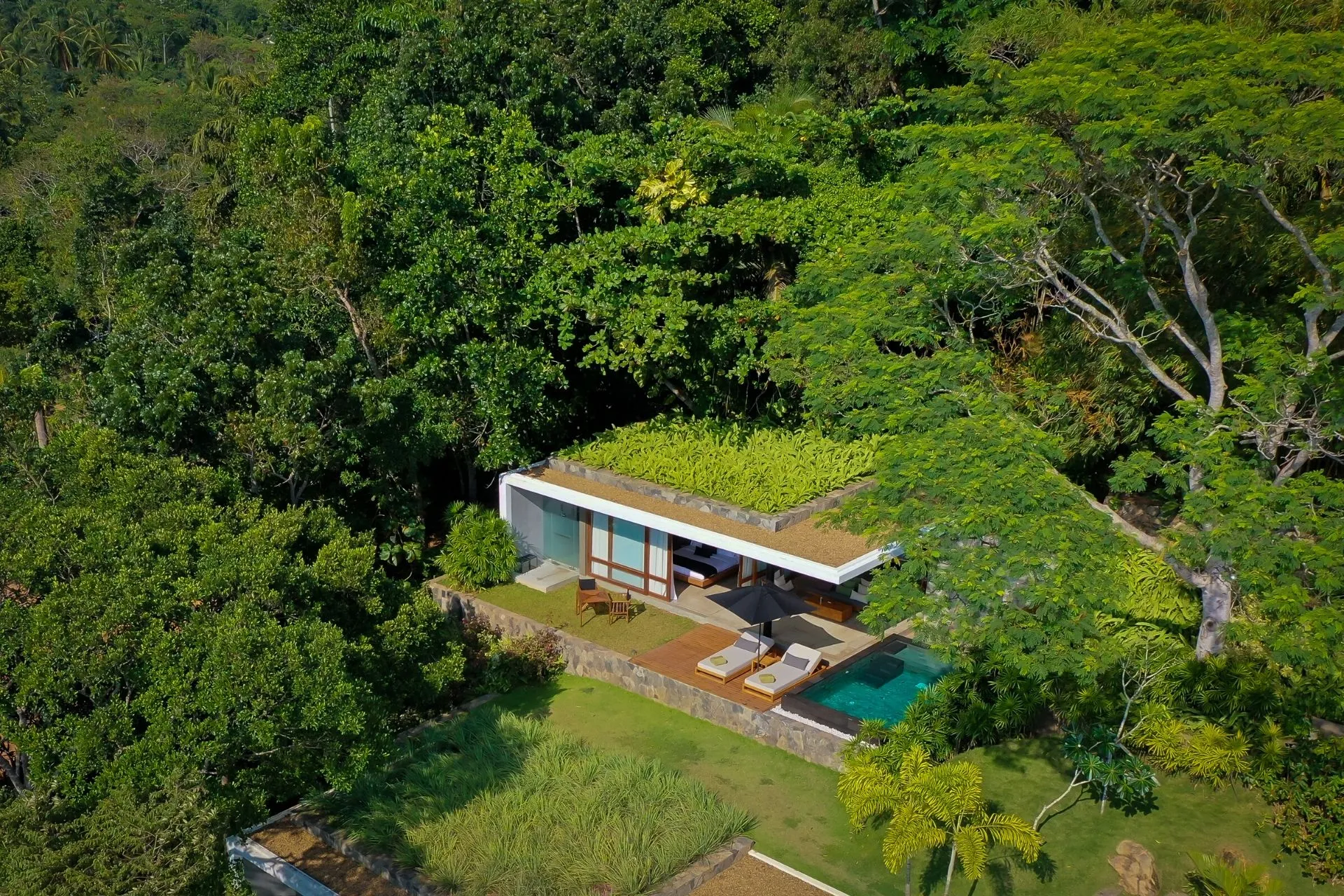
Thiranagama, Sri Lanka
Haritha Villas + Spa
Nine keys on a forested hilltop above Thiranagama, built around private saltwater plunge pools rather than a stretch of sand.
From $460 per night
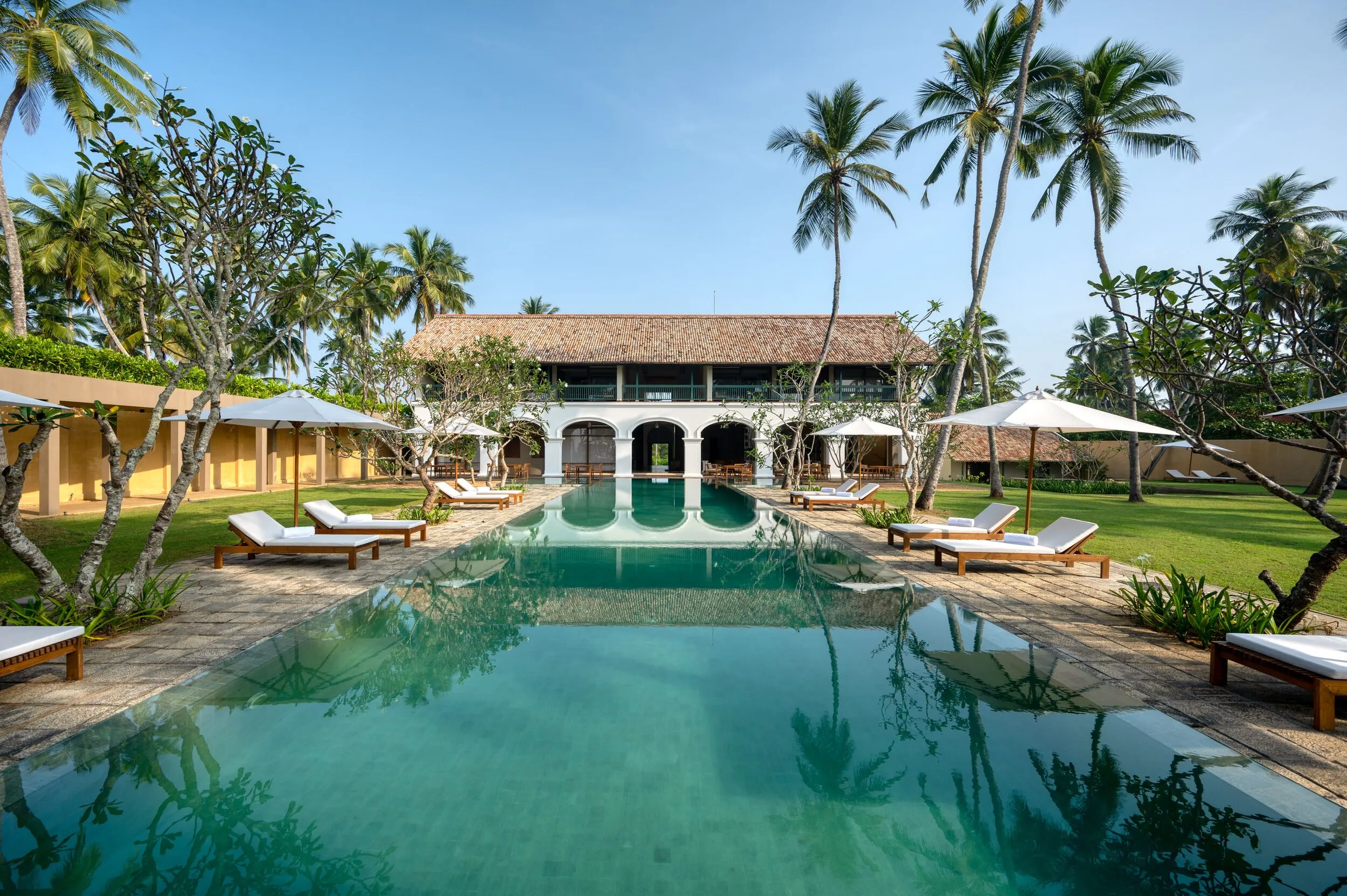
Tangalle, Sri Lanka
Kayaam House
Nine keys, a resident Ayurvedic doctor and a private stretch of turtle-nesting coastline near Tangalle.
From $700 per night
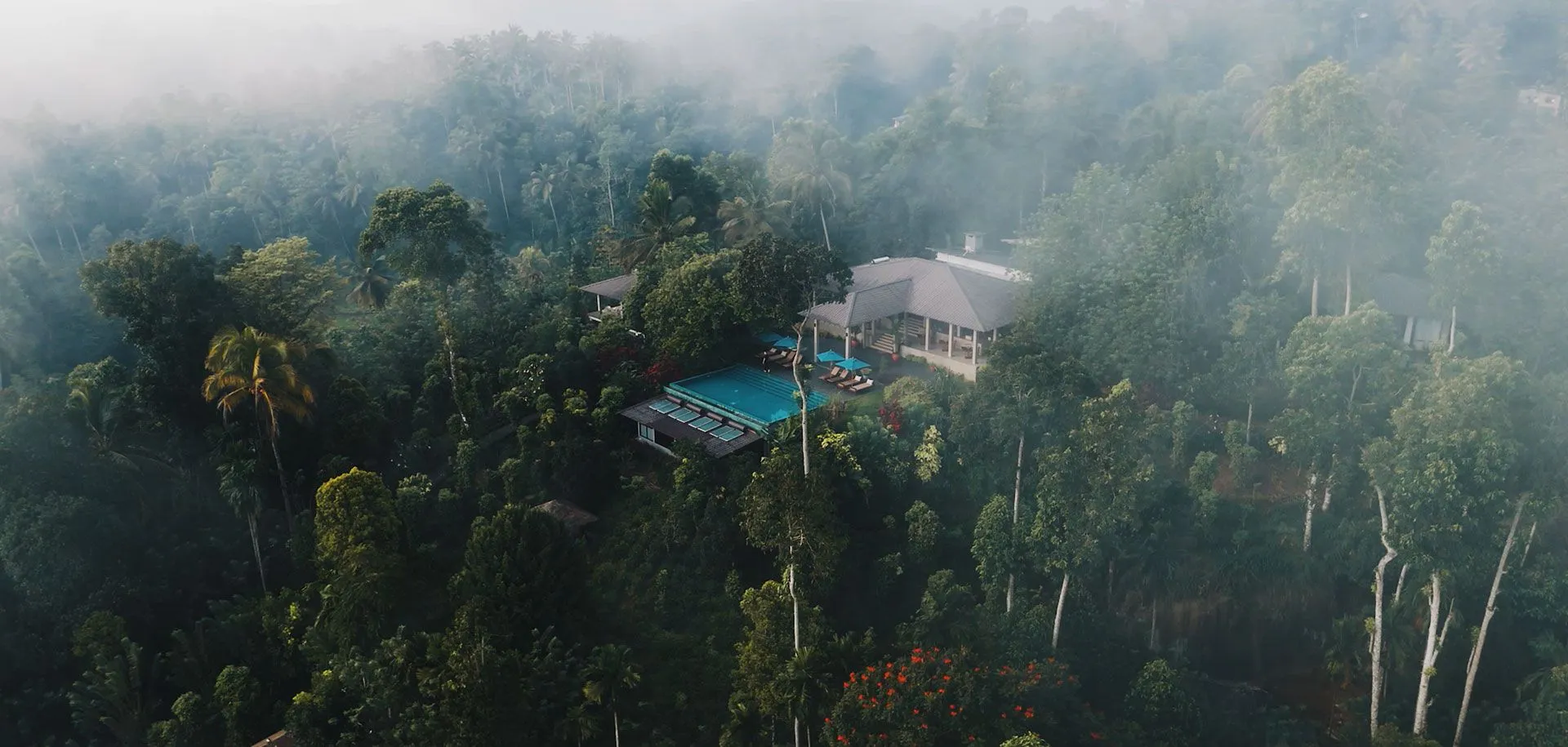
Alawatugoda, Kandy, Sri Lanka
Aarunya Nature Resort
A regenerative hillside estate above Kandy, where private-pool villas sit inside a working tea and spice garden facing the Knuckles range.
From $520 per night