Ithaafushi, Maldives
Waldorf Astoria Maldives Ithaafushi
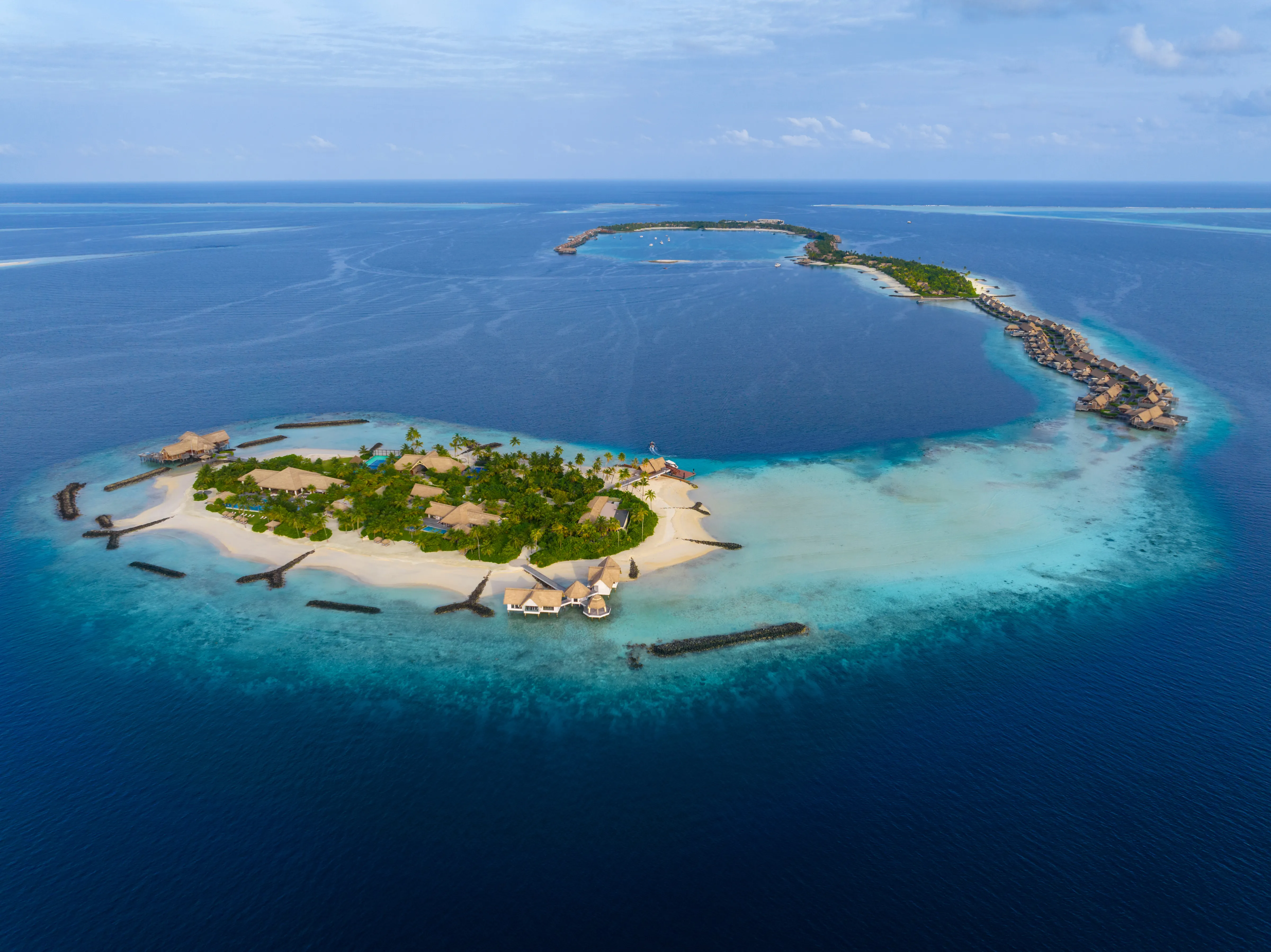
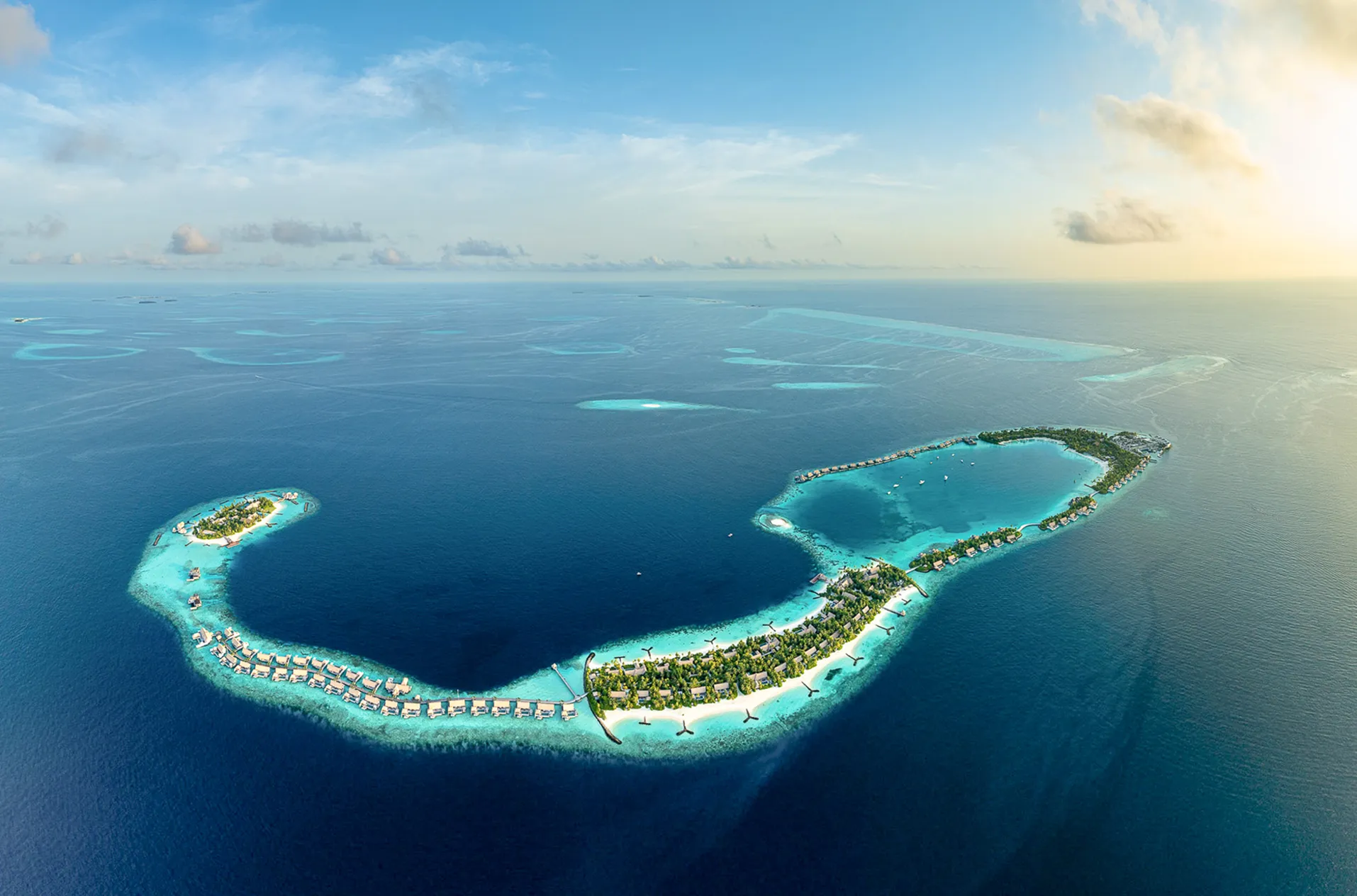
A 119-villa resort built across three linked islands in South Male Atoll, scaled less like a single hotel than a small, self-contained archipelago.
- Rates from
- From $1,800 per night
- Nearest airport
- Velana International Airport, Male (MLE)
- Transfer
- 40min by resort yacht (seaplane also available on request)
- Best months
- December to April, the Maldives' dry, low-swell season
There is a specific disorientation that sets in during the yacht crossing to Waldorf Astoria Maldives Ithaafushi, somewhere in the forty minutes between Velana International Airport’s runway and the resort’s own jetty. Most Maldives transfers end with a single low green shape on the horizon, one island, one hotel, the whole of the coming stay visible from the boat. This one does not resolve that way. What comes into view instead is a cluster: three islands sitting close together around a shared lagoon, timber bridges threading between them, villas queuing along the shoreline in numbers that keep going well past what a single-island resort would ever attempt. It reads, correctly, as a different order of scale.
That scale is the central fact of the property. Opened in July 2019 as Hilton’s first Waldorf Astoria in the Maldives, the resort spreads 119 villas, eleven restaurants and bars, and one of the region’s largest spas across a footprint that guests are expected to cross by bicycle rather than on foot. It is a resort built less like a boutique retreat and more like a small, well-organised town, one with its own internal geography, its own logistics of getting from A to B, and a fourth, entirely separate island reserved for guests who want none of that scale at all. Understanding how those pieces fit together, architecturally and practically, matters more here than at almost any other property in the region.
Why It Stands Out
Most Maldives resorts compete on restraint: a single island, a tight villa count, a house reef treated as the only amenity that matters. Waldorf Astoria Maldives Ithaafushi competes on range instead. Eleven distinct restaurants and bars, more than any other single resort in the country, mean a week-long stay can run through Japanese robata, Chinese roast duck, Middle Eastern mezze and Australian-style wood-fired barbecue without repeating a kitchen, a genuine rarity on a destination where most properties expect guests to eat at the same two or three venues on rotation. The spa follows the same logic at a larger scale, built out as the country’s biggest wellness facility rather than a boutique treatment suite bolted onto the villas.
The three-island layout is the other differentiator, and it cuts both ways depending on what a guest is after. It means more room, more privacy between villa clusters, and a resort that never quite feels as crowded as its total villa count might suggest, since 119 keys spread across three landmasses and a connecting lagoon simply have more space to disperse into than the same number packed onto one island. It also means the property does not offer the tight, walk-everywhere intimacy of a 30-villa boutique resort; getting to dinner is a bicycle ride, not a stroll. For travellers who want variety, capacity and a real sense of a private-island buyout as a distinct upgrade tier, rather than a marketing label, that trade is the whole appeal. Ithaafushi Private Island, the separate fourth landmass reserved for whole-island bookings, makes that upgrade tier literal rather than aspirational.
Architecture
The resort’s built environment is the work of Highness, the Doha-based architecture practice, with interiors by Stickman Tribe, based in Dubai. Both firms worked within a Maldivian idiom rather than against it: low-slung, horizontal buildings that keep sightlines open across the lagoon, deep covered verandahs suited to the climate, and a material palette of timber, thatch and stone that avoids the glass-box maximalism some newer regional resorts have leaned into. The intent, consistent across the villa architecture and the specialty restaurants alike, is a built environment that references its setting directly rather than importing an aesthetic from elsewhere; the design team has pointed to details like heron motifs worked into interior finishes as a deliberate nod to the surrounding wildlife and lagoon ecology.
The layout is the more unusual architectural decision. Rather than build up on a single island, as most Maldives resorts do, the developers spread the resort across three islands arranged around a central lagoon, connecting them with a network of wooden bridges rather than requiring a boat for every crossing. The result is a property that runs roughly 3 to 4km from end to end, an extraordinary distance by Maldives standards, and one the resort addresses head-on with its transport model: a bicycle assigned to every villa for daytime use, and a standing fleet of electric buggies, staffed around the clock, for guests who would rather not pedal, especially after dark. It is worth being precise about this, since the layout invites comparison to funicular or monorail systems used at a handful of other large-scale resorts worldwide: nothing of that kind exists here. Movement between islands is entirely bridge, bicycle and buggy, a lower-tech solution that fits the resort’s material language better than any mechanised system would, even if it asks a little more patience of guests early in a stay.
Ithaafushi Private Island sits apart from this three-island cluster entirely, a fourth, self-contained landmass of roughly 32,000 square metres reached by its own short boat crossing, or, for guests arriving directly from the airport, by dedicated yacht or seaplane. Its separation is the point: where the main resort is built for scale and variety, the private island is built for total seclusion, with its own villas, its own concierge team and no obligation to cross a bridge to reach anything.
Interior Design
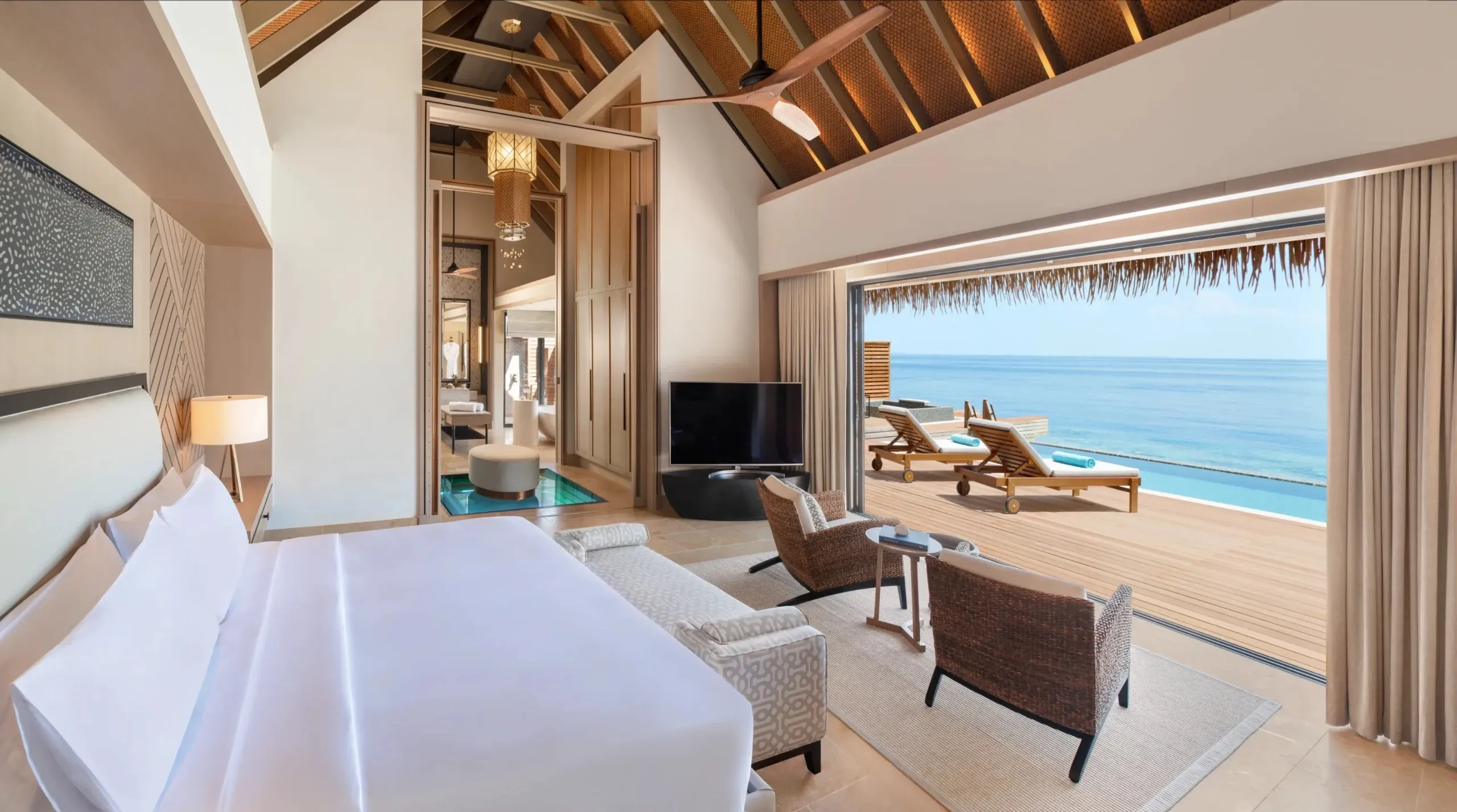
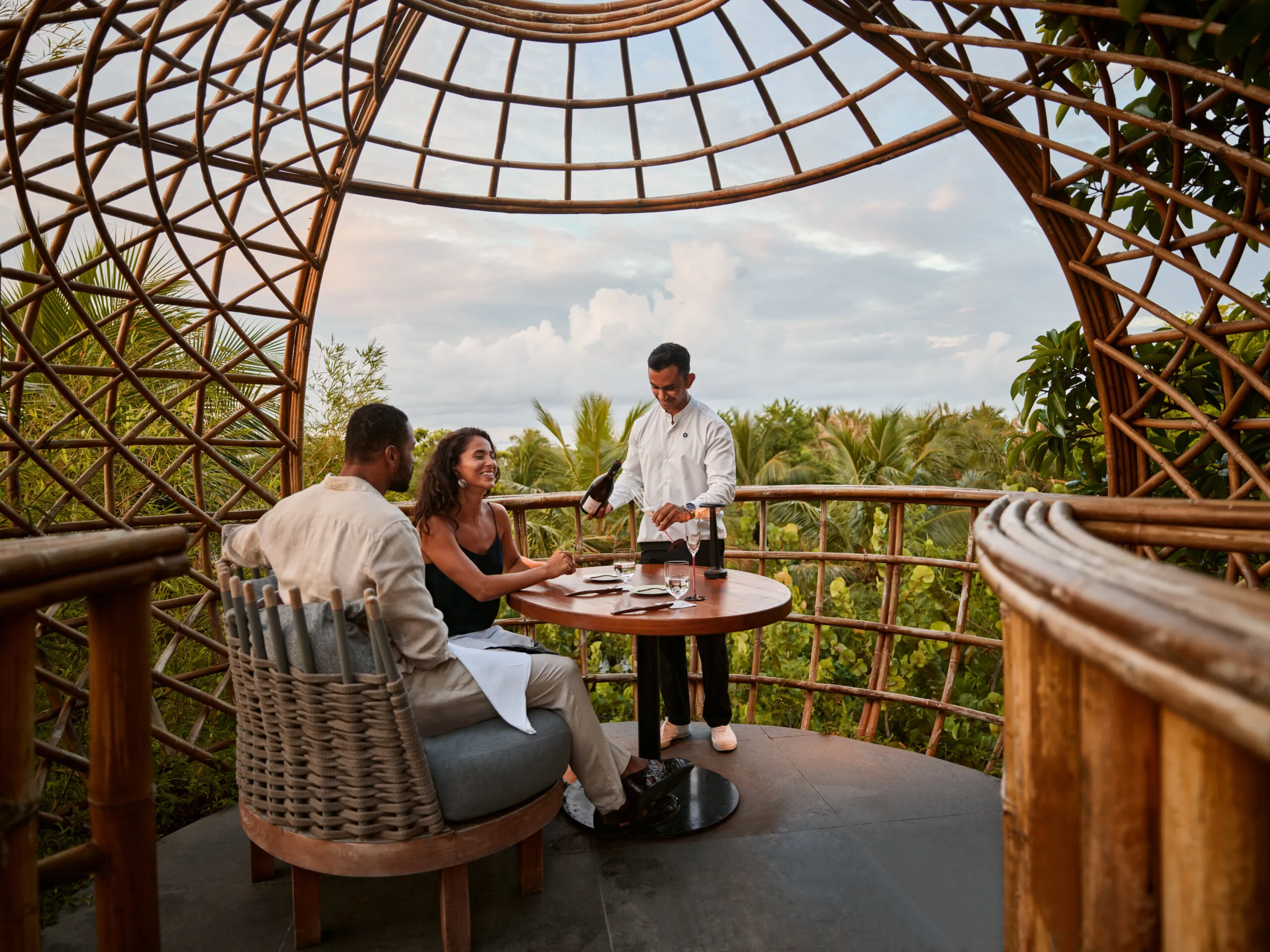
Stickman Tribe’s interiors stay disciplined within the architecture’s horizontal, timber-heavy frame: natural fibres, woven textures and a muted, sand-and-driftwood colour register that keeps the lagoon and sky doing most of the visual work through the villas’ floor-to-ceiling openings. Furniture leans toward clean-lined, contemporary pieces rather than ornate colonial or overtly nautical references, a choice that reads as deliberately understated against the scale of the architecture itself. Specialty restaurants are where the interior concept is allowed to become more expressive: Terra’s bamboo dining pods are built directly into the treetop canopy, The Rock’s wine cellar is carved into a boulder-like limestone structure anchored by a two-hundred-year-old jarrah wood table, and Yasmeen’s Middle Eastern dining room is dressed in artifacts and antiques that shift its register entirely from the pared-back villas. Across the property, that pattern holds: restraint in the private spaces, more overt theming in the venues built for a single memorable evening rather than a full stay.
Atmosphere
What the scale produces, in practice, is a resort that behaves more like a resort town than a retreat. There is genuine bustle here by Maldives standards, a staff complement in the hundreds keeping eleven kitchens, a large spa and three islands’ worth of villas running, and guests are more likely to encounter other guests in transit, on bicycles and buggies, than they would be at a 30-villa boutique property. That is neither a flaw nor an accident; it is the direct consequence of building a resort this large, and it suits travellers who want a genuine range of things to do and see across a stay rather than a single, quiet, unchanging view. For those who specifically want the hushed, nobody-else-exists atmosphere the Maldives is famous for, the private island exists as an explicit release valve, a way to buy the seclusion the main resort’s scale necessarily trades away.
Rooms and Suites
The 119 villas across the main resort’s three islands run through three core settings: Beach Villas set directly on the sand, Reef Villas positioned where garden and shallow lagoon meet, and Overwater Villas built on stilts above the lagoon itself, most with a private pool and direct water access via a deck ladder. Sizes and configurations extend from one-bedroom entry categories up through multi-bedroom villas and family-oriented layouts built for interconnecting or shared-roof bookings, with the Stella Maris Overwater Villas sitting at the top of the standard categories, distinguished by their more secluded, boat-accessible positioning and larger footprint. Across categories, the design brief holds constant: deep outdoor terraces, an emphasis on direct lagoon or ocean access, and interiors built to stay quiet against the view rather than compete with it.
Ithaafushi Private Island, the separate fourth landmass, offers its own distinct accommodation entirely: a two-bedroom overwater villa with dual master suites and an infinity pool, a three-bedroom beach villa with its own garden and two pools, and a four-bedroom residence built for a full family or wedding party, together sleeping up to 24 guests as a single whole-island booking with dedicated staff rather than a shared-resort experience.
Dining
Eleven restaurants and bars put Waldorf Astoria Maldives Ithaafushi ahead of every other single resort in the country on sheer culinary range. Zuma, the contemporary Japanese izakaya brand known for its robata grill and sushi counter, occupies an overwater setting and functions as the resort’s highest-profile dining destination, though its operating schedule can vary seasonally and is worth confirming ahead of a stay. Terra serves a seasonal, multi-course tasting menu from bamboo pods built into the island’s treetop canopy, a format built specifically for occasion dining rather than casual meals. Li Long focuses on Chinese cuisine anchored by wood-fired Beijing duck, while Yasmeen covers Middle Eastern cooking in a dining room dressed with artifacts and antiques. The Ledge, developed with input from a Michelin-starred chef, runs an Australian-inflected barbecue programme built around wagyu and wood-fired seafood, and its adjoining venue The Rock offers food and wine pairing menus inside a limestone, cave-styled cellar.
Glow handles the resort’s garden-to-table register with a Mediterranean lean and a greenhouse-style structure that puts the kitchen’s produce on display, and Nava operates as the pool and beach club, serving wood-fired pizza and cocktails through the day. Peacock Alley functions as the resort’s open-air lounge and live-music venue, drawing on New York supper-club heritage for its late-evening register, while Amber and the Tasting Table round out the beachfront and all-day dining options, the latter carrying the resort’s breakfast buffet and a broader international dinner menu. Given the number of venues and the total absence of any restaurant beyond the resort’s own islands, guests staying more than a few nights typically find a half-board or full-board plan the more sensible way to actually use the range on offer.
Spa and Wellness
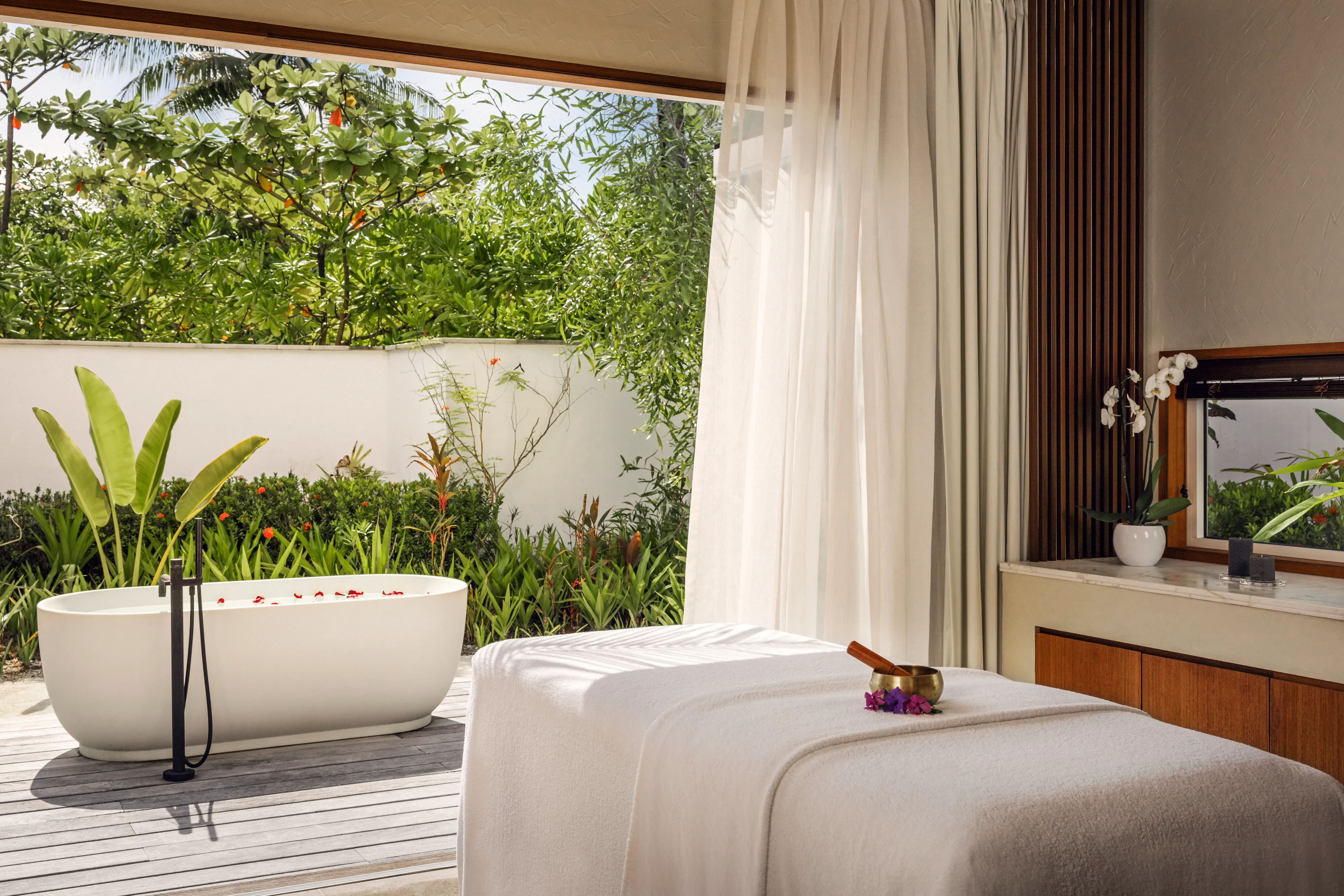
The Waldorf Astoria Spa is built at a scale that matches the rest of the resort: it is the largest spa facility in the Maldives, with treatment rooms spread across overwater pavilions and garden settings, including a large mirror pool used for hydrotherapy and quiet reflection between treatments. Programming draws on both international spa techniques and Maldivian wellness traditions, with a wellness concierge available to help guests build a treatment plan across a longer stay rather than booking single, unconnected sessions. Beyond the spa building itself, the resort maintains a fitness centre with personal training available and an Aqua Wellness Centre, alongside yoga sessions offered against the lagoon backdrop. Ithaafushi Private Island has its own overwater spa facility as well, allowing guests booked into the whole-island experience to stay entirely within that separate enclave for treatments too.
Experiences
The resort’s activity programme leans heavily on the water that surrounds it: snorkelling and scuba excursions out to South Male Atoll’s reef sites, sunset and dolphin-watching cruises aboard the resort’s yacht fleet, sandbank picnics reached by boat, and a glass-bottomed exploration boat for guests who want a look beneath the surface without diving in. A coral restoration programme, developed with marine biologists and run in partnership with a regional ocean-conservation group, invites guests to take part directly in reef rehabilitation work, from collecting naturally detached coral fragments to helping transplant them onto floating nursery frames under the resort’s in-house marine biology team. Families have the Stars Club, a supervised programme for children aged 4 to 11, plus the wider run of the resort’s three islands and central lagoon to explore by bicycle. For special-occasion travellers, the scale of the property translates into a correspondingly wide menu of private dining and celebration formats, from the treetop pods at Terra to sunset cruises aboard the resort’s superyacht, where dolphins are a frequent, unscripted addition to the evening.
Who It Is For
This is a resort built for scale-minded travellers: honeymooners who want eleven restaurants and a resort-town buzz rather than a hushed single-island retreat, multigenerational families who need the villa variety and children’s programming to keep several age groups genuinely occupied, and milestone-celebration groups large enough to make use of interconnecting villas or a private-island buyout. Divers and snorkellers get a serious, well-resourced water-sports operation to work with, and travellers who specifically want the ability to buy total seclusion, on Ithaafushi Private Island, as an explicit upgrade rather than a marketing promise, are well served by the resort’s structure. It is a less natural fit for travellers whose primary reason for choosing the Maldives is the smallest, quietest possible footprint; a 20 to 30-villa boutique resort on a single island will deliver that atmosphere more directly than a 119-villa, three-island property ever will, private island aside.
Best Time to Visit
The Maldives runs on two monsoon seasons, and the dry, northeast monsoon from roughly December through April brings the calmest seas, the most consistent sunshine and the best conditions for the resort’s boat-based excursions and diving programme, making it the peak and most heavily booked period. The wetter southwest monsoon, running from May through November, brings more frequent afternoon showers and rougher water but also lower rates and, for divers specifically, some of the best visibility and manta ray activity at sites elsewhere in the atoll chain, since increased plankton draws the mantas in during these months. Given the resort’s own scale and its heavy reliance on bicycle and buggy transport between islands, dry-season visits make the day-to-day experience of simply getting around the property meaningfully more comfortable.
How to Get There
All guests fly into Velana International Airport (MLE) near Male, the country’s main international gateway, before completing the journey to the resort by water. A member of the resort’s airport concierge team meets guests in the arrivals hall and escorts them directly to a private yacht for the crossing, a comfortable, air-conditioned journey of about 40 minutes across South Male Atoll to the resort’s own jetty. Seaplane transfers can be arranged on request for guests who prefer the aerial route, though the yacht is the resort’s standard and most frequently used option given the relatively short distance from the airport. Flight details should be shared with the resort roughly 72 hours ahead of arrival so the transfer team can time the crossing to match, and waiting times at the airport before departure can run from thirty minutes to an hour depending on how transfers are grouped.
Nearby Experiences
Because the Maldives’ resort model puts almost everything a guest needs on the property itself, “nearby” here mostly means what the resort’s own boats can reach rather than any town to visit. South Male Atoll’s dive and snorkel sites, reachable within a short boat ride, offer a genuine variety of reef environments, and excursions further into the atoll chain can be arranged for whale shark or manta ray sightings depending on season. Local island visits, to inhabited Maldivian islands rather than resort islands, can be arranged for guests curious about life beyond the tourism industry, giving a rare glimpse of the country outside its resort-island bubble. Male itself, the capital, is a possible day trip for guests with a longer transfer window either side of their stay, though most visitors treat it as a transit point rather than a destination in its own right.
Things to Know Before Booking
The resort’s scale is worth internalising before arrival: distances between the furthest villas and the main dining and spa areas can run to several kilometres, and while bicycles and buggies are provided and genuinely effective, this is a materially different day-to-day experience from a single-island resort where everything is a short walk away. Villa location matters more here than at a smaller property, and it is worth asking a booking agent or the resort directly how far a given villa category sits from the restaurants and spa before confirming. The number of restaurants is a genuine strength, but individual venues can close periodically for maintenance or seasonal changes, so guests with their heart set on a specific restaurant should confirm its operating status ahead of the stay. Given the eleven-venue dining programme, a half-board or full-board meal plan is generally worth the cost for stays longer than three or four nights. Finally, Ithaafushi Private Island is a genuinely separate product, booked and priced as a whole-island buyout rather than a villa category within the main resort, and travellers interested in that level of seclusion should inquire about it specifically rather than assume it is simply the resort’s top room tier.
Sustainability
Waldorf Astoria Maldives Ithaafushi runs a coral restoration programme developed with marine biologists, in which guests can take part directly, from collecting coral fragments that have naturally broken free of their parent colonies to transplanting them onto floating nursery frames tended by the resort’s in-house marine biology team. The resort has also stated figures for its environmental programme, including tree planting and reductions in fossil fuel use and carbon emissions, and maintains a partnership with a regional ocean-conservation organisation focused on marine plastic reduction. As with most large resort operators, independently verified, third-party audited sustainability reporting at the level of a single property is limited; the coral programme and marine biology team are the most concretely documented and guest-facing parts of the resort’s environmental work, and are worth asking about directly for guests for whom this is a priority in choosing where to stay.
Practical Information
Rates at Waldorf Astoria Maldives Ithaafushi start from around USD 1,800 per night and rise substantially for higher villa categories, multi-bedroom configurations and any booking on Ithaafushi Private Island, with pricing moving seasonally around the December-to-April peak. Check-in is from 3:00pm and check-out by 12:00pm, with early or late requests handled subject to availability. The nearest airport is Velana International Airport (MLE) near Male, reached from the resort by a roughly 40-minute private yacht transfer, with seaplane transfers available on request. Most stays run five to seven nights, long enough to make real use of the resort’s eleven restaurants, spa programme and water-based excursions without feeling rushed by the property’s own scale.
Editorial Conclusion
Waldorf Astoria Maldives Ithaafushi makes an unusual argument for a category that has spent two decades competing on restraint: that more, done well, can be its own kind of luxury. Three islands, 119 villas, eleven kitchens and a spa built at genuine scale add up to a resort that behaves more like a small, self-sufficient town than a secluded retreat, connected by bridges and bicycles rather than the boat rides most Maldives properties rely on to reach their own restaurants. That is a deliberate trade, not an oversight, and it will suit some travellers considerably better than others. For families, celebration groups and anyone who wants genuine variety across a week-long stay, the scale is the whole point. For those chasing the single-island hush the destination is best known for, the resort has built its own answer directly into the property: Ithaafushi Private Island, a separate landmass reserved for exactly that kind of seclusion, sitting a short boat ride from all the choice the main resort has to offer.
In pictures
On the map
Ithaafushi, Maldives
Questions
Frequently asked
How many islands does Waldorf Astoria Maldives Ithaafushi actually occupy, and how do guests get between them?
The main resort is built across three interconnected islands encircling a shared lagoon in South Male Atoll, joined by timber bridges rather than any boat shuttle. Within that footprint, guests get around on resort-assigned bicycles by day and on-call electric buggies by night, since the property stretches roughly 3 to 4km end to end. A separate fourth landmass, Ithaafushi Private Island, sits apart from this cluster and is reached only by a short internal boat transfer or, from the airport directly, its own yacht or seaplane run.
What is the transfer like from the airport, and how long does it take?
All guests arrive at Velana International Airport (MLE) near Male and are met by a resort concierge who accompanies them to a private yacht for the crossing to the resort, a journey of about 40 minutes. Seaplane transfers can be arranged on request for a faster, aerial alternative. Flight details should be shared with the resort in advance so the arrival team can time the yacht departure.
How many restaurants are there, and is a meal plan worth booking?
The resort operates 11 restaurants and bars, more than any other single resort in the Maldives, spanning Japanese, Chinese, Middle Eastern, Mediterranean and Australian-style barbecue registers alongside its all-day and beachfront venues. Given the number and variety of kitchens on-site, and the total absence of any other restaurant to walk to, guests planning to eat at more than one or two venues a day generally find a half-board or full-board plan worthwhile rather than paying à la carte throughout a longer stay.
Is Waldorf Astoria Maldives Ithaafushi suitable for families with young children?
Yes. The resort runs the Stars Club for children aged 4 to 11 with supervised activities and childcare, and villa categories include multi-bedroom and interconnecting configurations built for family groups. Children under 6 stay and transfer complimentarily, with reduced rates typically applying for ages 6 to 11 on half-board; the resort's scale, spread across three linked islands with a lagoon at the centre, also gives families more room to spread out than a single-island property would.
What is Ithaafushi Private Island, and is it a separate booking from the main resort?
Ithaafushi Private Island is a distinct, roughly 32,000-square-metre island, the largest private island in the Maldives, with its own two-bedroom overwater villa, three-bedroom beach villa and four-bedroom residence, sleeping up to 24 guests with a dedicated personal concierge team. It is bookable as a standalone, whole-island buyout separate from a standard villa reservation at the main resort, though guests staying there can cross by boat to use the main island's restaurants and spa.
Same destination
More hotel guides in Maldives
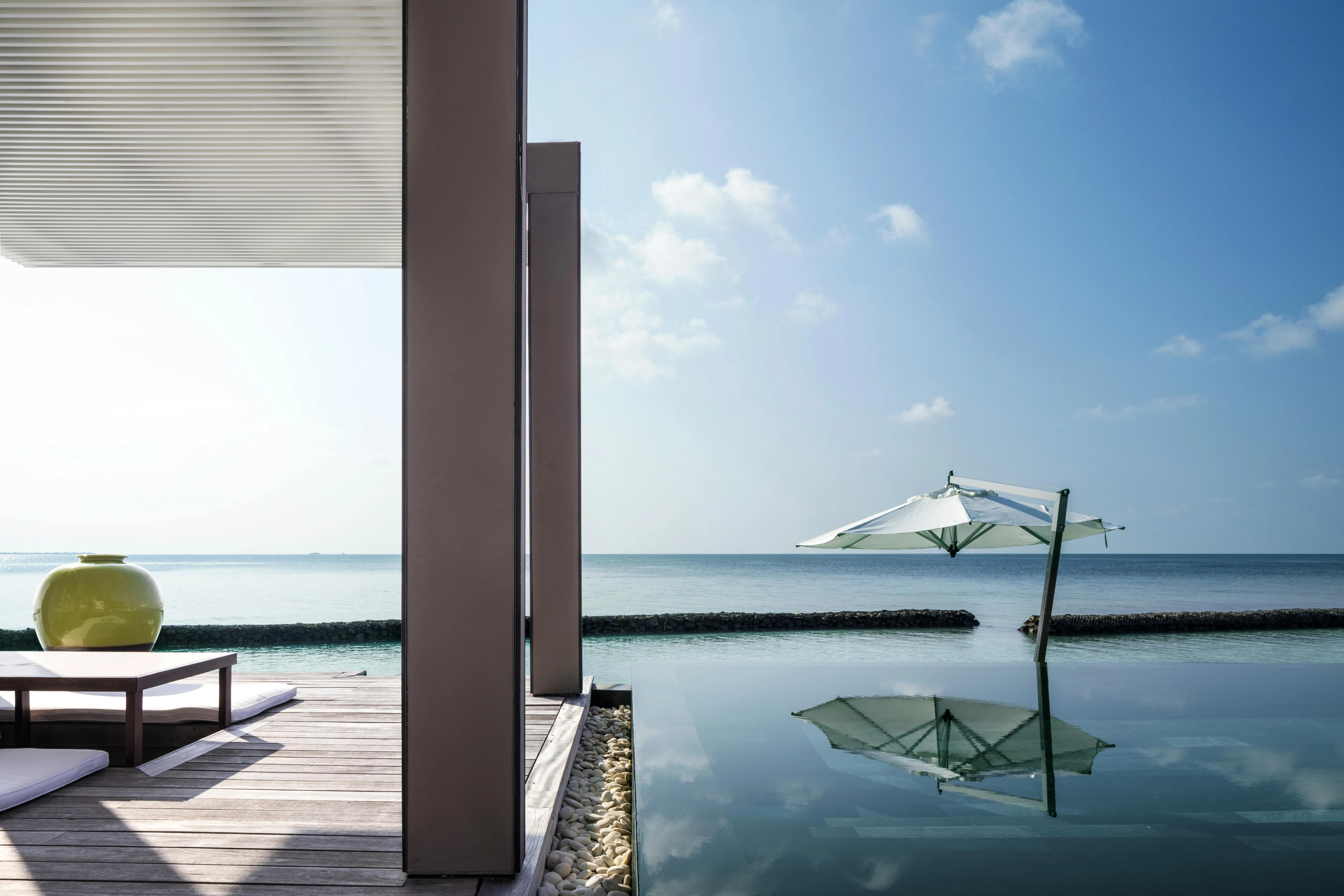
Randheli Island, Maldives
Cheval Blanc Randheli
Jean-Michel Gathy's private-island debut for LVMH's hotel house, forty minutes by seaplane into the Noonu Atoll.
From $2,200 per night
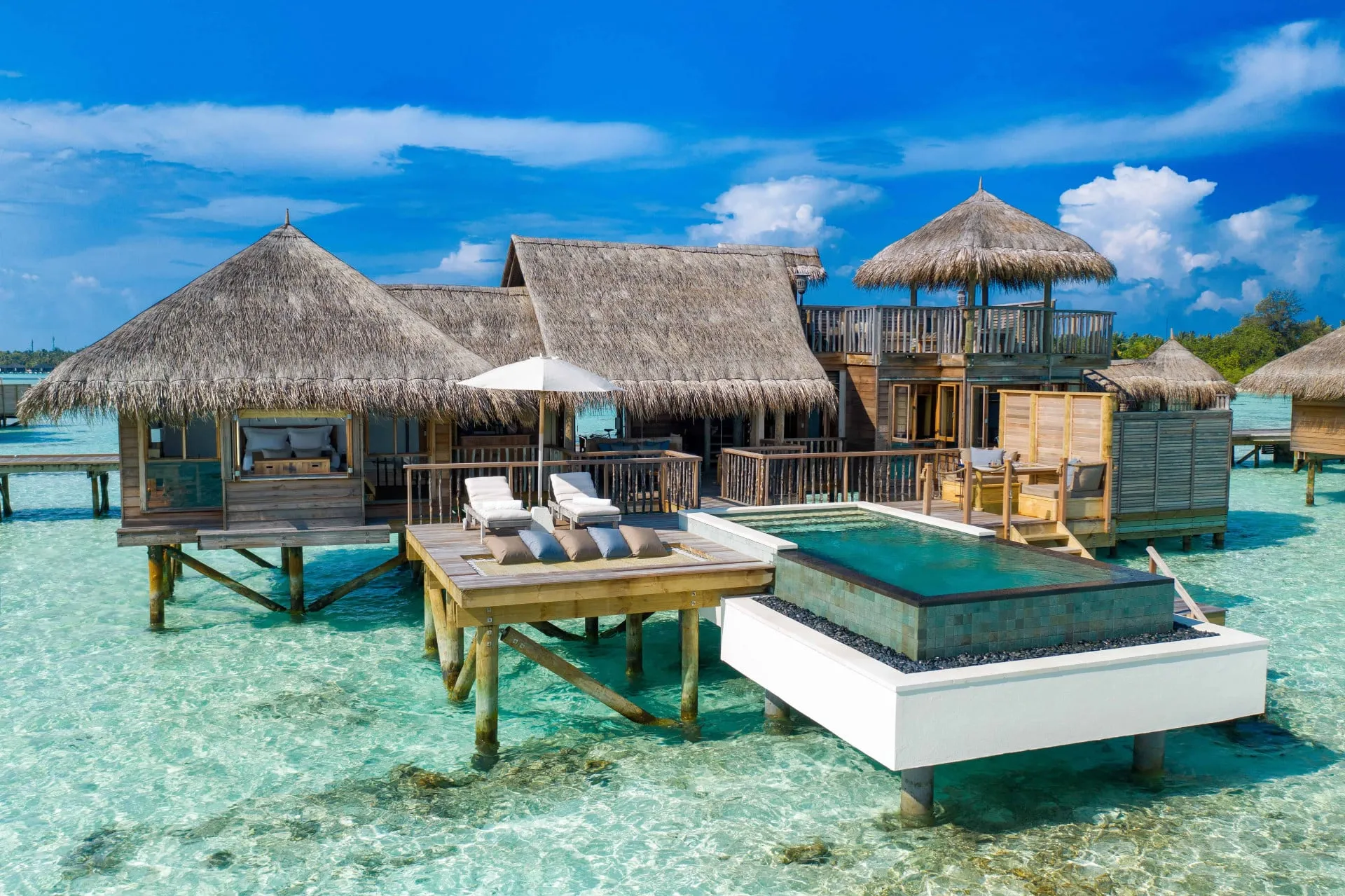
Lankanfushi Island, Maldives
Gili Lankanfushi
The Maldives resort that invented barefoot luxury and has spent two decades refusing to put its shoes back on.
From $1,550 per night
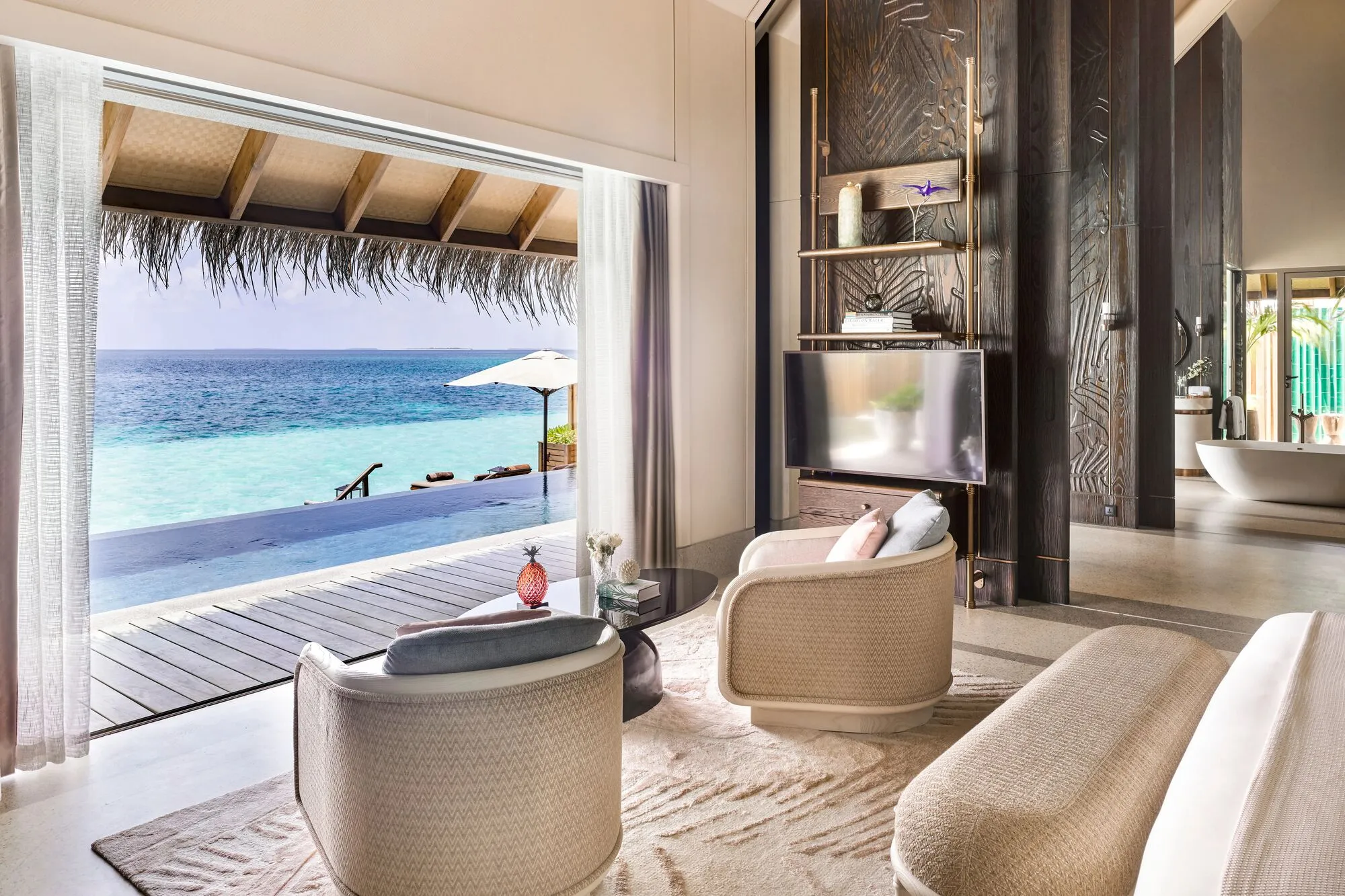
Muravandhoo Island, Maldives
JOALI Maldives
An art-immersive private island in Raa Atoll where more than forty commissioned installations sit alongside 73 villas and a working coral restoration reef.
From $1,600 per night